
 EN
EN



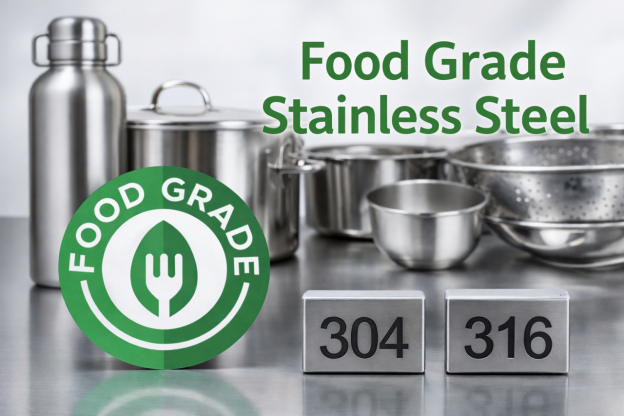
Ikke alle kvaliteter av rustfritt stål er egnet for matbruk. Av ca. 150 kommersielt brukte kvaliteter av rustfritt stål er bare et begrenset antall fra 300- og 400-seriene vanligvis godkjent for direkte kontakt med mat.
Å velge feil kvalitet – eller kjøpe inn fra en upålitelig leverandør – kan føre til korrosjonsfeil, kontaminasjonsrisiko og etterlevelsesproblemer.
· Hvilke rustfrie ståltyper er godkjent av FDA
· Hva gjør rustfritt stål egnet for matkontakt
· Hvordan velge riktig stålgode for ditt bruksområde
· Hvor man pålitelig kan kjøpe sertifisert matgrad-rustfritt stål
Hva er matstandard stainless steel?
Rustfritt stål for matbruk er en stållegering som er godkjent for direkte eller indirekte matkontakt i henhold til FDA- og NSF-standarder. For å oppfylle kravene må materialet motstå korrosjon under matprosesseringsforhold, unngå skadelig forurensning eller utløsning av metaller samt ha en overflate som kan rengjøres og desinfiseres fullstendig.
Regelverk for rustfritt stål for matbruk (FDA, NSF og EU-standarder)
I USA faller materialer for matkontakt under tilsyn fra FDA. To hovedstandarder refereres ofte til for utstyr til matprosessering:
· NSF/ANSI 51 – Dekker materialer som brukes i matutstyr
·3-A-sanitære standarder – Fokuserer på hygienisk design for mejeri- og matprosesseringssystemer
Begge standardene krever korrosjonsbestandighet, uskadelighet og rengjørbarhet. I Europa tar produsenter også hensyn til EU-forordning 1935/2004 sammen med EHEDG-veiledning for hygienisk utstyrsdesign.
Overflatebehandling er like viktig som valg av legering. Overflater som kommer i kontakt med mat forventes vanligvis å oppfylle Ra ≤ 0.8 μm , som omtrent tilsvarer en mekanisk overflate på nivå No. 4.
Hva gjør rustfritt stål egnet for matkontakt?
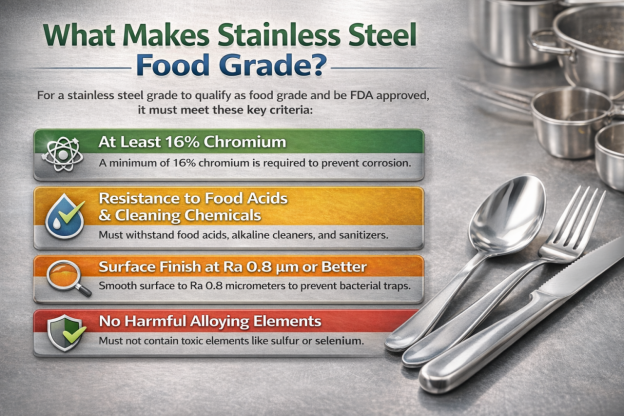
For at rustfritt stål skal kunne klassifiseres som matkvalitet, må det vanligvis oppfylle fire sentrale krav.
1. Minimuminnhold av krom (≥16 %)
Krom danner den passive oksidlaget som beskytter metallet mot korrosjon. Denne barrieren er avgjørende for hygieniske matkontaktanvendelser.
2. Motstandsdyktighet mot mat-syrer og rengjøringskjemikalier
Legeringen bør tåle organiske mat-syrer, alkaliske CIP-reaktiver, sure desinfiseringsmidler og klorbaserte rengjøringskjemikalier uten å utvikle pitting eller overflateforringelse.
3. Overflatefinish (Ra ≤ 0,8 μm)
En jevnere overflate reduserer bakterieopphold og gjør rutinemessig desinfeksjon lettere og mer effektiv.
4. Ingen skadelige legeringselementer
Fritt-skjærende legeringer som inneholder svovel eller selen er vanligvis uegnede for matkontakt. Feilaktig sveising kan også skape sensiterte soner som reduserer korrosjonsmotstanden i nærheten av sveiseskjøtene.
Vanlige rustfrie stålsorter for matkvalitet (304, 316 og 430 forklart)
Mest matkvalitetsrustfritt stål kommer fra 300- og 400-seriene. De mest brukte kvalitetene inkluderer 304, 304L, 316, 316L, 430 og 420.
| Kvalitet | Serie | Hovedsammensetning | Matkvalitet? | Beste for | Nøkkellimit |
|---|---|---|---|---|---|
| 304 | 300 (austenittisk) | 18 % Cr, 8 % Ni | Ja | Generell matutstyr, tanker, arbeidsflater, mejeri | Kan utvikle sprekker i miljøer med høy salt- eller kloridkonsentrasjon |
| 304L | 300 (austenittisk) | 18 % Cr, 8 % Ni, lavt karboninnhold | Ja | Sveist matutstyr | Samme kloridgrenser som for 304 |
| 316 | 300 (austenittisk) | 16 % Cr, 10 % Ni, 2 % Mo | Ja | Behandling av sterkt sure og saltede produkter, som kjøtt og fisk | Høyere kostnad enn 304-serien |
| 316L | 300 (austenittisk) | 16 % Cr, 10 % Ni, 2 % Mo, lavt karboninnhold | Ja | Sveiste anlegg i aggressive eller hygieniske prosessmiljøer | Høyest pris blant standardmatkvaliteter |
| 430 | 400 (Ferrittisk) | 16–18 % Cr, ingen Ni | Ja | Arbeidsflater, vasker, overflater for tørre matvarer | Lavere motstand mot klorider enn 304/316 |
| 420 | 400 (Martensittisk) | 12–14 % Cr, høyere karboninnhold | Avhengig av anvendelse | Bestikk og kniver som krever hardhet | Mindre egnet for lengre eksponering for fukt eller sure stoffer |
Anvendelser av matgradsstål
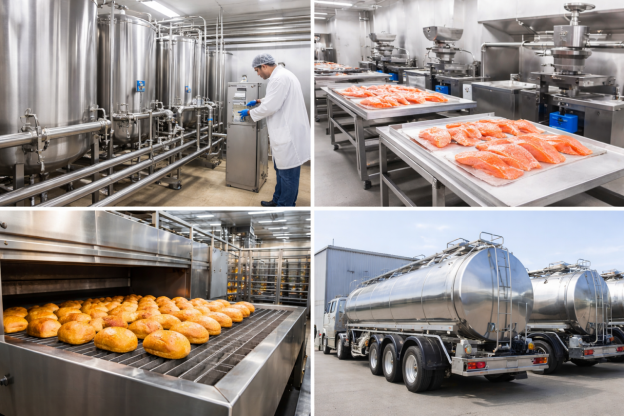
Hvert matgradsstål egner seg til et annet prosessmiljø, avhengig av klorideksponering, hyppighet av desinfisering og korrosjonsrisiko.
Meieri- og drikkeindustri
304L brukes mye til tanker, pasteuriseringsutstyr og standard prosesslinjer. 316L foretrekkes der det brukes aggressive rengjøringskjemikalier eller mer korrosive medier.
Kjøtt- og fiskeprosessering
316 eller 316L fungerer bedre i kloridrike miljøer, som f.eks. saltløsninger, blod og saltingssystemer.
Bakervarer og tørre matvarer
304 tilbyr en god balanse mellom hygiene, holdbarhet og kostnad for blandere, transportbånd og generell utstyr for kontakt med mat.
Oppbevaring og transport av mat
304 egner seg for mange standardtank- og transportapplikasjoner, mens 316 er bedre egnet for sure, salte eller eddikbaserte produkter.
Arbeidsflater og vasker
430 brukes ofte i miljøer med lavere korrosjonsbelastning der utseende og grunnleggende rengjørbarhet er viktigere enn avansert kloridmotstand.
Kutteri
420-martensittisk rustfritt stål velges for kniver og blader takket være sin hardhet og evne til å beholde skarphet etter varmebehandling.
Hvordan velge riktig matkvalitetsrustfritt stål
Ved valg av stålkvalitet bør du vurdere hele driftsmiljøet, ikke bare sammensetningen alene.
Korrosjonsmiljø
Salt, syrer, kloridholdige rengjøringsmidler og hyppigheten av vask påvirker valget av stålkvalitet.
Sveisekrav
Hvis utstyret skal sveises, er lavkarbon-L-kvaliteter ofte den sikrere valget.
Overflatefullføring
Selv den riktige legeringen kan ikke oppfylle hygienekravene hvis overflaten er for ru.
Leverandørsertifisering
Be om mottakstestertertifikater, sporbart dokumentasjon og etterlevelsesdokumenter.
Pris på matkvalitetsrustfritt stål (304 vs 316 vs 430)
Prisen avhenger av kvalitet, form, mengde og gjeldende legeringstillegg. Nikkel- og molybdeninnhold er viktige kostnadsdrevere.
430
Nikkel-fri ferrittisk kvalitet som ofte brukes der budsjettet er avgjørende og korrosjonseksponeringen er begrenset.
304 / 304L
Det vanligste valget for generelle matkontaktapplikasjoner, med en god balanse mellom verdi og ytelse.
316 / 316L
Høyere nikkel- og molybdeninnhold øker kostnaden, men forbedrer betydelig motstanden mot klorider.
Merk: Prisene endres i henhold til nikkelmarkedets vilkår, produktform og bestillingsvolum.
Konklusjon
De mest brukte matvaregraderte rustfrie stålsortene inkluderer 304, 304L, 316, 316L, 430 og 420. Mattrygghetsytelsen avhenger imidlertid ikke bare av legeringen selv, men også av overflatebehandling, sveisingsteknikk, prosessbetingelser og leverandørens sporbarehet.
Hvis du trenger rustfritt stål til matvareprosessering, farmasøytiske systemer, transporttanker eller sanitærkonstruksjoner, må du alltid velge stålsorten basert på den faktiske bruksmiljøet – ikke bare på det opprinnelige budsjettet.
OFTOSTILTE SPØRSMÅL
Er alt rustfritt stål matvaregradert?
Nei. Bare sortene med tilstrekkelig krominnhold, korrosjonsbestandighet og hygienisk overflate godtas vanligvis for kontakt med matvarer.
Hva er forskjellen mellom rustfritt stål 304 og 316 for matbruk?
316 inneholder molybden, som forbedrer motstanden mot klorider og salt. 304 er ideelt for generell bruk, mens 316 er bedre egnet for aggressive prosessmiljøer.
Hvilken overflatebehandling kreves for matvaregradert rustfritt stål?
Overflater som kommer i kontakt med mat forventes vanligvis å oppfylle Ra 0,8 μm eller bedre, noe som omtrent tilsvarer en overflatebehandling av type nr. 4.
Hvorfor anbefales 304L og 316L ofte for sveiste anlegg?
Den lavere karboninnholdet reduserer risikoen for sensitivering i nærheten av sveområder og støtter bedre korrosjonsbestandighet i hygieniske applikasjoner.
Få sertifisert matkvalitetsustavlastål fra Voyage Metal
Voyage Metal leverer rustfritt stål i form av plater, ark, stenger, rør og spoler med fabrikksprøvesertifikater, full sporbarehet og pålitelig industriell kvalitet for matprosessering og produksjon av hygienisk utstyr.
Be om eit gratis tilbud