
 EN
EN



Inconel 718 vs. 625: A Buyer’s Guide to Performance, Pricing, and Sourcing
Inconel 718 vs 625: In-Depth Comparison for Selection, Pricing & Reliable Procurement
In the realm of high-performance ni-based superalloys for B2B industrial applications, Inconel 718 and Inconel 625 stand as the industry workhorses, powering critical operations in aerospace, marine engineering, chemical processing and oil & gas sectors. For procurement managers and mechanical engineers, the challenge extends far beyond understanding technical specifications—it’s about partnering with a trusted Inconel supplier that delivers premium quality at competitive prices.
At Voyage Metal Co. Ltd., we bridge the gap between high-end material demand and cost control, specializing in genuine Inconel 718 and 625 with tailored processing solutions. This comprehensive guide breaks down the key differences between these two iconic alloys, explains the drivers behind Inconel 718 price and Inconel 625 pricing fluctuations, and reveals how custom cutting services can significantly reduce total project costs.
Quick Comparison: Inconel 718 vs Inconel 625
Inconel 718 and Inconel 625 are both nickel-based superalloys, but they are selected for different reasons. Inconel 718 is usually chosen for high strength and high-temperature mechanical performance, while Inconel 625 is preferred for corrosion resistance, chloride resistance, and easier welding.
| Item | Inconel 718 | Inconel 625 | Best Choice |
|---|---|---|---|
| Main advantage | High strength after heat treatment | Excellent corrosion resistance | Depends on service condition |
| Strength | Higher strength, especially after age hardening | Moderate to high strength | Inconel 718 |
| Corrosion resistance | Good corrosion resistance | Excellent resistance to chloride, acid and seawater environments | Inconel 625 |
| Weldability | Good, but heat treatment may be required depending on application | Excellent weldability for many fabricated parts | Inconel 625 |
| Common applications | Aerospace, turbines, fasteners, springs and high-strength parts | Marine, chemical processing, oil and gas, heat exchangers and piping | Depends on industry |
| Typical buying focus | Heat treatment, strength, AMS/ASTM standard and mechanical properties | Corrosion environment, welding, ASTM/ASME standard and MTC documents | Confirm project requirement |
For high-strength applications, buyers can check Inconel 718 sheet, plate, bar and pipe supply. For corrosion-resistant projects, review Inconel 625 sheet, plate, pipe and bar supply.
1. Core Technical Properties: Strength vs. Corrosion Resistance
Before evaluating Inconel pricing, it’s critical to ensure you’re paying for the exact performance your application requires—avoid overpaying for unneeded properties or risking equipment failure from misselection. The fundamental difference between Inconel 718 and 625 lies in their strengthening mechanisms, which define their unique performance profiles.
1.1 Inconel 718: The Precipitation Hardening Strength Expert
Core Mechanism: Precipitation (age) hardening, which forms fine strengthening phases within the alloy matrix through a precise, multi-stage heat treatment process.
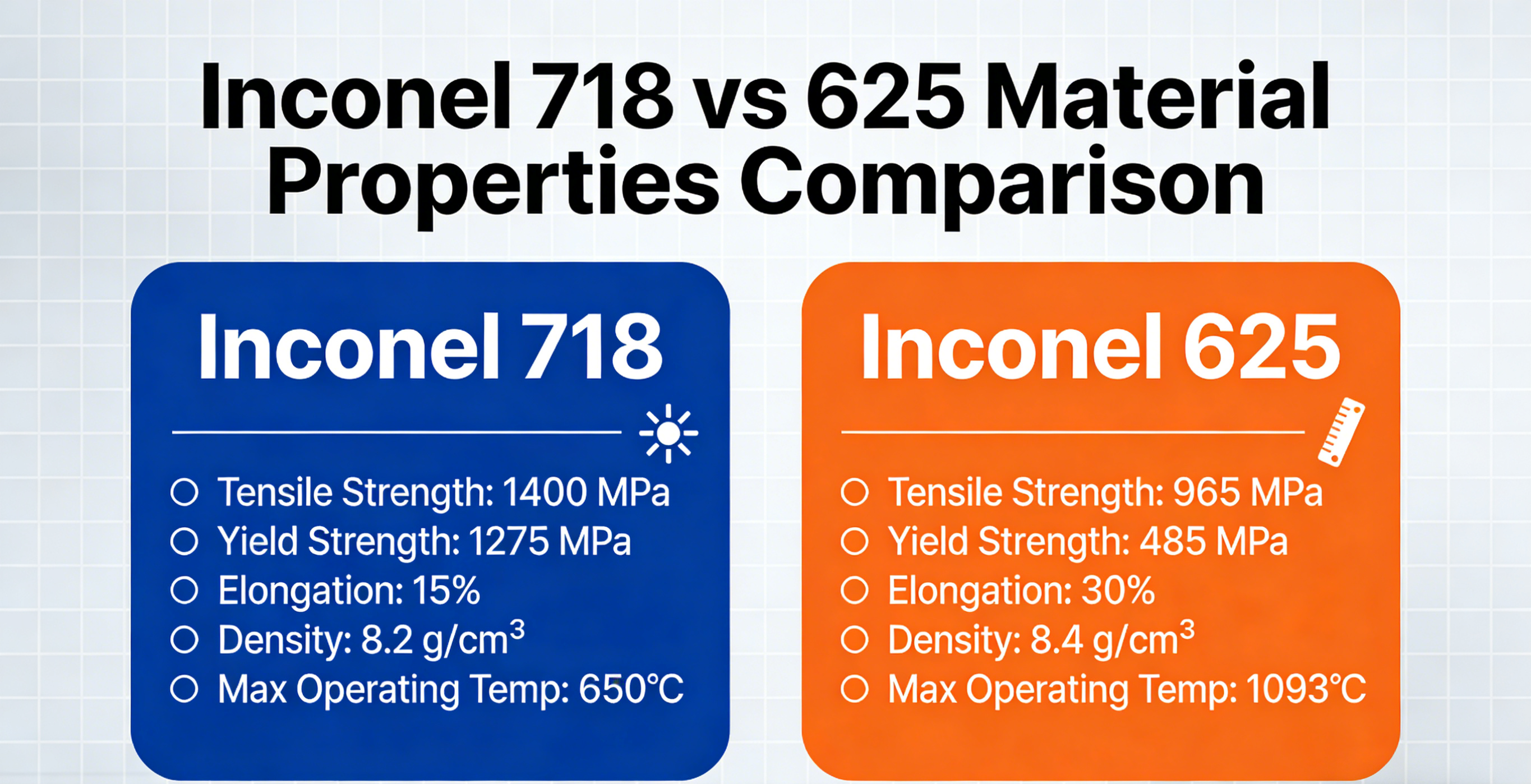
Key Performance: Retains exceptional yield strength, tensile strength and creep rupture resistance at temperatures up to 700°C (1300°F), with a room temperature yield strength of 1034 MPa. It also offers excellent fatigue and stress corrosion cracking resistance in high-stress environments.
Typical Applications: Aerospace turbine blades, gas turbine components, high-strength industrial fasteners, oil drilling high-pressure structural parts, and rocket engine components.
Selection Tip: Choose Inconel 718 if your components face extreme mechanical stress and high temperatures—this alloy is the optimal investment for high-performance structural applications.
1.2 Inconel 625: The Solution Strengthened Corrosion Champion
Core Mechanism: Solution strengthening, with no age-hardening phases. Its performance is driven by a high alloy content of molybdenum and niobium, which form a robust passive film on the surface.
Key Performance: Delivers unmatched corrosion resistance—impervious to pitting, crevice corrosion, intergranular corrosion and chloride-induced stress corrosion cracking. It also offers good high-temperature oxidation resistance, with a room temperature yield strength of 414 MPa for balanced mechanical performance.
Typical Applications: Marine engineering piping systems, desalination equipment, chemical processing reactors, acidic oil & gas production equipment, nuclear power cooling systems and offshore platform components.
Selection Tip: Inconel 625 is the gold standard for corrosive environments—ideal for projects in marine, chemical and oil & gas sectors where corrosion protection is the top priority.
How to Choose Between Inconel 718 and Inconel 625
The right choice depends on the working environment, mechanical load, temperature, corrosion risk, welding process, and certification requirements. Buyers should not choose only by price, because the wrong alloy can cause early failure, welding problems, or extra maintenance cost.
| Project Requirement | Recommended Alloy | Reason |
|---|---|---|
| High-strength bolts, fasteners, springs or turbine parts | Inconel 718 | Better age-hardened strength and mechanical performance. |
| Marine, offshore, chemical or chloride-rich environments | Inconel 625 | Better corrosion resistance and strong resistance to pitting and crevice corrosion. |
| Welded pipe systems or fabricated equipment | Inconel 625 | Excellent weldability and no age-hardening process required for many applications. |
| Aerospace and high-temperature structural components | Inconel 718 | Commonly used where strength and temperature performance are key requirements. |
| General corrosion-resistant nickel alloy parts | Inconel 625 | Good balance of corrosion resistance, fabrication performance and reliability. |
If price movement is a key concern, buyers can also review the latest Inconel price chart and 2026 buying guide before confirming the final material plan.
2. Why Do Inconel 718 and 625 Prices Fluctuate? 3 Core Drivers
When requesting quotes for Inconel 718 or 625, you’ll notice pricing is never fixed—variations exist across suppliers, product forms, delivery states and market conditions. As an experienced Inconel supplier with global supply chain expertise, we’ve identified the three non-negotiable factors that determine Inconel alloy pricing, helping you make informed procurement decisions.
2.1 Raw Material Market: LME Nickel Price is the Primary Indicator
Both Inconel 718 and 625 contain more than 50% nickel, making the LME (London Metal Exchange) nickel price the single biggest driver of their base material costs. Any spike in global nickel prices directly and immediately increases Inconel production costs.
Additionally, both alloys include high-value rare elements such as niobium and molybdenum, whose market price fluctuations further impact final pricing. Inconel 625 has a higher content of molybdenum and niobium, making it more sensitive to raw material price changes than 718.
2.2 Manufacturing Complexity: Heat Treatment Drives Processing Premiums
Different strengthening mechanisms result in vastly different manufacturing processes, with direct impacts on processing costs:
- Inconel 718 requires a complex, multi-step age hardening heat treatment to achieve its peak strength—adding extra production time, labor and technical expertise that increases costs.
- Inconel 625 features a simpler heat treatment process, but its complex alloy composition demands higher precision in melting and casting, driving up raw melting costs.
Delivery state also affects unit pricing. Age-hardened Inconel 718, for example, commands a higher price than solution-annealed 718 due to the additional heat treatment steps.
2.3 Product Form & Custom Specifications: Higher Customization = Higher Premium
Inconel 718 and 625 are available in various forms—round bars, plates, forgings, pipes and tubes—each with different processing complexities and price points. Forgings and custom shaped parts carry a significant premium due to their high melting and forging technical barriers, compared to standard bars and plates.
For the same product form, custom specifications cost more than standard sizes. Non-standard small plates, custom-length bars and precision-cut components require secondary processing of standard raw materials, with processing waste and labor costs reflected in the final quote.
3. How to Choose a Reliable Chinese Inconel Supplier for B2B Procurement
As a high-end industrial material, genuine Inconel 718 and 625 are critical to equipment safety and performance—and the market is filled with unqualified suppliers offering substandard products. For international B2B buyers, selecting a trusted Chinese Inconel supplier requires rigorous due diligence. Verify these three key points to ensure you receive authentic, high-quality materials that meet global standards.
3.1 Verify a Genuine MTC (Material Test Certificate) to EN 10204 3.1
A professional Inconel supplier must provide a Material Test Certificate compliant with EN 10204 3.1—the global gold standard for material quality documentation. This certificate must include detailed chemical composition analysis, mechanical property test results, heat treatment parameters and batch numbers for full traceability.
The MTC is the primary document to verify material authenticity and quality, eliminating the risk of counterfeit or substandard Inconel at the source.
3.2 Confirm Compliance with International ASTM Standards
Authentic Inconel 718 and 625 must adhere to globally recognized ASTM standards to ensure compatibility with international industrial applications:
- Inconel 718: Compliant with ASTM B637 for nickel-chromium-iron alloy bars, forgings and extrusions.
- Inconel 625: Compliant with ASTM B443 for sheets, plates and strips, and ASTM B446 for bars, forgings and extrusions.
For aerospace, nuclear power and other high-end applications, buyers should confirm whether additional project-specific standards, third-party inspection, or customer-approved supplier requirements apply.
3.3 Evaluate Value-Added Processing Capabilities
A top-tier Inconel supplier is more than a material shipper—they are a one-stop procurement solution partner. Prioritize suppliers with in-house custom precision cutting, near-net shape machining, bending and forging capabilities, and the ability to process materials to your exact drawing specifications.
Suppliers with value-added processing capabilities eliminate the need for secondary downstream processing, reducing your labor, tooling and transportation costs while boosting overall procurement efficiency.
4. How Voyage Metal Co. Ltd. Optimizes Your Inconel Procurement Budget
Most buyers focus solely on the per kg/lb unit price of Inconel—yet the hidden costs of material waste, downstream machining time and tool wear often make up the largest portion of total project costs. At Voyage Metal Co. Ltd., we address these hidden costs head-on with tailored processing services, delivering genuine Inconel 718 and 625 at a true total cost of ownership advantage.
4.1 Custom Precision Cutting: Pay Only for What You Use
Inconel alloys are high-investment materials—and purchasing standard full-size plates or bars for custom-sized components means you’re paying for expensive scrap. The solution is on-demand custom cutting for Inconel 718 and 625, processing plates, bars and tubes to your exact length, size and shape according to your technical drawings.
Result: You pay only for the material you actually use, with no waste costs. Reduced scrap volume also cuts your international shipping costs and helps avoid storing unused material.
4.2 Near-Net Shape Delivery: Reduce Machining Time & Tool Wear
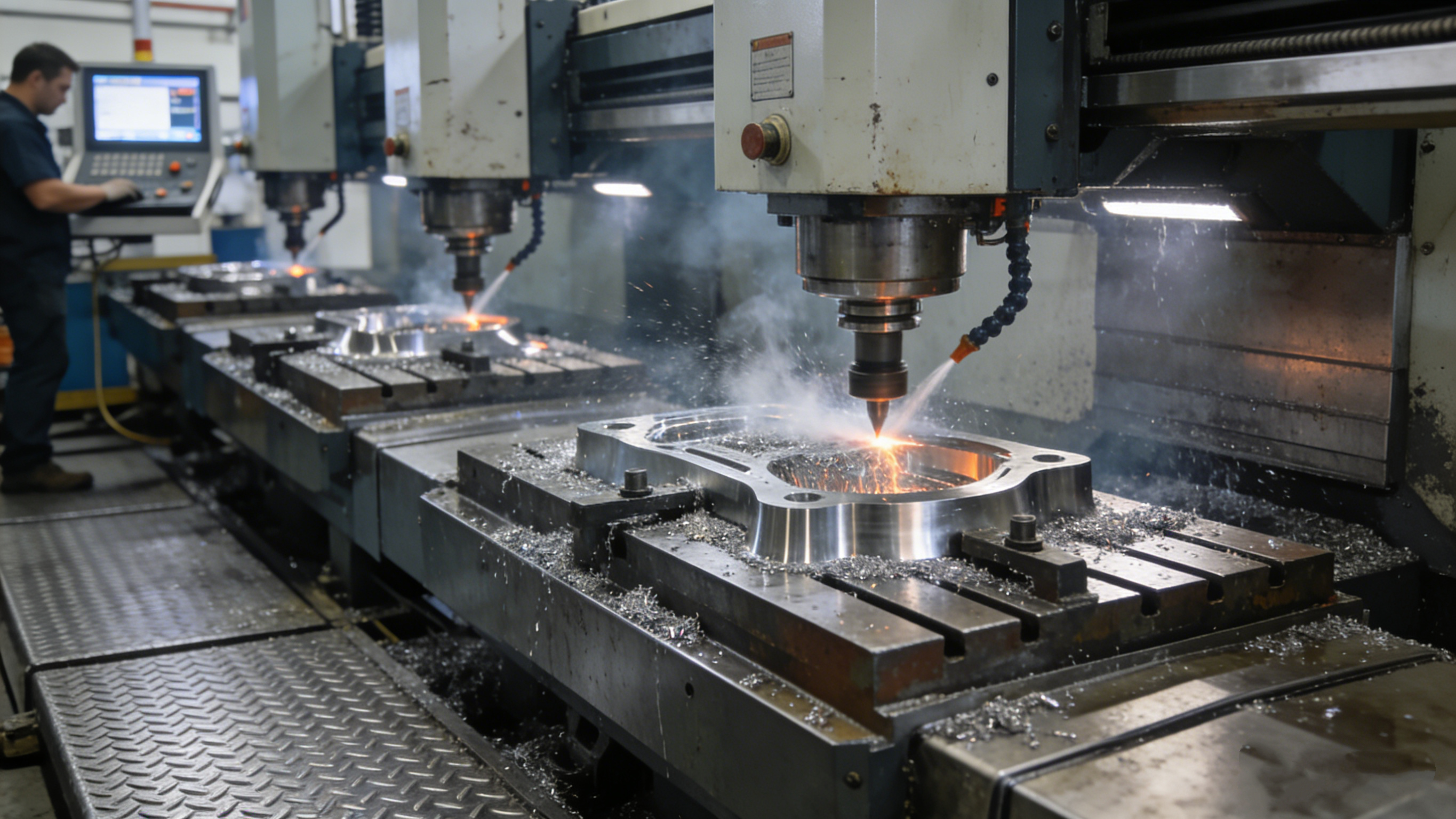
Inconel is a notoriously difficult-to-machine alloy—standard raw materials require extensive cutting, milling and drilling, which is time-consuming and causes severe tool wear. Near-net shape delivery processes your Inconel material to dimensions close to the final part size before shipment.
Result: Your workshop skips rough machining and moves directly to finish processing, reducing production lead times and tool wear. This can deliver substantial cost savings for Inconel machining projects.
5. Inconel 718 vs 625: Key Properties Comparison Table
| Key Property | Inconel 718 | Inconel 625 |
|---|---|---|
| Strengthening Mechanism | Precipitation (Age) Hardening | Solution Strengthening |
| Room Temp Yield Strength | 1034 MPa | 414 MPa |
| Core Strength | High temperature strength, creep resistance and fatigue resistance | Corrosion resistance, chloride resistance and fabrication performance |
| Corrosion Resistance | Excellent | Exceptional for many chloride and chemical environments |
| Machinability | Challenging because of high hardness and strength | Moderate, with balanced mechanical and corrosion properties |
| Pricing Level | High, often affected by heat treatment and mechanical testing costs | High, often affected by molybdenum and niobium raw material costs |
| Typical Applications | Aerospace, gas turbines, high-strength fasteners and springs | Marine engineering, chemical processing, desalination and oil & gas |
| Optimal Procurement Strategy | Confirm heat treatment, standard, MTC and custom cutting requirements | Confirm corrosion environment, product form, MTC and fabrication needs |
How to Buy Inconel 718 or 625 from a Supplier
For B2B purchasing, buyers should confirm more than the alloy name. Product form, size, standard, heat treatment condition, testing requirement, and documentation can all affect price and delivery time.
| Information to Confirm | Example |
|---|---|
| Alloy grade | Inconel 718, Alloy 718, UNS N07718, Inconel 625, Alloy 625, UNS N06625 |
| Product form | Sheet, plate, pipe, tube, bar, wire, strip or forging |
| Size | Thickness, width, length, outside diameter, wall thickness or bar diameter |
| Standard | ASTM, ASME, AMS, UNS, EN or customer project specification |
| Condition | Annealed, solution treated, aged, cold drawn or as required |
| Documents | Mill test certificate, heat number traceability, chemical report, mechanical test report or third-party inspection |
| Delivery requirement | Quantity, destination port, packing method and expected lead time |
Request Inconel 718 or 625 for Your Project
Send your required grade, product form, size, standard, quantity and destination port. Voyage Metal can provide nickel alloy materials with mill test certificates, heat number traceability and export packing.
6. Conclusion: Partner with the Right Inconel Supplier for True Value
Whether you’re sourcing Inconel 718 for aerospace contracts or Inconel 625 for marine engineering projects, choosing the right strategic supplier is the single most important step to control costs, ensure quality and meet your project deadlines.
At Voyage Metal Co. Ltd., we combine a stable global supply chain of genuine ASTM/EN-compliant Inconel 718 and 625 with tailored value-added processing—custom cutting, near-net shape machining and precision finishing—to optimize your total procurement costs. We are not just an Inconel supplier; we are your trusted ni-based superalloy procurement solution partner for global B2B projects.
Get Your Competitive Custom Inconel Quote Today
Send us your material specifications, technical drawings or project requirements, and our professional engineering team will create a tailored procurement solution for you—including a comprehensive quote with custom cutting and processing services. We deliver genuine Inconel 718 and 625 that meets global standards, with a total cost approach that supports your project success.
Contact us now for your Inconel quote:
About Voyage Metal Co. Ltd.
Voyage Metal Co. Ltd. is a leading B2B supplier of high-performance ni-based superalloys, including Inconel 718, Inconel 625, Hastelloy and Monel. With a focus on quality, reliability and cost optimization, we serve global customers in aerospace, marine engineering, chemical processing, oil & gas and nuclear power sectors. Our core strengths include genuine material supply, custom precision processing, near-net shape delivery and one-stop procurement solutions—all designed to help our partners reduce total project costs and boost operational efficiency.