
 EN
EN




एल्यूमीनियम फॉयल की मोटाई क्यों महत्वपूर्ण है
औद्योगिक उपयोग में, एल्यूमीनियम फॉयल की मोटाई केवल एक विशिष्टता पत्रक पर एक संख्या नहीं है। यह पदार्थ के परिवर्तन, पैकिंग, आकार देना, सीलिंग, लपेटना, परिवहन और अंतिम उपयोग के दौरान उसके प्रदर्शन को प्रभावित करती है।
ऑस्ट्रेलिया में, इसी सामग्री को अक्सर इस प्रकार लिखा जाता है एल्यूमिनियम फॉयल । अमेरिका-शैली के खोज शब्दों में, खरीदार अक्सर एल्युमीनियम फॉयल गेज का उपयोग कर सकते हैं। वैश्विक आरएफक्यू (RFQ) के लिए, सबसे सुरक्षित दृष्टिकोण वास्तविक मोटाई को माइक्रोन या मिलीमीटर में पुष्टि करना है।
अवरोध प्रदर्शन
मोटाई नमी, ऑक्सीजन, प्रकाश, गंध और वसा के खिलाफ सुरक्षा को प्रभावित कर सकती है।
आकारण
उचित मोटाई फॉयल को बिना दरार के मोड़ने, दबाने, लपेटने या आकार देने में सहायता करती है।
पिनहोल नियंत्रण
बहुत पतली फॉयल को संवेदनशील पैकेजिंग के लिए अधिक कठोर पिनहोल नियंत्रण की आवश्यकता हो सकती है।
लाइन स्थिरता
गलत मोटाई सिकुड़न, फटना, डाउनटाइम या अपव्यय दर में वृद्धि कर सकती है।
रोल का वजन
मोटी फॉयल रोल के वजन, माल ढुलाई के वजन और हैंडलिंग लोड को बढ़ाती है।
लैंडेड लागत
मोटाई सामग्री की लागत, उत्पादन दक्षता, पैकिंग लागत और माल ढुलाई लागत को प्रभावित करती है।
एक ही मोटाई की दो फॉयल रोल अलग-अलग प्रदर्शन कर सकती हैं, यदि उनकी मिश्र धातु, ताप संसाधन (टेम्पर), सतह की स्थिति, लपेटने की गुणवत्ता या छिद्रों का स्तर अलग हो।
सामान्य एल्यूमीनियम फॉयल मोटाई इकाइयाँ
वैश्विक खरीदार आरएफक्यू में विभिन्न इकाइयों का उपयोग करते हैं। ऑस्ट्रेलियाई और कई अंतर्राष्ट्रीय खरीदार आमतौर पर माइक्रॉन या मिलीमीटर को प्राथमिकता देते हैं। कुछ अमेरिकी शैली के दस्तावेज़ इंच, मिल्स या गेज का उपयोग कर सकते हैं। भ्रम से बचने के लिए, वास्तविक मोटाई हमेशा माइक्रॉन या मिमी में पुष्टि की जानी चाहिए।
| इकाई | अर्थ | आम उपयोग | खरीदार के लिए सुझाव |
|---|---|---|---|
| माइक्रॉन / µm | 1 माइक्रॉन = 0.001 मिमी | एल्यूमीनियम फॉयल आरएफक्यू में आम | फॉयल की मोटाई के लिए स्पष्ट और व्यापक रूप से समझी जाने वाली इकाई |
| मिलीमीटर / मिमी | मापन की मेट्रिक इकाई | तकनीकी आरेख और सामग्री विनिर्देश | औपचारिक खरीद आदेशों के लिए उपयोगी |
| MIL | 1 मिल = 0.001 इंच | कुछ अमेरिकी-शैली के औद्योगिक विनिर्देश | मिल को मिलीमीटर के साथ भ्रमित न करें |
| इंच | इंपीरियल मोटाई इकाई | कुछ निर्यात दस्तावेज़ | आदेश देने से पहले मिमी या माइक्रॉन में बदलें |
| गेज | उद्योग का संक्षिप्त रूप | खरीदारों के साथ बातचीत और खोज में उपयोग किया जाता है | वास्तविक मोटाई की सदैव पुष्टि करें |
अनुप्रयोग के आधार पर एल्यूमीनियम फॉयल की मोटाई चार्ट
नीचे दिए गए श्रेणियाँ केवल व्यावहारिक संदर्भ श्रेणियाँ हैं। अंतिम मोटाई को उत्पाद संरचना, मशीन प्रक्रिया, ग्राहक मानक और परीक्षण परिणाम के अनुसार निर्धारित किया जाना चाहिए।
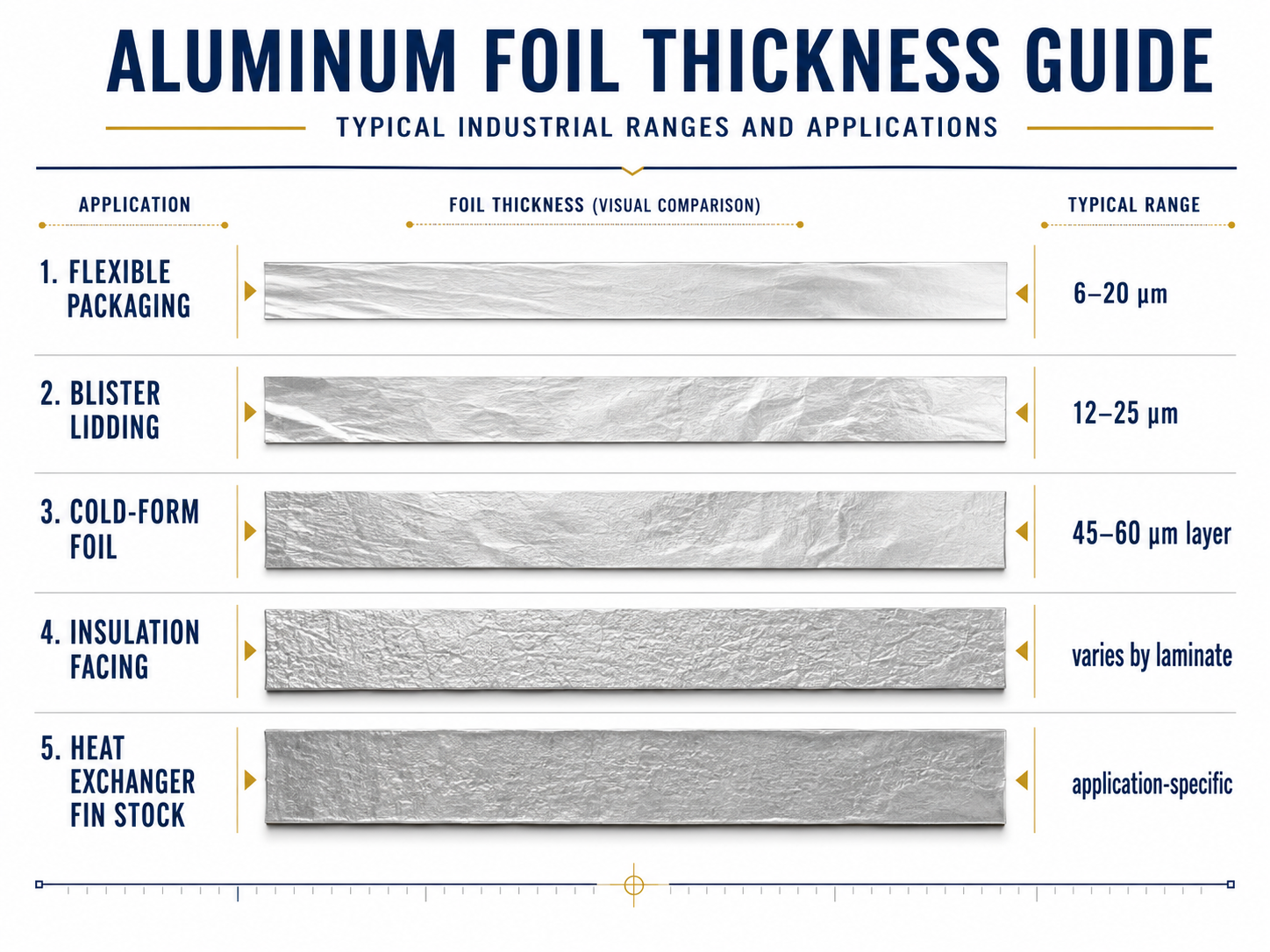
औद्योगिक अनुप्रयोगों के अनुसार मोटाई सीमा
कोई एकल एल्युमीनियम फॉयल की मोटाई नहीं है जो प्रत्येक औद्योगिक उपयोग के लिए उपयुक्त हो। पैकेजिंग, इन्सुलेशन, इलेक्ट्रॉनिक्स और ऊष्मा विनिमय अनुप्रयोगों के लिए सभी भिन्न-भिन्न सामग्री व्यवहार की आवश्यकता होती है।
| उपयोग | सामान्य मोटाई पर ध्यान केंद्रित | मुख्य खरीद संबंधी चिंताएँ | पुष्टि करने के लिए क्या |
|---|---|---|---|
| लचीली पैकेजिंग | पतली से हल्के-गेज फॉयल; अक्सर संरचना के आधार पर लगभग 6–20 माइक्रॉन | बैरियर प्रदर्शन, पिनहोल, लैमिनेशन की गुणवत्ता | मोटाई सहिष्णुता, सतह की सफाई, चिपकने वाले पदार्थ की संगतता |
| खाद्य कंटेनर और ढक्कन | ट्रे या ढक्कन के डिज़ाइन के आधार पर मध्यम से भारी फॉयल | आकृति निर्माण, कठोरता, सीलिंग, खाद्य संपर्क दस्तावेज़ | टेम्पर, आकृति निर्माण परीक्षण, कोटिंग या सीलिंग परत |
| फार्मेसीटिकल ब्लिस्टर फॉयल | नियंत्रित पतली फॉयल; आमतौर पर लिडिंग फॉयल के लिए लगभग 12–25 माइक्रोन | साफ सतह, पिनहोल नियंत्रण, सीलिंग स्थिरता | COA, MTC, कोटिंग विवरण, ग्राहक मानक |
| कोल्ड-फॉर्म पैकेजिंग | भारी फॉयल संरचना; एल्युमीनियम परत अक्सर लगभग 45–60 माइक्रोन होती है | आकृति निर्माण की गहराई, बैरियर सुरक्षा, दरार प्रतिरोध | पूर्ण लैमिनेट संरचना, आकृति निर्माण प्रदर्शन, नमूना परीक्षण |
| इन्सुलेशन फॉयल | बैकिंग और लैमिनेट डिज़ाइन के आधार पर पतली से मध्यम मोटाई की फॉयल | ऊष्मा प्रतिबिंबन, बंधन, नमी प्रतिरोध | बैकिंग सामग्री, चिपकने की शक्ति, रोल की चौड़ाई |
| केबल शील्डिंग | पतली तकनीकी फॉयल | चालकता, किनारे की गुणवत्ता, बर्र नियंत्रण | काटने की गुणवत्ता, सतह की सफाई, रोल सुरक्षा |
| हीट एक्सचेंजर फिन स्टॉक | अनुप्रयोग-विशिष्ट मोटाई | समतलता, आकृति निर्माण, कोटिंग, संक्षारण प्रतिरोध | मिश्र धातु, विशिष्टता, लेपन, मोटाई और चौड़ाई की सहनशीलता |
पतली फॉयल बनाम मोटी फॉयल: क्या बदलाव आता है?
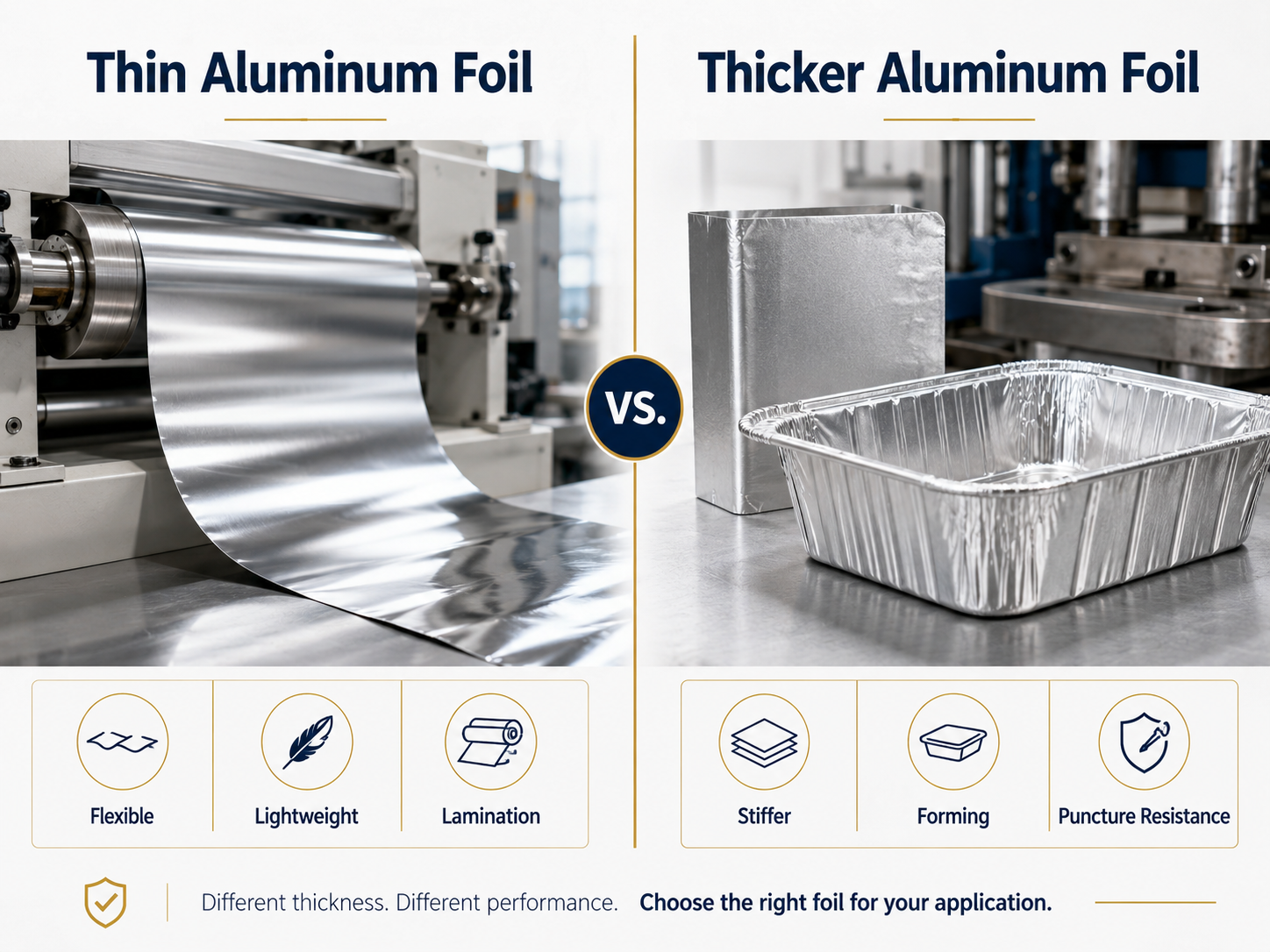
फॉयल की मोटाई का चयन एक संतुलन है। पतली फॉयल भार कम कर सकती है और लचीलापन में सुधार कर सकती है, जबकि मोटी फॉयल कठोरता और छेद प्रतिरोध में सुधार कर सकती है। सही उत्तर प्रक्रिया और उत्पाद पर निर्भर करता है।
पतली एल्युमीनियम फॉयल
- प्रति वर्ग मीटर कम सामग्री भार
- लैमिनेशन और लपेटने के लिए अच्छा लचीलापन
- बैरियर पैकेजिंग और संयोजित संरचनाओं के लिए उपयोगी
- झुर्रियों, हैंडलिंग के कारण क्षति और पिनहोल्स के प्रति अधिक संवेदनशील
- उच्च-गति लाइनों पर दृढ़ प्रक्रिया नियंत्रण की आवश्यकता हो सकती है
मोटी एल्युमीनियम फॉयल
- बेहतर दृढ़ता और आकार नियंत्रण
- कई अनुप्रयोगों में उच्च विदारण और फटने का प्रतिरोध
- कंटेनर, आकार दिए गए भागों, इन्सुलेशन फेसिंग और भारी उपयोग के लिए उपयोगी
- उच्च रोल वजन और सामग्री लागत
- यदि टेम्पर उपयुक्त नहीं है तो लैमिनेट, मोड़ने या आकार देना कठिन हो सकता है
मोटाई एकमात्र कारक नहीं है
एक उपयोगी एल्यूमीनियम फॉयल मोटाई मार्गदर्शिका में हमेशा मोटाई के अतिरिक्त अन्य कारक शामिल होने चाहिए। समान मोटाई अलग-अलग मिश्र धातु, टेम्पर, सतह का फिनिश या रोल की स्थिति के कारण अलग-अलग तरीके से व्यवहार कर सकती है।
- एल्यूमिनियम मिश्रण: ताकत, आकार देने की क्षमता और संक्षारण प्रतिरोध को प्रभावित करता है।
- तापक्रमः कोमलता, दृढ़ता, मोड़ने और आकार देने को प्रभावित करता है।
- सतह की गुणवत्ता: मुद्रण, कोटिंग, सीलिंग, लैमिनेशन और उपस्थिति को प्रभावित करता है।
- छोटे छिद्र का स्तर: बैरियर पैकेजिंग और संवेदनशील उत्पादों के लिए महत्वपूर्ण है।
- चौड़ाई सहिष्णुता: यह परिवर्तन गति और किनारे नियंत्रण को प्रभावित करती है।
- रोल वाइंडिंग: खराब वाइंडिंग से मशीन का डाउनटाइम और अपव्यय हो सकता है।
- दस्तावेज: कुछ खरीदार COA, MTC, भोजन-संपर्क दस्तावेज़, RoHS, REACH या ग्राहक-विशिष्ट रिपोर्ट की आवश्यकता रखते हैं।
जो खरीदार व्यापक सामग्री विकल्पों की आवश्यकता रखते हैं, वे एल्युमिनियम उत्पाद और संबंधित एल्युमीनियम कॉइल voyage Metal पर विकल्पों की समीक्षा कर सकते हैं।
सही एल्युमीनियम फॉयल मोटाई कैसे चुनें
एक व्यावहारिक चयन प्रक्रिया अंतिम उत्पाद से शुरू होती है, मूल्य सूची से नहीं। आपूर्तिकर्ता को उपयुक्त मोटाई की सिफारिश करने से पहले अनुप्रयोग को समझना आवश्यक है।
उपयोग को परिभाषित करें
पैकेजिंग, ऊष्मा-रोधन, इलेक्ट्रॉनिक्स, ऊष्मा विनिमय, या सामान्य औद्योगिक उपयोग की पुष्टि करें।
प्रक्रिया की जाँच करें
लैमिनेशन, कोटिंग, प्रिंटिंग, सीलिंग, फॉर्मिंग, स्लिटिंग, या व्रैपिंग की आवश्यकताओं की सूची बनाएँ।
प्रदर्शन निर्धारित करें
बैरियर, दृढ़ता, फॉर्मिंग, शक्ति, या ऊष्मा प्रतिबिंबन की आवश्यकताओं का निर्णय लें।
विशिष्टता की पुष्टि करें
मिश्र धातु, ताप स्थिति, मोटाई, चौड़ाई, सहनशीलता और सतह परिष्करण का चयन करें।
रोल की जाँच करें
रोल आईडी, रोल ओडी, रोल भार, किनारे की गुणवत्ता और वाइंडिंग स्थिति की पुष्टि करें।
परीक्षण नमूना
जब अनुप्रयोग नया हो या तकनीकी हो, तो बड़े ऑर्डर से पहले नमूनों का परीक्षण करें।
खरीदारों द्वारा शामिल करने योग्य मुख्य आरएफक्यू विवरण
एक अच्छी आरएफक्यू ईमेल के माध्यम से बार-बार संवाद को कम करती है और आपूर्तिकर्ता को अधिक सटीक उद्धरण देने में सहायता करती है। यह विभिन्न प्रस्तावों की तुलना करने को भी आसान बनाती है।
| RFQ आइटम | क्यों मायने रखता है | उदाहरण विवरण |
|---|---|---|
| उपयोग | सही मोटाई, मिश्र धातु, टेम्पर और सतह की आवश्यकताओं को परिभाषित करता है। | लचीले पैकेजिंग, इन्सुलेशन फेसिंग, केबल शील्डिंग या फिन स्टॉक |
| मोटाई | बैरियर, ताकत, आकार देने और लागत को नियंत्रित करता है। | 12 माइक्रॉन, 18 माइक्रॉन, 0.03 मिमी, या खरीदार द्वारा निर्दिष्ट सीमा |
| सहनशीलता | उत्पादन के दौरान मशीन और गुणवत्ता संबंधी समस्याओं को रोकता है। | स्वीकार्य मोटाई और चौड़ाई सहिष्णुता की पुष्टि करें |
| मिश्र धातु और टेम्पर | कठोरता, लचीलापन, आकृति निर्माण और प्रसंस्करण व्यवहार को प्रभावित करता है। | 1xxx, 3xxx, 8xxx श्रृंखला; मुलायम, अर्ध-कठोर या कठोर टेम्पर |
| रोल विशिष्टताएँ | रोल का आकार खरीदार के उपकरण और हैंडलिंग विधि के अनुकूल होना चाहिए। | रोल आईडी, रोल ओडी, रोल वजन, चौड़ाई और किनारे की गुणवत्ता |
| दस्तावेज़ | कुछ परियोजनाओं के लिए गुणवत्ता और अनुपालन अभिलेखों की आवश्यकता होती है। | COA, MTC, खाद्य संपर्क दस्तावेज़, RoHS, REACH या ग्राहक-विशिष्ट रिपोर्टें |
| पैकिंग | निर्यात पैकिंग फॉयल को नमी और परिवहन के दौरान होने वाले क्षति से बचाती है। | लकड़ी का केस, पैलेट सुरक्षा, नमी अवरोधक, निर्यात चिह्न |
| डिलीवरी विवरण | प्रमुख समय और भूमि लागत का अनुमान लगाने में सहायता करता है। | गंतव्य देश, बंदरगाह, आदेश मात्रा और रिलीज अनुसूची |
एल्यूमीनियम फॉयल की मोटाई चुनते समय सामान्य त्रुटियाँ
कई फॉयल संबंधी समस्याएँ उत्पादन से पहले ही शुरू हो जाती हैं। अस्पष्ट मोटाई का अनुरोध गलत सामग्री, अधिक अपव्यय या विलंबित डिलीवरी का कारण बन सकता है।
| सामान्य गलती | संभावित जोखिम | उत्तम प्रथा |
|---|---|---|
| केवल “गेज” का उपयोग करना | जोखिम विभिन्न बाजारों में गेज की व्याख्या अलग-अलग की जा सकती है। | बेहतर वास्तविक मोटाई माइक्रोन या मिमी में निर्दिष्ट करें। |
| केवल सबसे कम मूल्य के आधार पर खरीदना | जोखिम खराब सहनशीलता, कमजोर रोल गुणवत्ता या उच्च उत्पादन अपव्यय। | बेहतर मूल्य की तुलना सहनशीलता, गुणवत्ता, दस्तावेज़ों और पैकिंग के साथ करें। |
| टेम्पर को अनदेखा करना | जोखिम फॉयल फट सकती है, झुर्रियाँ आ सकती हैं या आकार धारण करने में विफल हो सकती है। | बेहतर तापमान को आकृति निर्माण, मोड़ना, सीलिंग या लैमिनेशन की आवश्यकताओं के अनुसार समायोजित करें। |
| नमूना चलाने को छोड़ना | जोखिम बल्क फॉयल खरीदार की मशीन या चिपकाने वाली प्रणाली के लिए उपयुक्त नहीं हो सकती है। | बेहतर बड़ी मात्रा में ऑर्डर से पहले नमूना रोल का परीक्षण करें। |
| रोल विशिष्टताओं की पुष्टि न करना | जोखिम रोल का आकार उत्पादन उपकरण में फिट नहीं हो सकता है। | बेहतर रोल की आईडी, बाहरी व्यास (OD), भार, चौड़ाई और वाइंडिंग की गुणवत्ता की पुष्टि करें। |
| निर्यात पैकिंग को भूलना | जोखिम नमी या हैंडलिंग के कारण फॉयल की सतह और रोल के किनारों को नुकसान पहुँच सकता है। | बेहतर खरीद आदेश (PO) में निर्यात पैकिंग और नमी सुरक्षा का विवरण दें। |
वैश्विक खरीदारों के लिए व्यावहारिक आरएफक्यू चेकलिस्ट
एक स्पष्ट एल्युमीनियम फॉयल आरएफक्यू में तकनीकी आवश्यकताओं के साथ-साथ वाणिज्यिक विवरण शामिल होने चाहिए। इससे आपूर्तिकर्ता उपलब्धता की जाँच कर सकते हैं, नेतृत्व समय का अनुमान लगा सकते हैं और अधिक सटीक उद्धरण दे सकते हैं।
उद्योगिक पैकेजिंग, विद्युत की विशिष्ट आवश्यकताओं, इलेक्ट्रॉनिक्स, ताप-विनिमय या सामान्य विनिर्माण के लिए फॉयल की खरीद करने वाले खरीदार Voyage Metal के माध्यम से एल्युमीनियम फॉयल के विकल्पों की समीक्षा कर सकते हैं संबंधित सामग्री जैसे 3003 एल्युमीनियम कॉइल इन फॉयल के अतिरिक्त कुंडल उत्पादों की आवश्यकता वाली परियोजनाओं के लिए भी उपयोगी हो सकती हैं।
संक्षिप्त सारांश
एल्युमीनियम फॉयल की मोटाई का चयन केवल कीमत या गेज नाम के आधार पर नहीं, बल्कि अनुप्रयोग के आधार पर किया जाना चाहिए। लचीले पैकेजिंग के लिए पर्याप्त बैरियर और पिनहोल नियंत्रण के साथ पतली फॉयल की आवश्यकता हो सकती है, जबकि कंटेनर, विद्युत की विशिष्ट आवश्यकताओं, ताप-विनिमय और तकनीकी उपयोगों के लिए विभिन्न मोटाई, टेम्पर और सतह की आवश्यकताएँ हो सकती हैं।
औद्योगिक खरीदारों के लिए, एक स्पष्ट RFQ में माइक्रोन या मिमी में मोटाई, मिश्र धातु, टेम्पर, सहनशीलता, रोल का आकार, सतह की आवश्यकताएँ, दस्तावेज़, पैकिंग विधि और डिलीवरी का विवरण शामिल होना चाहिए। इससे खरीद के जोखिम को कम करने और उत्पादन की स्थिरता में सुधार करने में सहायता मिलती है।
औद्योगिक उपयोग के लिए एल्युमीनियम फॉयल की आवश्यकता है?
खरीदार जो पैकेजिंग, इन्सुलेशन, इलेक्ट्रॉनिक्स, हीट एक्सचेंज या सामान्य औद्योगिक परियोजनाओं के लिए एल्यूमीनियम फॉयल की आवश्यकता रखते हैं, वे voyagemetal.com के माध्यम से सामग्री विकल्पों, विशिष्टताओं और B2B सोर्सिंग सहायता की समीक्षा कर सकते हैं।
एल्यूमीनियम फॉयल की मोटाई के बारे में अक्सर पूछे जाने वाले प्रश्न
औद्योगिक उपयोग के लिए एल्यूमीनियम फॉयल की सामान्य मोटाई क्या है?
सभी औद्योगिक उपयोगों के लिए एकल सामान्य मोटाई नहीं है। लचीले पैकेजिंग, इन्सुलेशन, केबल शील्डिंग, खाद्य कंटेनर, फार्मास्यूटिकल पैकेजिंग और हीट एक्सचेंज अनुप्रयोगों के लिए विभिन्न मोटाई सीमाएँ आवश्यक हो सकती हैं। खरीदारों को माइक्रॉन या मिमी में वास्तविक मोटाई की पुष्टि करनी चाहिए।
एल्यूमीनियम फॉयल की मोटाई पैकेजिंग प्रदर्शन को क्यों प्रभावित करती है?
मोटाई बैरियर सुरक्षा, पिनहोल के जोखिम, सीलिंग, लैमिनेशन, फॉर्मिंग, मशीन स्थिरता और स्क्रैप दर को प्रभावित कर सकती है। इसे मिश्र धातु, टेम्पर और सतह की गुणवत्ता के साथ साथ चुना जाना चाहिए।
खरीदार एल्यूमीनियम फॉयल की मोटाई को माइक्रॉन से मिमी में कैसे बदल सकते हैं?
एक माइक्रॉन 0.001 मिमी के बराबर होता है। उदाहरण के लिए, 10 माइक्रॉन 0.010 मिमी के बराबर होता है, और 25 माइक्रॉन 0.025 मिमी के बराबर होता है।
एल्युमिनियम फॉयल के गेज और मोटाई में क्या अंतर है?
गेज एक संक्षिप्त शब्द है जो विभिन्न बाजारों में अस्पष्ट हो सकता है। मोटाई वास्तविक मापी गई मात्रा है, जिसे आमतौर पर माइक्रॉन, मिमी, इंच या मिल्स में लिखा जाता है। खरीदारों को केवल गेज पर निर्भर नहीं रहना चाहिए, बल्कि वास्तविक मोटाई की पुष्टि करनी चाहिए।
लैमिनेशन के लिए खरीदारों को एल्युमिनियम फॉयल की मोटाई कैसे चुननी चाहिए?
खरीदारों को लैमिनेशन के लिए फॉयल की मोटाई चुनने से पहले बैरियर की आवश्यकताओं, लचीलापन, पिनहोल नियंत्रण, एडहेसिव संगतता, मशीन की गति, रोल की गुणवत्ता और अंतिम पैकेज संरचना की जाँच करनी चाहिए।
बड़े पैमाने पर एल्युमिनियम फॉयल के ऑर्डर से पहले नमूनों का परीक्षण क्यों किया जाना चाहिए?
नमूना परीक्षण से मशीन संगतता, आकृति निर्माण, सीलिंग, लैमिनेशन, सतह की गुणवत्ता, पिनहोल का स्तर और रोल हैंडलिंग की पुष्टि करने में सहायता मिलती है, जो बड़े ऑर्डर के आदेश से पहले की जाती है।