
 EN
EN




ហេតុអ្វីបានជាប្រវែងនៃសន្លឹកអាលុយមីញ៉ូមមានសារសំខាន់
ក្នុងការប្រើប្រាស់ផ្នែកឧស្សាហកម្ម ប្រវែងនៃសន្លឹកអាលុយមីញ៉ូមមិនមែនគ្រាន់តែជាលេខមួយនៅលើបញ្ជីបច្ចេកទេសទេ។ វាប៉ះពាល់ដល់ប្រសិទ្ធភាពនៃសម្ភារៈក្នុងការបំប្លែង ការវ៉ែក ការបង្កើត ការបិទ ការប៉ុវ ការដឹកជញ្ជូន និងការប្រើប្រាស់ចុងក្រាយ។
នៅប្រទេសអូស្ត្រាលី សម្ភារៈតែមួយនេះជាញឹកញាប់សរសេរថា សន្លឹកអាលុយមីញ៉ូម ។ ក្នុងពាក្យស្វែងរកបែបអាមេរិកាំង អ្នកទិញអាចប្រើ កម្រាស់សន្លឹកអាលុយមីញ៉ូម ។ សម្រាប់ការស្នើសុំបញ្ជាទិញជាសកល វិធីដែលមានសុវត្ថិភាពបំផុតគឺបញ្ជាក់ប្រវែងជាក់ស្តែងជាមីក្រូន ឬមីលីម៉ែត្រ។
សមត្ថភាពរារា
សំណុំកម្រាស់អាចប៉ះពាល់ដល់ការការពារទើបបានប្រឆាំងនឹងសំណើម អុកស៊ីសែន ពន្លឺ ក្លិន និងខ្ទើយ។
ភាពងាយបត់
កម្រាស់ត្រឹមត្រូវជួយឱ្យសំណុំអាចបត់ ចុច ហុះ ឬរៀបរាប់ដោយគ្មានការប៉ះទង្គិច។
ការគ្រប់គ្រងរន្ធតូចៗ
សំណុំដែលប្រើប្រាស់កម្រាស់បានតិចពេក ប្រហែលជាត្រូវការការគ្រប់គ្រងរន្ធតូចៗឱ្យកាន់តែតឹងរ៉ឹងសម្រាប់ការហុះប៉ះពាល់ដែលមានភាពរ៉ាប់រង។
ស្ថេរភាពនៅលើបន្ទាត់ផលិត
កម្រាស់មិនត្រឹមត្រូវអាចបណ្តាលឱ្យមានការធ្វើឱ្យមានជើងឯក ការខូច ការឈប់ផលិត ឬអត្រាប៉ះពាល់ខូច។
ទម្ងន់រលក
សំណុំដែលមានកម្រាស់ច្រើនជាងនេះនឹងបង្កឱ្យមានទម្ងន់របស់គ្រាប់កាន់តែច្រើន ទម្ងន់ដឹកជញ្ជូនកាន់តែច្រើន និងការដៃកាន់តែធ្ងន់។
ថ្លៃដើមសរុប
កម្រាស់ប៉ះពាល់ដល់ថ្លៃដើមសារធាតុ ប្រសិទ្ធិភាព ថ្លៃដើមការវេចខ្ចប់ និងថ្លៃដើមដឹកជញ្ជូន។
ការប្រើប្រាស់រលកពីរដែលមានស្តាប់ដូចគ្នាអាចនៅតែខុសគ្នាប្រសិនបើសមាសធាតុ ស្ថានភាពផ្ទៃ គុណភាពនៃការបវេសន៍ ឬកម្រិតរន្ធតូចៗខុសគ្នា។
ឯកតាស្តាប់សាមញ្ញនៃសន្ទះអាលុយមីញ៉ូម
អ្នកទិញជាអន្តរជាតិប្រើឯកតាខុសៗគ្នាក្នុងការស្នើសុំការប៉ាន់ស្មាន (RFQ)។ អ្នកទិញពីអូស្ត្រាលី និងអ្នកទិញអន្តរជាតិជាច្រើន ជាទូទៅចូលចិត្តប្រើមីក្រូន ឬមីលីម៉ែត្រ។ ឯកសារបែបអាមេរិកខ្លះ ប្រហែលជាប្រើអ៊ីញ មីល ឬការវាស់ស្ទង់។ ដើម្បីជៀសវាងការភាន់ច្រឡំ ស្តាប់ពិតប្រាកដគួរតែបានបញ្ជាក់ជាមីក្រូន ឬមីលីម៉ែត្រជានិច្ច។
| កម្លាំង | ន័យ | ការប្រើប្រាស់ទូទៅ | គន្លឹះសម្រាប់អ្នកទិញ |
|---|---|---|---|
| មីក្រូន / µm | ១ មីក្រូន = ០,០០១ មីលីម៉ែត្រ | ប្រើញឹកញាប់ក្នុងការស្នើសុំការប៉ាន់ស្មានសន្ទះអាលុយមីញ៉ូម | ច្បាស់លាស់ និងយល់បានយ៉ាងទូទៅចំពោះស្តាប់នៃសន្ទះ |
| មីលីម៉ែត្រ / mm | ឯកតាស្តាប់ប្រក្រតី | គំនូរបច្ចេកទេស និងសេចក្តីបញ្ជាក់អំពីសម្ភារៈ | មានប្រយោជន៍សម្រាប់ការបញ្ជាទិញផ្លូវការ |
| មីល | ១ មីល = ០.០០១ អ៊ីញ | ស្តង់ដារឧស្សាហកម្មបែបអាមេរិកខ្លះ | កុំច្រឡំមីលជាមួយមីលីម៉ែត្រ |
| Inch | ឯកតាកម្រាស់បែបអាមេរិក | ឯកសារនាំចេញខ្លះ | បំលែងទៅជាមីលីម៉ែត្រ ឬម៉ីក្រូន មុនពេលបញ្ជាទិញ |
| គោលវាស់ | ការសរសេរសង្ខេបរបស់ឧស្សាហកម្ម | ប្រើប្រាស់ក្នុងការសន្ទនាជាមួយអ្នកទិញ និងការស្វែងរក | ត្រូវបញ្ជាក់ជានិច្ចនូវស្រទាប់កម្រាស់ពិតប្រាកដ |
តារាងកម្រាស់សន្លឹកអាលុយមីញ៉ូមតាមការប្រើប្រាស់
ជួរដែលបានបង្ហាញខាងក្រោមគឺជាជួរយោងសម្រាប់ប្រើប្រាស់ប៉ុណ្ណោះ។ កម្រាស់ចុងក្រាយគួរតែសមស្របតាមរចនាសម្ព័ន្ធផលិតផល ដំណាំដែលប្រើ ស្តង់ដាររបស់អតិថិជន និងលទ្ធផលនៃការសាកល្បង
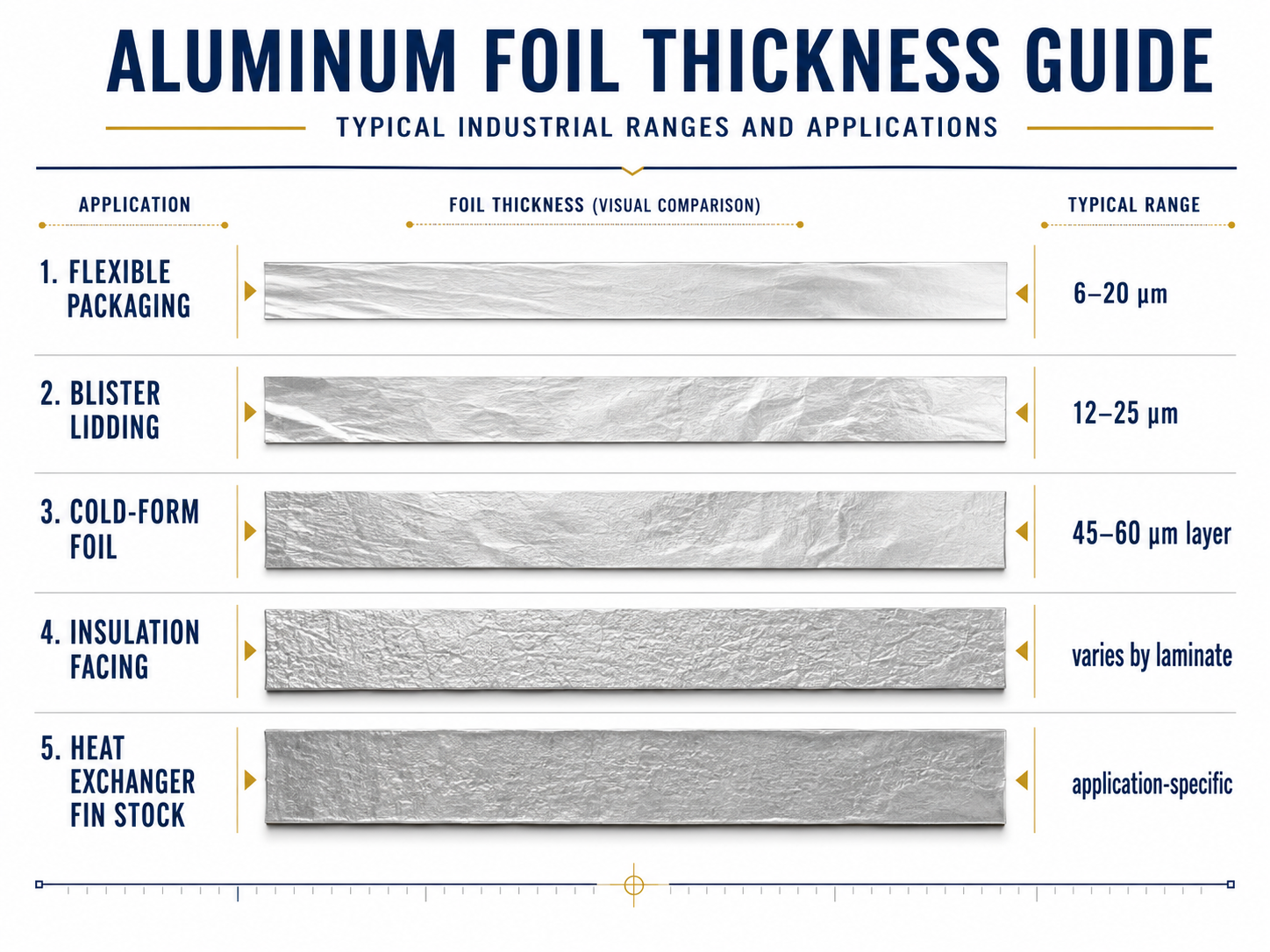
ជួរកម្រាស់តាមការប្រើប្រាស់ឧស្សាហកម្ម
គ្មានកម្រាស់សន្លឹកអាលុយមីញ៉ូមតែមួយដែលអាចប្រើបានសម្រាប់ការប្រើប្រាស់ឧស្សាហកម្មទាំងអស់ទេ។ ការវ៉ែបផ្ទុក ការពារកំដៅ អេឡិចត្រូនិក និងការផ្ទេរកំដៅ ទាំងអស់ត្រូវការឥរិយាបថផ្សេងៗគ្នារបស់សម្ភារៈ។
| ការដាក់ពាក្យ | ការផ្តោតលើកម្រាស់ធម្មតា | បញ្ហាសំខាន់ៗដែលអ្នកទិញគួរពិនិត្យ | អ្វីដែលត្រូវបញ្ជាក់ |
|---|---|---|---|
| ការពង្រឹងលក្ខណៈរឹងមាំ | សន្លឹកអាលុយមីញ៉ូមប៉ះទាប ដល់កម្រាស់ស្រាល ជាញឹកញាប់ប្រហែល ៦–២០ មីក្រូន អាស្រ័យលើរចនាសម្ព័ន្ធ | សមត្ថភាពរារាំង រូបរាងរន្ធតូចៗ គុណភាពនៃការភ្ជាប់ជាមួយស្រទាប់ផ្សេងៗ | ការអត់ទេសន៍កម្រាស់ ភាពស្អាតនៃផ្ទៃ និងសារធាតុបិទភ្ជាប់ដែលឆបគ្នាជាមួយវា |
| ធុង និងគ្រាប់បិទសម្រាប់អាហារ | សន្លឹកអាល៊ុយមីញ៉ូមមធ្យមដល់ធ្ងន់ អាស្រ័យលើរចនាប័ទ្មនៃថាស ឬគ្រាប់បិទ | ការបង្កើតរាង ភាពរឹងមាំ ការបិទជិត និងឯកសារទាក់ទងនឹងការប៉ះពាល់ជាមួយអាហារ | ស្ថានភាពវត្ថុធាតុ ការសាកល្បងការបង្កើតរាង ស្រទាប់សំណាញ់ ឬស្រទាប់បិទជិត |
| សន្លឹកអាល៊ុយមីញ៉ូមសម្រាប់ការប៉ះពាល់ជាមួយថ្នាំ | សន្លឹកអាល៊ុយមីញ៉ូមប្រកបដោយការគ្រប់គ្រងដែលមានស្រទាប់ប៉ុន្មានម៉៊ីក្រូន ជាទូទៅប្រហែល ១២–២៥ ម៉៊ីក្រូនសម្រាប់សន្លឹកគ្រាប់បិទ | ផ្ទៃស្អាត ការគ្រប់គ្រងរន្ធតូចៗ និងស្ថេរភាពនៃការបិទជិត | ឯកសារបញ្ជាក់គុណភាព (COA) ឯកសារបញ្ជាក់បច្ចេកទេស (MTC) ព័ត៌មានលម្អិតអំពីស្រទាប់សំណាញ់ និងស្តង់ដាររបស់អតិថិជន |
| ការវេចខ្ចប់ដែលបង្កើតរាងនៅសីតុណ្ហភាពទាប | រចនាសម្ព័ន្ធសន្លឹកអាល៊ុយមីញ៉ូមធ្ងន់ ស្រទាប់អាល៊ុយមីញ៉ូមជាទូទៅប្រហែល ៤៥–៦០ ម៉៊ីក្រូន | ជម្រៅនៃការបង្កើតរាង ការការពារដែលមានប្រសិទ្ធភាព និងភាពធន់នឹងការប៉ះទង្គិច | រចនាសម្ព័ន្ធប៉ាក់ស្រទាប់ពេញលេញ ការបង្កើតប្រសិទ្ធិភាព ការធ្វើតេស្តគំរូ |
| សន្លឹកការពារការផ្ទះលើគ្នា | សន្លឹកប៉ាក់ប៉ែតប៉ុន្មានទៅមធ្យម អាស្រ័យលើសន្លឹកគ្រឹះ និងរចនាសម្ព័ន្ធប៉ាក់ស្រទាប់ | ការឆ្លុះកំដៅ ការភ្ជាប់ និងការឈរនឹងសំណើម | សន្លឹកគ្រឹះ ស្ថេរភាពនៃសារធាតុបិទ និងទទឹងរបស់វ៉ែល |
| ការរារាំងខ្សែភ្លើង | សន្លឹកប៉ាក់ប៉ែតបច្ចេកទេសប៉ែត | សារធាតុប៉ុន្មាន គុណភាពគែម និងការគ្រប់គ្រងគែមដែលមានជាប់ | គុណភាពការកាត់ ភាពស្អាតនៃផ្ទៃ និងការការពារវ៉ែល |
| ស្តុកសម្រាប់ស្លាប់ការផ្លាស់ប្តូរកំដៅ | កម្រាស់ដែលបានកំណត់សម្រាប់ការប្រើប្រាស់ជាក់ស្តែង | ភាពរាបសាមី, ការបង្កើត, ការគ្រោម, និងភាពធន់ទ្រាំនឹងការឆ្លាក់ | សមាសធាតុ, ស្ថានភាព, ការគ្រោម, និងដែនកំណត់នៃកម្រាស់ និងទទឹង |
ផ្ទៃសំបកអាលុយមីញ៉ូមប៉ះប៉ោង និងផ្ទៃសំបកអាលុយមីញ៉ូមក្រាស់៖ តើអ្វីដែលផ្លាស់ប្តូរ?
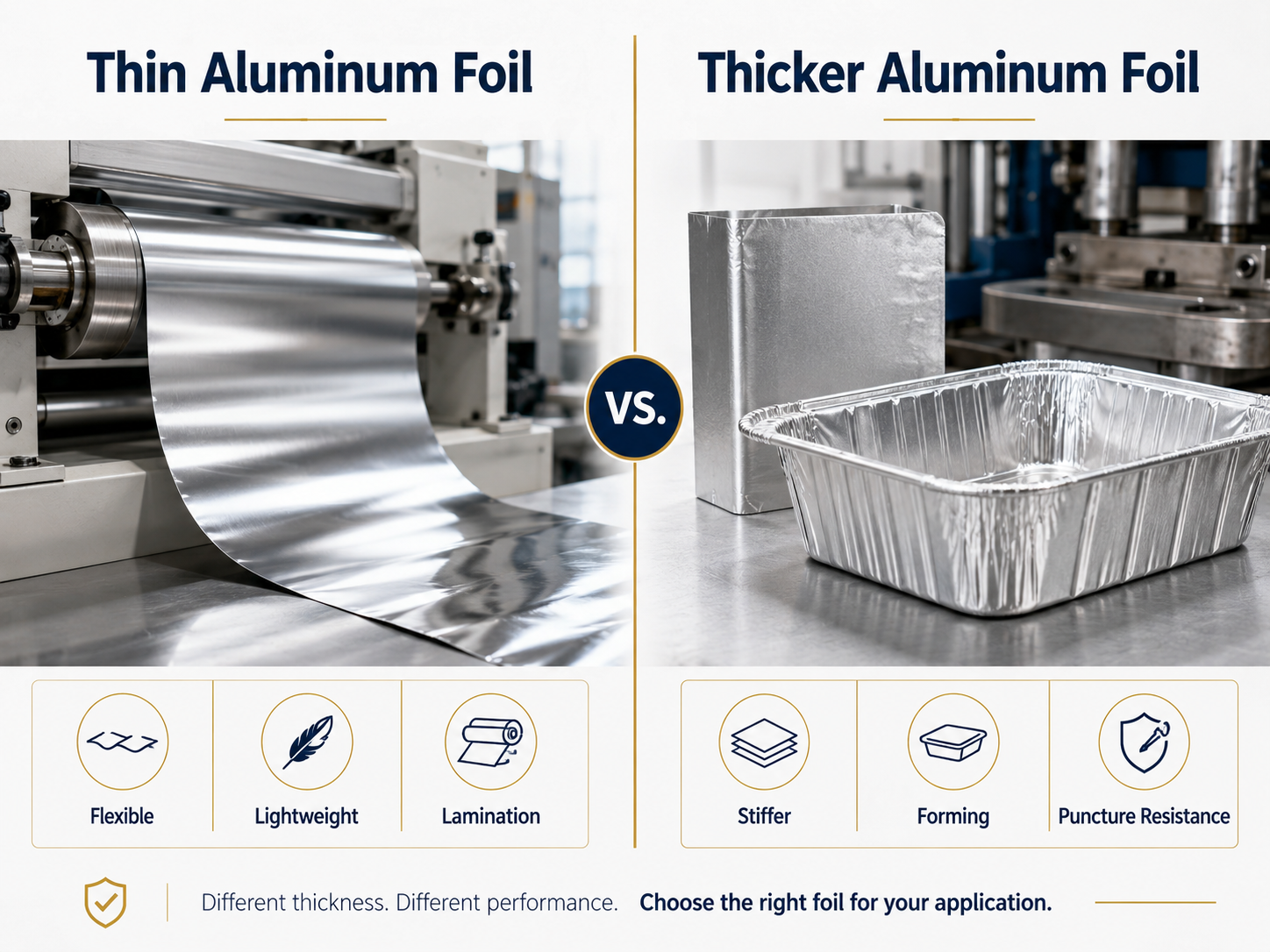
ការជ្រើសរើសកម្រាស់នៃផ្ទៃសំបកគឺជាការប្រកបដោយការប៉ះទង្គិល។ ផ្ទៃសំបកដែលប៉ះប៉ោងជាងអាចសន្សំទម្ងន់ និងធ្វើឱ្យវាមានភាពអាចបត់បែនបានល្អជាង ខណៈដែលផ្ទៃសំបកដែលក្រាស់ជាងអាចធ្វើឱ្យវាមានភាពរឹងមាំ និងធន់ទ្រាំនឹងការចំហេះបានល្អជាង។ ចម្លើយត្រឹមត្រូវគឺអាស្រ័យលើដំណាំ និងផលិតផល។
ផ្ទៃសំបកអាលុយមីញ៉ូមប៉ះប៉ោង
- ទម្ងន់សារធាតុតិចជាងក្នុងមួយម៉ែត្រការ៉េ
- ភាពអាចបត់បែនបានល្អសម្រាប់ការប៉ះគ្នា និងការពាក់
- មានប្រយោជន៍សម្រាប់ការវេចខ្ចប់ដែលមានលក្ខណៈរារាំង និងរចនាសម្ព័ន្ធសរសៃរួម
- មានភាពអាក្រក់ជាងចំពោះការប៉ះទង្គិល ការខូចខាតដែលបណ្តាលមកពីការប្រើប្រាស់ និងរន្ធតូចៗ
- ប្រហែលត្រូវការការគ្រប់គ្រងដំណាំដែលមានភាពតឹងរឹងជាងនៅលើបន្ទាត់ដែលដំណាំលឿន
សន្លឹកអាលុយមីញ៉ូមដែលមានភាពជាប់គ្នាជាង
- ភាពរឹងមាំ និងការគ្រប់គ្រងទម្រង់បានល្អជាង
- ភាពធន់នឹងការចំបាក់ និងការខូចបាក់បានល្អជាងក្នុងការប្រើប្រាស់ជាច្រើនប្រភេទ
- មានប្រយោជន៍សម្រាប់ធុង ផ្នែកដែលបានបង្កើតឡើង ផ្ទៃប៉ះសម្រាប់ការពារកំដៅ និងការប្រើប្រាស់ប្រភេទធ្ងន់
- ទម្ងន់របស់វេណេល និងថ្លៃដើមវត្ថុធាតុក្រៅបានកើនឡើង
- អាចមានការលំបាកក្នុងការបិទភ្ជាប់ បាក់ ឬបង្កើតទម្រង់ ប្រសិនបើស្ថានភាពរបស់វាមិនសមស្រប
កម្រាស់មិនមែនជាកត្តាតែមួយគត់ទេ
គោលការណ៍ណែនទានអំពីកម្រាស់សន្លឹកអាលុយមីញ៉ូមដែលមានប្រយោជន៍គួរតែរាប់បញ្ចូលច្រើនជាងកម្រាស់តែប៉ុណ្ណោះ។ កម្រាស់ដូចគ្នាអាចមានឥរិយាបទខុសគ្នាប្រសិនបើសន្លឹកអាលុយមីញ៉ូមមានសមាសធាតុផ្សេងគ្នា ស្ថានភាពផ្សេងគ្នា ផ្ទៃផ្ទៃផ្សេងគ្នា ឬស្ថានភាពវេណេលផ្សេងគ្នា។
- សមាសធាតុ៖ ប៉ះពាល់ដល់ស្ថោមភាព សមត្ថភាពក្នុងការបង្កើតទម្រង់ និងភាពធន់នឹងការឆ្លុះ
- សភាព៖ ប៉ះពាល់ដល់ភាពទន់ ភាពរឹង ការបត់ និងការបង្កើត
- គុណភាពផ្ទៃ៖ ប៉ះពាល់ដល់ការបោះពុម្ព ការគ្របដណ្តប់ ការបិទ ការប្រមូលផ្តុំ និងរូបរាង
- កម្រិតរន្ធតូចៗ៖ សំខាន់សម្រាប់ការវ៉ាយប៉ាក់ដែលមានសារធាតុរារា និងផលិតផលដែលអាចរងផលប៉ះពាល់បាន
- ការអត់ធានាទទួលយកបាននៃទទឹង៖ ប៉ះពាល់ដល់ល្បឿនការបំពាក់ និងការគ្រប់គ្រងគែម
- ការបើកបរក្រាវ៉េន៖ ការបើកបរក្រាវ៉េនមិនល្អ អាចបណ្តាលឱ្យម៉ាស៊ីនឈប់ដំណាំ និងបាក់បែក
- ឯកសារ: អ្នកទិញខ្លះទាមទារឯកសារបញ្ជាក់គុណភាព (COA) ឯកសារបញ្ជាក់បច្ចេកទេស (MTC) ឯកសារទាក់ទងនឹងការប្រើប្រាស់ជាមួយអាហារ របាយការណ៍ RoHS របាយការណ៍ REACH ឬរបាយការណ៍ដែលអ្នកទិញកំណត់ជាក់លាក់
អ្នកទិញដែលត្រូវការជម្រើសសម្ភារៈទូទៅជាង អាចពិនិត្យមើល ផលិតផលAluminum និងទាក់ទង coil អាលឺយ៉ាម ជម្រើសលើ Voyage Metal។
របៀបជ្រើសរើសកម្រាស់សន្លឹកអាលុយមីញ៉ូមដែលសមស្រប
ដំណាំការជ្រើសរើសដែលអាចអនុវត្តបានចាប់ផ្តើមពីផលិតផលចុងក្រាយ មិនមែនពីបញ្ជីតម្លៃទេ។ អ្នកផ្គត់ផ្គង់ត្រូវតែយល់ពីការប្រើប្រាស់មុននឹងណែនាំកម្រាស់ដែលសមស្រប។
កំណត់ការប្រើប្រាស់
បញ្ជាក់ការវេចខ្ចប់ ការការពារកំដៅ អេឡិចត្រូនិក ការផ្លាស់ប្តូរកំដៅ ឬការប្រើប្រាស់ឧស្សាហកម្មទូទៅ។
ពិនិត្យដំណាំការ
រាយបញ្ជីតម្រូវការសម្រាប់ការប៉ះគ្នា ការលាប ការបោះពុម្ព ការបិទ ការបង្កើតរាង ការកាត់ ឬការហុំព័ទ្ធ។
កំណត់សមត្ថភាព
សម្រេចចិត្តអំពីតម្រូវការសម្រាប់ការរារាំង ភាពរឹង ការបង្កើតរាង ភាពរឹងមាំ ឬការឆ្លុះកំដៅ។
បញ្ជាក់សេចក្តីបញ្ជាក់
ជ្រើសរើសអាល័យដែលមានសមាសធាតុ កម្រិតភាពរឹង សំណើម ទទឹង កំហែង និងផ្ទៃបាក់ដែលត្រូវការ
ពិនិត្យគ្រាប់
បញ្ជាក់លេខកូដគ្រាប់ បរិមាណគ្រាប់ ទម្ងន់គ្រាប់ គុណភាពគែម និងលក្ខខណ្ឌនៃការរុំ
សាកល្បងគំរូ
ដំណាំគំរូមុនពេលបញ្ជាទិញច្រើន នៅពេលដែលការប្រើប្រាស់ថ្មី ឬមានលក្ខណៈបច្ចេកទេស
ព័ត៌មានសំខាន់ៗសម្រាប់ការស្នើសុំការប៉ាន់ស្មានតម្លៃ (RFQ) ដែលអ្នកទិញគួររាប់បញ្ចូល
ការស្នើសុំការប៉ាន់ស្មានតម្លៃ (RFQ) ល្អ នឹងបន្ថយការផ្ញើអ៊ីមែលទៅមកវិញ និងជួយអ្នកផ្គត់ផ្គង់ប៉ាន់ស្មានតម្លៃបានត្រឹមត្រូវជាងមុន។ វាក៏ធ្វើឱ្យការប្រៀបធៀបសំណើផ្សេងៗគ្នាកាន់តែងាយស្រួលផងដែរ។
| ធាតុសំណើសុំតម្លៃ (RFQ Item) | ហេតុអ្វីដែលវាជាំពូកែ | ឧទាហរណ៍នៃព័ត៌មានលម្អិត |
|---|---|---|
| ការដាក់ពាក្យ | កំណត់សំណើម សមាសធាតុ កម្រិតភាពរឹង និងតម្រូវការផ្ទៃដែលត្រឹមត្រូវ | ការវ៉ែកបាក់ប៉ែកបាន ការប៉ាក់ការត្រជាក់ ការការពារកាប៊ល ឬស្តុកសម្រាប់ផ្ទៃ |
| កម្រាស់ | គ្រប់គ្រងជញ្ជាំង ស្ថេរភាព ការបង្កើត និងថ្លៃដើម | 12 ម៉ីក្រូន 18 ម៉ីក្រូន 0.03 មម ឬជួរដែលអ្នកទិញបានបញ្ជាក់ |
| ការអត្រា | បង្ការបញ្ហាម៉ាស៊ីន និងគុណភាពក្នុងអំឡុងពេលផលិត | បញ្ជាក់ភាពអាចទទួលយកបាននៃស្តង់ដារកម្រាស់ និងទទឹង |
| សមាសធាតុ និងស្ថានភាព | ប៉ះពាល់ដល់ភាពរឹង ភាពអាចបត់បែនបាន ការបង្កើត និងឥរិយាបថក្នុងការដំណាំ | ស៊េរី 1xxx 3xxx 8xxx; ស្ថានភាពទនោរ កណ្តាលរឹង ឬរឹង |
| សេចក្តីបញ្ជាក់អំពីគ្រាប់ (Roll Specs) | ទំហំរ៉ុលត្រូវតែសមស្របនឹងឧបករណ៍ និងវិធីសាស្រ្តដែលអ្នកទិញប្រើ | អត្តសញ្ញាណរ៉ុល បរិមាត្រខាងក្រៅរ៉ុល ទម្ងន់រ៉ុល ទទឹង និងគុណភាពគែម |
| ឯកសារ | គម្រោងខ្លះត្រូវការកំណត់ត្រាគុណភាព និងការប៉ុនប៉ងប៉ុនប៉ង | COA, MTC, ឯកសារទាក់ទងនឹងអាហារ, RoHS, REACH ឬរបាយការណ៍ដែលអតិថិជនបានកំណត់ |
| ការវេចខ្ចប់ | ការវ៉ែបផ្ទុកសម្រាប់ការនាំចេញ ការពារសន្លឹកអាលុយមីញ៉ូមពីសំណើម និងការខូចខាតក្នុងអំឡុងពេលដឹកជញ្ជូន | ប្រអប់ឈើ ការការពារប៉ាឡេត របាំងសំណើម និងស្លាកសម្គាល់សម្រាប់ការនាំចេញ |
| ព័ត៌មានលម្អិតអំពីការដឹកជញ្ជូន | ជួយប៉ាន់ស្មានពេលវេលាដឹកជញ្ជូន និងថ្លៃដឹកជញ្ជូនសរុប | ប្រទេសគោលដៅ pel ទីក្រុង បរិមាណការបញ្ជាទិញ និងកាលវិភាគបញ្ចេញ |
កំហុសធម្មតាដែលបានធ្វើនៅពេលជ្រើសរើសកម្រាស់សន្លឹកអាលុយមីញ៉ូម
បញ្ហាជាច្រើនដែលទាក់ទងនឹងសន្លឹកអាលុយមីញ៉ូមចាប់ផ្តើមមុនពេលផលិត។ ការស្នើសុំកម្រាស់ដែលមិនច្បាស់លាស់អាចនាំឱ្យប្រើវត្ថុធាតុខុស ការប៉ះទង់ខ្ពស់ ឬការដឹកជញ្ជូនយឺត
| កំហុសធម្មតា | គ្រោះថ្នាក់ដែលអាចកើតមាន | វិធីសាស្រ្តល្អជាង |
|---|---|---|
| ប្រើតែ «កម្រាស់» | ហានិភ័យ កម្រាស់អាចបកប្រែខុសគ្នាទៅតាមទីផ្សារ | ល្អជាង បញ្ជាក់ភាពជាក់ស្តែងនៃកម្រាស់ជាមីក្រូន ឬមីលីម៉ែត្រ។ |
| ទិញតែដោយតម្លៃទាបបំផុត | ហានិភ័យ ភាពតឹងតែងទាប គុណភាពរ៉ុលខ្សះខាត ឬការខូចខាតក្នុងការផលិតខ្ពស់។ | ល្អជាង ប្រៀបធៀបតម្លៃជាមួយនឹងភាពតឹងតែង គុណភាព ឯកសារ និងការវ៉ែប។ |
| ការមិនយកចិត្តទុកដាក់លើស្ថានភាពផ្ទៃ (temper) | ហានិភ័យ សំបកអាចបាក់ ជ្រើស ឬមិនអាចរក្សាទម្រង់បាន។ | ល្អជាង សម្របសម្រួលស្ថានភាពរបស់សំបកទៅនឹងតម្រូវការការបង្កើត ការបត់ ការបិទ ឬការប៉ះគ្នា។ |
| មិនធ្វើការសាកល្បងរ៉ុលគំរូ | ហានិភ័យ សំបកចំនួនច្រើនអាចមិនសមស្របសម្រាប់ម៉ាស៊ីន ឬប្រព័ន្ធអាឌហេស៊ីវរបស់អ្នកទិញ។ | ល្អជាង សាកល្បងរ៉ុលគំរូមុនពេលបញ្ជាទិញចំនួនច្រើន។ |
| មិនបញ្ជាក់សេចក្តីលម្អិតរបស់រ៉ុល | ហានិភ័យ ទំហំរូលអាចមិនសមស្របជាមួយឧបករណ៍ផលិតកម្ម។ | ល្អជាង បញ្ជាក់អ័ក្សរូល បរិមាត្រខាងក្រៅ ទម្ងន់ ទទឹង និងគុណភាពនៃការរួមរាស់។ |
| ភ្លេចការវេចខ្ចប់សម្រាប់នាំចេញ | ហានិភ័យ សំណើម ឬការខូចខាតដែលបណ្តាលមកពីការប្រើប្រាស់ អាចប៉ះពាល់ដល់ផ្ទៃសំណាំង និងគែមរូល។ | ល្អជាង បញ្ជាក់ពីការវេចខ្ចប់សម្រាប់នាំចេញ និងការការពារសំណើមនៅក្នុងការបញ្ជាទិញ (PO)។ |
បញ្ជីត្រួតពិនិត្យ RFQ សម្រាប់អ្នកទិញទូទាំងពិភពលោក
ការស្នើសុំការប៉ាន់ស្មានតម្លៃ (RFQ) សម្រាប់សំណាំងអាលុយមីញ៉ូមដែលច្បាស់លាស់ គួររួមបញ្ចូលទាំងតម្រូវការបច្ចេកទេស និងព័ត៌មានពាណិជ្ជកម្ម។ នេះជួយឱ្យអ្នកផ្គត់ផ្គង់ពិនិត្យសារធាតុដែលមាន ប៉ាន់ស្មានពេលវេលាដែលត្រូវបានគ្រោងទុក និងផ្តល់តម្លៃបានត្រឹមត្រូវជាងមុន។
អ្នកទិញដែលកំពុងស្វែងរកសន្លឹកអាលុយមីញ៉ូមសម្រាប់ការធ្វើប្រអប់ឧស្សាហកម្ម ការការពារកំដៅ អេឡិកត្រូនិក ការផ្លាស់ប្តូរកំដៅ ឬការផលិតទូទៅ អាចពិនិត្យមើល ជម្រើសសន្លឹកអាលុយមីញ៉ូម តាមរយៈ Voyage Metal។ សម្ភារៈដែលទាក់ទង ដូចជា cuon អាលុយមីញ៉ូម 3003 ក៏អាចមានប្រយោជន៍សម្រាប់គម្រោងដែលត្រូវការផលិតផលគូល ជាមួយនឹងសន្លឹកអាលុយមីញ៉ូមផងដែរ។
សង្ខេបខ្លី
កម្រាស់សន្លឹកអាលុយមីញ៉ូមគួរតែជ្រើសរើសដោយផ្អែកលើការប្រើប្រាស់ មិនមែនតែដោយផ្អែកលើតម្លៃ ឬឈ្មោះកម្រាស់ប៉ុណ្ណោះទេ។ ការធ្វើប្រអប់បត់បែនអាចត្រូវការសន្លឹកអាលុយមីញ៉ូមបត់បែនដែលមានកម្រាស់ប៉ះនៅ និងការគ្រប់គ្រងរន្ធតូចៗបានល្អ ខណៈដែលធុង ការការពារកំដៅ ការផ្លាស់ប្តូរកំដៅ និងការប្រើប្រាស់បច្ចេកទេស អាចត្រូវការកម្រាស់ ស្ថានភាព និងលក្ខណៈផ្ទៃដែលខុសគ្នា។
សម្រាប់អ្នកទិញឧស្សាហកម្ម ការស្នើសុំប្រកាសតម្លៃ (RFQ) ដែលច្បាស់លាស់គួររាប់បញ្ចូលនូវកម្រាស់ជាម៉ាយក្រូន ឬ mm ស្ថានភាពអាល័យ (alloy) ស្ថានភាពការពារ (temper) កំហាប់ (tolerance) ទំហំរ៉ូល (roll size) តម្រូវការផ្ទៃ ឯកសារ វិធីសាស្ត្រវេចខ្ចប់ និងព័ត៌មានដឹកជញ្ជូន។ នេះជួយកាត់បន្ថយហានិភ័យក្នុងការទិញ និងប៉ះពាល់លើស្ថេរភាពផលិតកម្ម។
ត្រូវការសន្លឹកអាលុយមីញ៉ូមសម្រាប់ប្រើប្រាស់ក្នុងឧស្សាហកម្មទេ?
អ្នកទិញដែលត្រូវការសន្លឹកអាលុយមីញ៉ូមសម្រាប់ការវេចខ្ចប់ ការការពារកំដៅ វិស័យអេឡិចត្រូនិក ការផ្លាស់ប្តូរកំដៅ ឬគម្រោងឧស្សាហកម្មទូទៅ អាចពិនិត្យមើលជម្រើសសារធាតុ សេចក្តីបញ្ជាក់ និងការគាំទ្រការទិញ B2B តាមរយៈ voyagemetal.com។
សំណួរដែលគេសួរញឹកញាប់អំពីកម្រាស់សន្លឹកអាលុយមីញ៉ូម
កម្រាស់ធម្មតារបស់សន្លឹកអាលុយមីញ៉ូមសម្រាប់ប្រើប្រាស់ក្នុងឧស្សាហកម្មគឺអ្វី?
គ្មានកម្រាស់តែមួយគត់សម្រាប់ការប្រើប្រាស់ទាំងអស់ក្នុងឧស្សាហកម្មទេ។ ការវេចខ្ចប់ប៉ះពាល់ ការការពារកំដៅ ការការពារខ្សែកាប ធុងអាហារ ការវេចខ្ចប់ថ្នាំ និងការផ្លាស់ប្តូរកំដៅ អាចត្រូវការជួរកម្រាស់ខុសៗគ្នា។ អ្នកទិញគួរបញ្ជាក់កម្រាស់ពិតប្រាកដជាម៉ាយក្រូន ឬ mm។
ហេតុអ្វីបានជាកម្រាស់សន្លឹកអាលុយមីញ៉ូមប៉ះពាល់ដល់សមត្ថភាពវេចខ្ចប់?
កម្រាស់អាចប៉ះពាល់ដល់ការការពារជាប៉ារ៉ាកែត គ្រោះថ្នាក់នៃចំណុចស្រាល (pinhole) ការបិទ ការភ្ជាប់ (lamination) ការបង្កើតរាង ស្ថេរភាពនៃម៉ាស៊ីន និងអត្រាប៉ះពាល់។ វាគួរតែត្រូវបានជ្រើសរើសជាមួយនឹងសមាសធាតុអាលុយមីញ៉ូម (alloy) ស្ថានភាព (temper) និងគុណភាពផ្ទៃ។
អ្នកទិញធ្វើដូចម្តេចដើម្បីបំលែងកម្រាស់សន្លឹកអាលុយមីញ៉ូមពីម៉ីក្រូនទៅមីលីម៉ែត្រ?
មួយម៉ីក្រូនស្មើនឹង ០,០០១ មីលីម៉ែត្រ។ ឧទាហរណ៍ ១០ ម៉ីក្រូនស្មើនឹង ០,០១០ មីលីម៉ែត្រ ហើយ ២៥ ម៉ីក្រូនស្មើនឹង ០,០២៥ មីលីម៉ែត្រ។
តើមានភាពខុសគ្នាអ្វីខ្លះរវាងការវាស់កម្រាស់សន្លឹកអាលុយមីញ៉ូម (gauge) និងកម្រាស់ពិតប្រាកដ?
ការវាស់កម្រាស់ (gauge) គឺជាពាក្យសង្ខេបដែលអាចមានភាពមិនច្បាស់លាស់នៅតាមទីផ្សារផ្សេងៗគ្នា។ កម្រាស់គឺជាតម្លៃដែលវាស់បានពិតប្រាកដ ជាទូទៅសរសេរជាម៉ីក្រូន មីលីម៉ែត្រ អ៊ីញ ឬមីល (mils)។ អ្នកទិញគួរបញ្ជាក់កម្រាស់ពិតប្រាកដជំន взៈការពឹងផ្អែកតែលើការវាស់កម្រាស់ (gauge) ប៉ុណ្ណោះ។
អ្នកទិញគួរជ្រើសរើសកម្រាស់សន្លឹកអាលុយមីញ៉ូមសម្រាប់ការភ្ជាប់ (lamination) ដោយរបៀបណា?
អ្នកទិញគួរពិនិត្យលក្ខខណ្ឌដូចជា តម្រូវការការពារជាប៉ារ៉ាកែត ភាពអាចបត់ប៉ះបាន ការគ្រប់គ្រងចំណុចស្រាល (pinhole) ភាពឆបគ្នាជាមួយសារធាតុបិទ (adhesive) ល្បឿនម៉ាស៊ីន គុណភាពរ៉ូល និងរចនាសម្ព័ន្ធប៉ាក់កេজស្រាប់ចុងក្រោយ មុនពេលជ្រើសរើសកម្រាស់សន្លឹកអាលុយមីញ៉ូមសម្រាប់ការភ្ជាប់ (lamination)។
ហេតុអ្វីបានជាគេត្រូវធ្វើការសាកល្បងគំរូមុនពេលបញ្ជាទិញសន្លឹកអាលុយមីញ៉ូមចំនួនច្រើន?
ការធ្វើតេស្តគំរូជួយបញ្ជាក់ពីសារធាតុដែលអាចប្រើបានជាមួយម៉ាស៊ីន ការបង្កើតរាង ការបិទ ការភ្ជាប់ជាមួយស្រទាប់ផ្សេងៗ គុណភាពផ្ទៃ កម្រិតរន្ធតូចៗ និងការគ្រប់គ្រងរ៉ូល មុនពេលដាក់ការបញ្ជាទិញចំនួនច្រើន។