
 EN
EN



စက်မှုလုပ်ငန်းအတွက် အလူမီနီယမ်ဖိုလ်၏ အသုံးပုံအများဆုံးနေရာများ - ထုပ်ပိုးခြင်း၊ အပူကာကွယ်မှု၊ အီလက်ထရွန်နစ်ပစ္စည်းများ နှင့် ဝယ်ယူရာတွင် အရေးကြီးသော အကြံပေးချက်များ
စက်မှုလုပ်ငန်းအတွက် အလူမီနီယံဖိုင်လ်သည် ရိုးရှင်းသော ပါးလွင်းသော သေးငယ်သော သံမဏိပြားကဲ့သို့ ပုံပန်းသုံးသပ်မှုရှိသော်လည်း ကမ္ဘာလုံးဆိုင်ရာ ဝယ်ယူသူများသည် ပုံပန်းသုံးသပ်မှုထက် ပိုမိုများပါးသော အချက်များကို အထူးဂရုပြုလေ့ရှိပါသည်။ ထုထည်၊ သံမဏိအမျိုးအစား၊ အလူမီနီယံအမျိုးအစား၊ ရိုလ်အခြေအနေ၊ ပေးပို့ရန် ကာလ၊ စာရွက်စာတမ်းများနှင့် နိုင်ငံခြားသို့ ပို့ပေးရာတွင် အသုံးပြုသည့် ထုပ်ပိုးမှုများသည် ထုတ်လုပ်မှုစရိတ်နှင့် ပေးပို့မှုအခြေအနေကို အကျိုးသက်ရောက်စေနိုင်ပါသည်။ စက်မှုလုပ်ငန်းအတွက် အလူမီနီယံဖိုင်လ်ကို ထုပ်ပိုးမှု၊ အပူကာကွယ်မှု၊ အီလက်ထရွန်နစ်ပစ္စည်းများ၊ အပူလဲလှယ်မှုနှင့် ထုတ်လုပ်မှုလုပ်ငန်းများတွင် အသုံးပြုကြပါသည်။ အကြောင်းမှာ ၎င်းသည် အလေးချိန်ပေါ့ပါးပြီး ပုံသေးနိုင်ခြင်း၊ ခြောက်သွေ့မှုကို ခံနိုင်ရည်ရှိခြင်းနှင့် အလင်း၊ စိုထုံး၊ အောက်စီဂျင်နှင့် အနံ့များကို ပိတ်ဆို့ပေးနိုင်ခြင်းတို့ကြောင့်ဖြစ်ပါသည်။
အလူမီနီယံဖိုင်လ်သည် အသေးစိတ်အချက်အလက်များအရ သတ်မှတ်ထားသည့် ပစ္စည်းဖြစ်ပါသည်။
စက်မှုလုပ်ငန်းအတွက် ဝယ်ယူသူများသည် အလူမီနီယံဖိုင်လ်ကို စျေးနှုန်းသီးသန့်ဖြင့် ဝယ်ယူခြင်းမဟုတ်ပါ။ အသုံးပုံ၊ ထုထည်၊ သံမဏိအမျိုးအစား၊ မျက်နှာပုံအရည်အသွေး၊ ရိုလ်အရွယ်အစား၊ လက်မှတ်များ၊ ထုပ်ပိုးမှုနည်းလမ်းနှင့် ထုတ်လုပ်မှုစက်ကူများတွင် အဆင်ပေါ်စေရန် အလူမီနီယံဖိုင်လ်ကို အကဲဖေးနိုင်ပါသည်။
စက်မှုလုပ်ငန်းအတွက် အလွှာထုပ်အလွှာ (Industrial Aluminum Foil) ဆိုသည်မှာ အဘယ်နည်း။
စက်မှုလုပ်ငန်းအတွက် အလွှာထုပ်အလွှာသည် ကုန်ပစ္စည်းများကို ထုပ်ပိုးခြင်း၊ ပြောင်းလဲခြင်း၊ အပူကာကွယ်ခြင်း၊ လျှပ်စစ်အသုံးပြုမှု၊ HVAC (အပူလေဝင်လေထွက်စနစ်)၊ အပူလွှဲပေးခြင်းနှင့် ထုတ်လုပ်မှုလုပ်ငန်းများတွင် အသုံးပြုသည့် ပါးလွှာသော အလွှာထုပ်အလွှာဖြစ်သည်။ ယင်းကို အများအားဖြင့် ကြီးမားသော ရိုလ်များ (jumbo rolls)၊ ဖြတ်ထားသော ရိုလ်များ (slit rolls)၊ အလွှာထုပ်အလွှာပိုင်းများ (sheets)၊ အလွှာထုပ်အလွှာများပေါ်တွင် အလွှာဖုံးထားသော အလွှာထုပ်အလွှာများ (coated foil)၊ အလွှာထုပ်အလွှာများကို အခြားအလွှာများနှင့် ပေါင်းစပ်ထားသော အလွှာထုပ်အလွှာများ (laminated foil) သို့မဟုတ် အလွှာထုပ်အလွှာအခြေပြု ပေါင်းစပ်ပစ္စည်းများ (foil-based composite materials) အဖြစ် ပေးအပ်လေ့ရှိသည်။
အိမ်သုံးအလွှာထုပ်အလွှာများနှင့် နှိုင်းယှဉ်ပါက စက်မှုလုပ်ငန်းအတွက် အလွှာထုပ်အလွှာများသည် အထူအတိုင်းအတာ၊ အကျယ်အတိုင်းအတာ၊ မျက်နှာပုံသန့်ရှင်းမှု၊ အပေါက်ငယ်များ (pinholes),ရိုလ်ထုပ်ပုံအရည်အသွေး၊ အလွှာထုပ်အလွှာအမျိုးအစား (alloy)၊ အမျိုးအစားအလွှာထုပ်အလွှာ (temper)၊ ရိုလ်၏ အတွင်းအချင်း (roll inner diameter)၊ ရိုလ်၏ အပြင်အချင်း (roll outer diameter) နှင့် အလွှာဖုံးခြင်း၊ ပုံနှိပ်ခြင်း၊ ပိတ်ခြင်း သို့မဟုတ် အလွှာပေါင်းစပ်ခြင်းတွင် သင့်တော်မှုရှိမှုတို့ကို ပိုမိုတင်းကြပ်စွာ ထိန်းညှိရန် လိုအပ်ပါသည်။ စံနှုန်းအတိုင်း အလွှာထုပ်အလွှာများကို ဝယ်ယူလိုသော ဝယ်သူများသည် အလူမီနီယမ် ဖော်လ် ယေဘုယျထုတ်ကုန်ရွေးချယ်မှုများအတွက် အုပ်စုအမျိုးအစားကို ပြန်လည်သုံးသပ်နိုင်ပါသည်။
စက်မှုလုပ်ငန်းများတွင် အသုံးများသော ပုံစံများ
- ပြောင်းလဲရေးလုပ်ငန်းများအတွက် ကြီးမားသော အလွှာထုပ်အလွှာရိုလ်များ
- ထုပ်ပိုးခြင်းနှင့် အပူကာကွယ်ခြင်းလုပ်ငန်းများအတွက် ဖြတ်ထားသော အလွှာထုပ်အလွှာရိုလ်များ
- အသုံးပြုမှုအတွက် အလွှာထုပ်အလွှာပိုင်းများ (fabrication) သို့မဟုတ် စုစည်းခြင်းအတွက် အလွှာထုပ်အလွှာပိုင်းများ (assembly)
- ပိုမိုကောင်းမွန်သော ပိတ်မှု၊ အပူလဲလှယ်မှု သို့မဟုတ် အထူးသုံးစရာအတွက် အထုပ်ဖော်ထားသော အလူမီနီယမ် ဖွဲ့စည်းမှု
- ပိုမိုလျော့ပါးသော အထုပ်ပို့ဆောင်ရေး သို့မဟုတ် အပူကာကွယ်ရေးအတွက် အလူမီနီယမ် ဖွဲ့စည်းမှု
- မျက်နှာပြင်၏ အသွင်အပြင် သို့မဟုတ် ကပ်စောင်းခြင်းလိုအပ်ချက်များအတွက် အလူမီနီယမ် ဖွဲ့စည်းမှု
- အပူစနစ် သို့မဟုတ် အတားအဆီးစနစ်များအတွက် အလူမီနီယမ် ဖွဲ့စည်းမှုများ
နိုင်ငံတက် အမှာစာများတွင် အထူကို မိုက်ခရွန် (microns)၊ မီလီမီတာ (millimeters)၊ အင်ခ် (inches)၊ မီလ် (mils) သို့မဟုတ် ဂေးဂ် (gauge) တို့ဖြင့် ဖော်ပြလေ့ရှိပါသည်။ ရောလ်အလေးချိန်ကို ကီလိုဂရမ် (kilograms) သို့မဟုတ် ပေါင် (pounds) တွင် ဖော်ပြလေ့ရှိပါသည်။ ကုန်စည်မှာယူခြင်း၊ နမူနာထုတ်ခြင်း သို့မဟုတ် အမှာစာပေးခြင်းမှီ ယူနစ်များကို အတိအကျ အတည်ပြုပါ။
အလူမီနီယမ် ဖွဲ့စည်းမှုကို အသုံးဝင်စေသည့် အရေးကြီးသော ဂုဏ်သတ္တိများ
အလူမီနီယမ် ဖွဲ့စည်းမှုသည် အလေးချိန်နည်းခြင်း၊ အတားအဆီးဖော်ပေးခြင်း၊ အပူပြန်လွှင့်ခြင်း၊ ပုံသေးနုပ်နိုင်ခြင်း နှင့် သေးငယ်သော အက်ဆစ်ဓာတ်မှ ခံနိုင်ရည်ရှိခြင်းတို့ကို တစ်ခုတည်းသော ပစ္စည်းတွင် ပေါင်းစပ်ပေးနိုင်သောကြောင့် စက်မှုလုပ်ငန်းအများအပြားတွင် အသုံးပြုနေကြပါသည်။
အလူမီနီယမ်ဖိုလ်ကို အထူအားဖြင့်သာ ရွေးချယ်သင့်ပါသည်။ အသုံးပြုမှုအတွက် အသုံးပြုသည့် အလူမီနီယမ်အမျိုးအစား၊ အရှိန်အဟောင်း၊ မျက်နှာပုံအခြေအနေ၊ အပေါက်ငယ်များ၏အရှိန်အဟောင်း၊ အလွှာထည့်ရန်လိုအပ်ချက်များနှင့် ဝယ်သူ၏ ပြောင်းလဲမှုလုပ်ငန်းစဉ်များသည် စွမ်းဆောင်ရည်ကို အကျိုးသက်ရောက်မှုရှိနိုင်ပါသည်။
စက်မှုလုပ်ငန်းအတွက် အလူမီနီယမ်ဖိုလ်အသုံးပြုမှုများကို အကျဉ်းချုပ်ဖော်ပြခြင်း
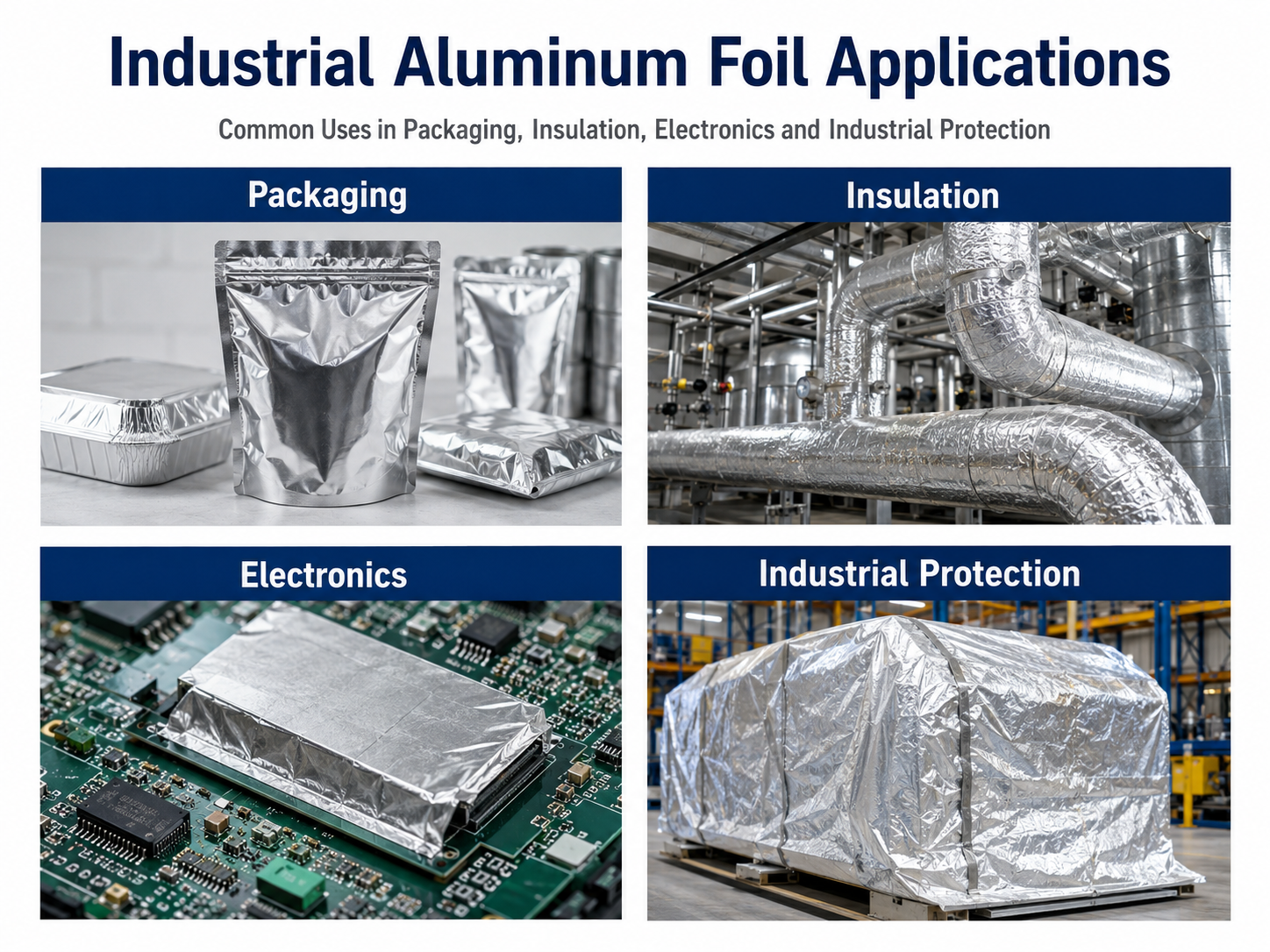
ဝယ်သူများသည် အလူမီနီယမ်ဖိုလ်ကို မတူညီသောနည်းလမ်းများဖြင့် အသုံးပြုကြပါသည်။ အထုပ်ပေးရေးပြောင်းလဲသူ၊ HVAC အ insulation ပေးသူ၊ ကြိုးထုတ်လုပ်သူနှင့် အပူလဲလှယ်သူများသည် အလူမီနီယမ်ဖိုလ်ကို တောင်းဆိုကြပါသည်။ သို့သော် ၎င်းတို့၏ အသုံးပြုမှုအတွက် အက်စ်ပီစီဖိက်ရှင်များသည် အလွန်ကွဲပြားနိုင်ပါသည်။
| အသုံးပြုမှုဧရိယာ | အများသုံး | ဝယ်သူများ၏ အဓိကစိုးရိမ်မှုများ | အများအားဖြင့် သတ်မှတ်ချက်များပေါ်တွင် အာရုဏ်စိုက်မှုရှိခြင်း |
|---|---|---|---|
| Packaging ကို | အစားအစာ ပုံးများ၊ ကော္ဖီအိတ်များ၊ အဖုံးများ၊ ပိတ်များ၊ ဆေးဝါးအတွက် ဘလစ်တာပုံးများ၊ စက်တ်များ | အတားအဆီးဖော်မြူလာ စွမ်းဆောင်ရည်၊ အပေါက်သေးငယ်မှုထိန်းချုပ်မှု၊ သန့်ရှင်းသောမျက်နှာပုံ၊ ပိတ်ခြင်းနှင့် လမီနေးရှင်း လုပ်ဆောင်နိုင်မှု | အထူ၊ အပူချိန်ထိန်းညှိမှု၊ မျက်နှာပုံသန့်ရှင်းမှု၊ လိုအပ်ပါက အစားအစာနှင့် ထိတွေ့မှုအတွက် စာရွက်စာတမ်းများ |
| အလျင်းခြေထောင့် | HVAC လေကြောင်းများ၊ အဆောက်အဦးများအတွက် အပူကာကွယ်မှု၊ ပိုက်များကို ထုပ်ပေးခြင်း၊ အပူပြန်လည်ရှိသော အပူကာကွယ်မှုအတွက် မျက်နှာပုံ | အပူပြန်လည်ရှိမှု၊ ကပ်စေ့မှုအား၊ စိုထိုင်းမှုဒုတ်ထုတ်မှု၊ နောက်ကွယ်ရှိ ပစ္စည်းများနှင့် ကိုက်ညီမှု | ဖိုင်ယ်မျက်နှာပုံ၊ ရောလ်အကျယ်၊ လမီနေးရှင်းအရည်အသွေး၊ တပ်ဆင်မှုအတွက် ကိုင်တွယ်မှု |
| အီလက်ထရောနစ် | ကေဘယ်လ်အကာအကွယ်၊ လျှပ်စစ်သံလိုက်အကာအကွယ်၊ လျှပ်ကူးပစ္စည်းဖြင့်ပြုလုပ်ထားသော ನ್ಯಾನို၊ ကက်ပီတာဖော့လ် | သန့်ရှင်းမှု၊ အနားများတွင် အမှုန်များကို ထိန်းချုပ်မှု၊ လျှပ်စစ်စီးဆင်းမှု၊ အနားများ၏ အရည်အသွေး၊ ရောလ်များကို ကာကွယ်မှု | တင်းကြပ်သော အတိုင်းအတာများ၊ သန့်ရှင်းသောမျက်နှာပုံ၊ ထိန်းချုပ်ထားသော ဖဲခြင်း၊ ကာကွယ်မှုပေးသော ထုပ်ပိုးမှု |
| အပူချိန် စီးပွားမှု | အာကာသ အအေးချိန်စနစ် အမြှေးများ၊ အပူလဲလှယ်ရှင် အမြှေးများ၊ ရေဒီယေတာများ၊ အအေးချိန်စနစ်များ | အပေါ်ယံ ညီညာမှု၊ ပုံသေးနိုင်မှု၊ အလွှာဖုံးခြင်း သ совместимость၊ ချေးစားမှု ခံနိုင်ရည် | အမြှေးအမျှင်များ၊ အလွှာဖုံးထားသော ဖိုင်လ်များ၊ သတ်မှတ်ပေးထားပါက ရေနှင့် ကပ်ညီသော အလွှာဖုံးများ |
| လူမှုတော်လှန်ရေး | ဂasket များ၊ အမည်စာတမ်းများ၊ တိပ်များ၊ အပူကာကွယ်ရေး ပြားများ၊ ပေါင်းစပ်ထုတ်လုပ်ထားသော ပြားများ၊ ကာကွယ်ရေး အထုပ်ပေါ်ယံများ | အသုံးပြုနိုင်မှု၊ အပေါ်ယံအခြေအနေ၊ အားသေးမှု၊ အရွယ်အစား တိကျမှု၊ ပို့ဆောင်ရေး ကာကွယ်မှု | အသုံးပြုမှုအလိုက် သတ်မှတ်ထားသော အလွန်သေးငယ်သော သံမဏိအမျိုးအစား၊ အမျှင်အား၊ အပေါ်ယံအမျိုးအစားနှင့် အထုပ်ပိုးမှု |
အထုပ်ပိုးမှုအတွက် အလွန်သေးငယ်သော သံမဏိဖိုင်လ်
အထုပ်ပို့ခြင်းသည် စက်မှုလုပ်ငန်းတွင် အသုံးများသည့် အလူမီနီယမ်ဖိုလ်အသုံးအနှုန်းများထဲမှ တစ်ခုဖြစ်သည်။ အစားအစာအထုပ်ပို့သူများ၊ ဆေးဝါးအထုပ်ပို့ပေးသူများ၊ ပေါ့ပေါ့ပါးပါးအထုပ်ပို့စက်ရုံများနှင့် အထူးပုဒ်ပိုင်းထုတ်လုပ်သူများက ဖိုလ်ကို အကျယ်အကျယ်အသုံးပြုကြသည်။
အလွန်သေးငယ်သော သံမဏိဖိုင်လ်သည် ထုတ်ကုန်များကို အလင်း၊ စိုထေးမှု၊ လေ၊ အနံ့နှင့် အဆီများမှ ကာကွယ်ပေးသည်။ ကော်ဖီ၊ နို့မှုန်များ၊ ဆေးလုံးများ၊ မုန့်များ၊ ဆော့စ်များနှင့် အထူးသဖြင့် ဓာတုပစ္စည်းများအတွက် ဤကာကွယ်မှုသည် အထုပ်ပိုးမှုအစီအစဥ် အပြည့်အဝ မှန်ကန်စွာ ဒီဇိုင်းလုပ်ထားပါက သိုလှောင်နိုင်သည့် ကာလနှင့် ထုတ်ကုန်၏ တည်ငြိမ်မှုကို အထောက်အကူပေးနိုင်သည်။
အထုပ်ပိုးမှု ဝယ်သူများသည် ပုံမှန်အားဖြင့် စစ်ဆေးလေ့ရှိသည်
- ထုပ်ထားသည့်အထူနှင့် အထူခွင့်လွှတ်ခံရမည့်အကွာအဝေး
- မျက်နှာပုံ၏ သန့်ရှင်းမှုအဆင့်
- ပင်ဟိုလ်အဆင့်
- အားလုံးပိတ်မှု အဆင့်
- အလွှာဖုံးခြင်း၊ ပုံနှိပ်ခြင်းနှင့် လမီနေးရှင်းလုပ်ခြင်းတွင် ကောင်းစွာကြောင်းတွေ့နိုင်မှု
- ရိုလ်၏အတွင်းသံသယအချင်းအကွာအဝေး၊ ရိုလ်၏အပြင်သံသယအချင်းအကွာအဝေးနှင့် ရိုလ်၏အလေးချိန်
- အစားအသောက်နှင့်ထိတွေ့မှုရှိသည့် စံသတ်မှတ်ချက်များ သို့မဟုတ် ဖောက်သည်များ၏လိုအပ်ချက်များ (သက်သေပြရန်လိုအပ်ပါက)
ဆေးဝါးထုပ်ပိုးမှုအတွက် လိုအပ်ချက်များသည် ပုံမှန်အားဖြင့် ပိုမိုတင်းကျပ်ပါသည်။ ဝယ်သူများသည် ခွဲခြမ်းစိတ်ဖေးမှုလက်မှတ်၊ ပစ္စည်းစမ်းသပ်မှုအစီရင်ခံစာ၊ အလွှာဖုံးခြင်းအချက်အလက်များနှင့် ASTM၊ EN၊ ISO သို့မဟုတ် ဖောက်သည်အလိုက်သတ်မှတ်ထားသည့် စံသတ်မှတ်ချက်များကို တောင်းဆိုနိုင်ပါသည်။ အတိအကျသေးစိတ်ဖော်ပြထားသည့် စာရွက်စာတမ်းအစုကို ဝယ်ယောင်အမှာစာကို ထုတ်မှုမှီအထ do အတည်ပြုရန်လိုအပ်ပါသည်။
အပူကာကွယ်ရေးအတွက် အလူမီနီယမ်ဖိုလ်
အပူကာကွယ်ရေးအတွက် အလူမီနီယမ်ဖိုလ်ကို HVAC၊ တည်ဆောက်ရေး၊ ပိုက်များအတွက် အပူကာကွယ်ရေး၊ စက်ကိရိယာများအတွက် အပူကာကွယ်ရေးနှင့် အပူကာကွယ်ရေးအတွက် ကာကွယ်ရေးပစ္စည်းများတွင် အသုံးများပါသည်။ များစွာသော စီမံကိန်းများတွင် ဖိုလ်ကို အလွှာဖုံးခြင်းအဖြစ် သို့မဟုတ် လမီနေးရှင်းလုပ်ထားသည့် အလွှာအဖြစ် အသုံးပြုကြပါသည်။ သို့သော် အပူကာကွယ်ရေးအတွက် အလွှာတစ်ခုတည်းအဖြစ် အသုံးများပါသည်။
၎င်း၏ အဓိကလုပ်ဆောင်ချက်မှာ အပူစွမ်းအားကို ပြန်လည်ထောင်းပေးရန်ဖြစ်သည်။ နောက်ဆုံးအောင်မြင်မှုသည် လေအကွာအဝေး၊ အောက်ခြေပစ္စည်းများ၊ ကပ်စောင်းပစ္စည်းများ၊ တပ်ဆင်မှုနည်းလမ်းနှင့် ဒေသတွင်း စံနှုန်းလိုအပ်ချက်များ အပါအဝင် အပူကာကွယ်မှုစနစ်အားလုံးပေါ်တွင် မှီခိုပါသည်။
အပူကာကွယ်မှုပစ္စည်းများ ဝယ်ယူသူများသည် မက်ထားသော အချက်များကို ပုံမှန်စစ်ဆေးလေ့ရှိသည်
- ဖော်လ်အထူ
- အထောက်အပံ့ပစ္စည်း
- ကပ်စောင်းခြင်း သို့မဟုတ် လေမ်းမှုအား
- Moisture Resistance ၊
- ရောလ်အကျယ်နှင့် ရောလ်အရှည်
- စီမံကိန်းအရ လိုအပ်သည့်အခါ မီးလုံခြုံမှုဆိုင်ရာ စာရွက်စာတမ်းများ
- စက်ရုံနှင့် အလုပ်နေရာတွင် ကုန်ပစ္စည်းများကို ကိုင်တွယ်ရာတွင် အသုံးပြုသော ထုပ်ပိုးမှု၏ ခိုင်မာမှု
HVAC လေမှုန်းမှုပိုက်လိုင်းများအတွက် အပူကာကွယ်မှု သို့မဟုတ် အဆောက်အဦးအပူကာကွယ်မှုအတွက် ဝယ်ယူသူများသည် ဖော်လ်အလွှာကိုသာ စစ်ဆေးသင့်ခြင်းမဟုတ်ပါ။ အောက်ခြေပစ္စည်း၊ ကပ်စောင်းပစ္စည်း၊ မီးလုံခြုံမှုအဆင့်သတ်မှတ်ချက်၊ တပ်ဆင်မှုအခြေအနေများနှင့် စီမံကိန်းဆိုင်ရာ စာရွက်စာတမ်းများသည်လည်း အလွန်အရေးကြီးပါသည်။ အဆောက်အဦးနှင့် ပတ်သက်သော အလူမီနီယမ်ပစ္စည်းများကို ပိုမိုကျယ်ပေါင်းစွာ ဝယ်ယူရာတွင် ဝယ်ယူသူများသည် အောက်ပါအချက်များကိုလည်း ပုံမှန်စစ်ဆေးနိုင်ပါသည် တည်ဆောက်ရေးအတွက် အလူမီနီယမ်ပစ္စည်းများ .
အီလက်ထရွန်နစ်နှင့် လျှပ်စစ်ပစ္စည်းများအတွက် အလူမီနီယမ်ဖော်လ်
အီလက်ထရွန်နစ်နှင့် လျှပ်စစ်အသုံးချမှုများတွင် ယေဘုယျအသုံးပြုသည့် ပိုမိုသေချာသေချာသော အထုပ်ပို့ခြင်း သို့မဟုတ် အကာအရံဖိုလ်များထက် ပိုမိုတင်းကြပ်သော အသုံးပြုမှုအတွက် အထူးသော အချက်အလက်များ လိုအပ်ပါသည်။ ဤဝယ်သူများသည် အများအားဖြင့် အရည်အသွေးတူညီမှု၊ အစွန်းအရည်အသွေး၊ သန့်ရှင်းမှုနှင့် နည်းပညာဆိုင်ရာ စာရွက်စာတမ်းများကို အလေးထားပါသည်။
အလူမီနီယမ်သတ္တုပြားကို ကေဘယ်လ်အကာအကွယ်၊ လျှပ်စစ်သံလိုက်အကာအကွယ်၊ လျှပ်ကူးနိုင်သောလမီနိတ်များ၊ ကက်ပီတာဆက်စပ်ထုတ်ကုန်များနှင့် ဘက်ထရီဆက်စပ်အသုံးချမှုများတွင် အသုံးပြုနိုင်ပါသည်။ ဤအသုံးပြုမှုများတွင် ယေဘုယျအိမ်သုံးပုံစံသတ္တုပြားသည် မသင့်လျော်ပါ။
အီလက်ထရွန်နစ်ဝယ်သူများသည် ပုံမှန်အားဖြင့် စစ်ဆေးလေ့ရှိသည့်အရာများ
- အလောဟ်နှင့် အမျှင်အား
- ထူလွှာညီမျှမှု
- မျက်နှာပုံ၏ သန့်ရှင်းမှုအဆင့်
- ဆီကြွင်းကျန်မှုထိန်းချုပ်မှု
- ဖဲ့ထုတ်ပြီးနောက် အစွန်းမှုန်မှုထိန်းချုပ်မှု
- ရောလ်အစွန်းအရည်အသွေး
- ပင်လယ်ကြောင်းပို့ဆောင်ရေးနှင့် မြေပေါ်ပို့ဆောင်ရေးအတွင်း ကာကွယ်ရေးအထုပ်ပို့မှု
နည်းပညာဆိုင်ရာ အသုံးပြုမှုများအတွက် ဝယ်သူများသည် အဆုံးသတ်အသုံးပြုမှု၊ စက်ပစ္စည်းဖြင့် လုပ်ဆောင်မှု၊ အကျယ်အတွင်း ခွင့်လွန်မှု၊ မျက်နှာပုံပ်လိုအပ်ချက်များနှင့် စာရွက်စာတမ်းလိုအပ်ချက်များကို နောက်ဆုံးစျေးနှုန်းကို တောင်းဆိုရန်မှီအထိ မျှဝေပေးရန် လိုအပ်ပါသည်။
အပူလဲလှယ်ရေးအတွက် အလူမီနီယမ်ဖိုလ်
အလူမီနီယမ် ဖိုလ်ကို အပူလဲလှယ်မှုစနစ်များတွင်လည်း အသုံးပြုကြသည်။ အကြောင်းမှာ ၎င်းသည် အလေးချိန်ပေါ့ပါးပြီး ပုံသေးနုပ်ပေးနိုင်ကာ အပူလွှဲပေးမှုစွမ်းရည်ကောင်းမောင်းသောကြောင့်ဖြစ်သည်။ အသုံးများသော အသုံးချမှုများတွင် လေအေးပေးစက် အနောက်ဘက်အပူလွှဲပေးသည့် အပိုင်းများ (fins)၊ အပူလွှဲပေးသည့် အပိုင်းများ (heat exchanger fins)၊ ရေဒီယေတာများ၊ အအေးပေးစနစ်များ၊ လေဝင်လေထွက်စနစ်များနှင့် အထုပ်လုပ်ထားသော အပူလွှဲပေးသည့် အပိုင်းများ (coated fin stock) တို့ ပါဝင်သည်။
အပူလဲလှယ်မှုပစ္စည်းများ ဝယ်ယူသူများသည် ပုံမှန်အားဖြင့် စစ်ဆေးလေ့ရှိသည့်အရာများ
- ပlatဖြစ်မှု
- အား
- ပုံသေးနုပ်မှုစွမ်းရည်
- ပြင်ဆင်ခြင်း
- ရေကို ဆွဲဆောင်သော အလွှာဖုံးခ покрытие လိုအပ်ချက်များ
- အပျက်အစီး ခံနိုင်ရည်
- ထုပ်အထူနှင့် အကျယ် အတိုင်းအတာအတွင်း အမှားအမှားများ
အပူလွှဲပေးသည့် အပိုင်းများ (fin stock) အတွက် မျှတမှုမှုန်းမှု (flatness) နိုင်မှုနိုင်မှု နှင့် အထူမှုန်းမှုမှုန်းမှုများ မှန်ကန်မှုမရှိပါက ပုံသေးနုပ်ခြင်း၊ ပုံသေးနုပ်ခြင်းနောက်ဆက်တွဲ ပုံသေးနုပ်ခြင်း (stamping, forming) သို့မဟုတ် စုစည်းခြင်း (assembly) အဆင့်များတွင် ပြဿနာများ ဖြစ်ပေါ်လာနိုင်သည်။ အလွှာဖုံးခြင်း (coating) လိုအပ်ပါက ဝယ်ယူသူများသည် ထုတ်လုပ်မှုအရှိန်မှုမှု (mass production) စတင်မှုမှီ အလွှာဖုံးခြင်းအမျိုးအစားနှင့် သေးနုပ်မှုမှုနှင့် ကိုက်ညီမှုရှိမှုကို အတည်ပြုရန် လိုအပ်သည်။
အသုံးများသော အလူမီနီယမ် ဖိုလ် အထူးအမျိုးအစားများနှင့် အခြေအနေများ (alloys and tempers)
စက်မှုလုပ်ငန်းအသုံးအနေဖြင့် အလူမီနီယမ် ဖိုလ်ကို အလူမီနီယမ် အထူးအမျိုးအစားများစွာမှ ထုတ်လုပ်နိုင်သည်။ အလူမီနီယမ် ပစ္စည်းများ၏ အကျယ်ပေါ်မှု ရွေးချယ်မှုများကို လိုအပ်သော ဝယ်ယူသူများသည် အောက်ပါ အလူမီနီယမ် ပစ္စည်းအမျိုးအစား voyage Metal တွင် ပြန်လည်စစ်ဆေးနိုင်ပါသည်။
- ၁xxx စီရီးဇ် - အလူမီနီယမ်ပမာဏမြင့်မားပြီး ပုံသေးချက်ကောင်းမားကာ ခြောက်သွေ့မှုဒဏ်ခံနိုင်မှုကောင်းမားသည် ကြည့်ရန် 1235 အလူမီနီယမ် ဖွေး .
- ၃xxx စီရီးဇ် - အားကောင်းမားခြင်း သို့မဟုတ် ပုံသေးချက်ကောင်းမားခြင်းကို လိုအပ်သည့်နေရာများတွင် များသောအားဖြင့်အသုံးပြုကြသည်။ ဆက်စပ်သော ကွိုင်ပစ္စည်းများအတွက် ကြည့်ရန် 3003 အလူမီနီယံဖိုလ် , 3105 အလူမီနီယံဖိုလ် .
- ၈xxx စီရီးဇ် - ထုပ်ပိုးမှုအတွက် ဖော်လီ၊ အိမ်သုံးဖော်လီ၊ ပုံးများအတွက် ဖော်လီနှင့် ပေါ့ပါးသော ထုပ်ပိုးမှုများတွင် အသုံးများသည် ကြည့်ရန် 8079 အလူမီနီယံဖိုလ် , 8011 အလူမီနီယမ် ဖွေး .
အရှိန်အဟောင်း (Temper) သည်လည်း အရေးကြီးပါသည်။ နုပ်သောအရှိန်အဟောင်းသည် ခေါက်ရနှင့် ပုံသေးရန် လွယ်ကောင်းလွယ်ကောင်းဖြစ်ပြီး မာသောအရှိန်အဟောင်းသည် ပုံစံအမှန်အကန်နှင့် မှန်ကန်သော အမိုးအထောက်ပေးမှုကို ပိုမိုကောင်းမားစေသည်။ အလယ်အလံ့အရှိန်အဟောင်းသည် အထက်ပါနှစ်များကြား အချိန်မှန်ကန်သော အမျှခေါင်းပေါ်မှုကို ပေးစေသည်။ ဝယ်ယူမှုအမှာစာပေးပို့ရန်မှီ အသုံးပြုမည့် အလောဟ်အမျိုးအစား၊ အရှိန်အဟောင်း၊ ထူမှု၊ အကျယ်၊ မျက်နှာပြင်အခြေအနေနှင့် သက်ဆိုင်ရာ စာရွက်စာတမ်းလိုအပ်ချက်များကို ဝယ်ယူသူများသည် အတည်ပြုထားရန် လိုအပ်ပါသည်။
စက်မှုလုပ်ငန်းအတွက် အလူမီနီယမ်ဖော်လီကို ရွေးချယ်နည်း
ကောင်းမွန်သော RFQ တစ်ခုသည် ပေးသောသူအား ဖော်လီကို မည်သို့အသုံးပြုမည်ကို နားလည်စေရန် ဖန်တီးပေးရပါမည်။ ထိုသို့ပြုလုပ်ခြင်းဖြင့် မှန်ကန်မှုမရှိသော စျေးနှုန်းသတ်မှတ်မှုများ၊ ထုတ်လုပ်မှုနှင့် ကိုက်ညီမှုမရှိမှုများနှင့် ရှောင်လွဲနိုင်သော နောက်ကောင်းမှုများကို ရှောင်လွဲနိုင်ပါသည်။
အသုံးပြုမှုကို သတ်မှတ်ပါ
ဖိုလ်သည် ထုပ်ပိုးရန်၊ အပူကာကွယ်ရန်၊ အီလက်ထရွန်နစ်ပစ္စည်းများ ထုတ်လုပ်ရန်၊ အပူလဲလှယ်ရန် သို့မဟုတ် ဖော်မော်လေးရှင်းလုပ်ရန်အတွက် အသုံးပြုမည်ဖုံးဆိုသည်ကို အတည်ပြုပါ။
အသုံးပြုမည့် အလွိုင်းအမျိုးအစားကို ရွေးချယ်ပါ
အားသောင်း၊ ပုံသောင်းနိုင်မှု၊ ချေးစားမှုဒဏ်ခံနိုင်မှုနှင့် အသုံးပြုမှုအမျိုးအစားအလိုက် အလွိုင်းအမျိုးအစားကို ရွေးချယ်ပါ။
အသုံးပြုမည့် အခြေအနေကို အတည်ပြုပါ
ထုတ်လုပ်မှုလုပ်ငန်းစဉ်အတွက် ပုံသောင်းနိုင်မှုနှင့် အသုံးပြုမှုအလိုက် နုန်းသော ဖိုလ်၊ အလယ်အလတ် မာသော ဖိုလ် သို့မဟုတ် မာသော ဖိုလ် တွင် မည်သည့်အခြေအနေကို လိုအပ်သည်ကို ဆုံးဖြတ်ပါ။
ရိုလ်အသေးစိတ်အချက်အလက်များကို စစ်ဆေးပါ
ထုပ်ပိုးမှုအထူ၊ အကျယ်၊ ခွင့်လွင့်ခွင့်၊ ရိုလ်၏ အတွင်းဘက်အချင်း၊ ရိုလ်၏ အပြင်ဘက်အချင်းနှင့် ရည်ရွယ်ချက်အတွက် ရိုလ်အလေးချိန်ကို အတည်ပြုပါ။
စာရွက်စာတမ်းများကို အတည်ပြုပါ
COA (အရည်အသွေးအစီရင်ခံစာ)၊ MTR (ပစ္စည်းစမ်းသပ်မှုအစီရင်ခံစာ)၊ လိုက်နာမှုစာရွက်စာတမ်းများ၊ ထုပ်ပိုးမှုနည်းလမ်းများနှင့် နမူနာစမ်းသပ်မှုရလဒ်များကို ပြန်လည်သုံးသပ်ပါ။
ဝယ်သူများ အတည်ပြုရန် အရေးကြီးသော အသေးစိတ်အချက်အလက်များ
အသေးစိတ်အချက်အလက်များ ပေးထားခြင်းဖြင့် ပေးသွင်းသူများသည် စျေးနှုန်းကောက်ယူရန် ပိုမိုမြန်ဆန်ပြီး ထုတ်လုပ်မှုမှီ နားလည်မှုလွဲမှားမှုများကို လျော့နည်းစေပါသည်။ ထိုပရောဂျက်တွင် ကွိုင်ပစ္စည်းများနှင့် ကိုက်ညီသော ပစ္စည်းများလည်း လိုအပ်ပါက၊ အလျာမင်ကိုး အမျိုးအစားသည် ဝယ်သူများအား ပါဝင်သော ပစ္စည်းအမျိုးအစားများကို နှိုင်းယှဉ်ရန် အထောက်အကူပေးနိုင်ပါသည်။
| အသေးစိတ်အချက်အလက် အမျိုးအစား | ဘယ်အတွက်ရှိသလဲ | အသုံးဝင်သော RFQ မေးခွန်း |
|---|---|---|
| အသုံးပြုမှု | အသုံးပုံအမျိုးအစားသည် သင့်လျော်သော အလွိုင်း (alloy)၊ အမျိုးအစား (temper)၊ မျက်နှာပုံသဏ္ဍာန် (surface) နှင့် ခွင့်လွှတ်နိုင်သော အများဆုံး အဖွဲ့အစဥ် (tolerance) ကို ဆုံးဖြတ်ပေးပါသည်။ | ဤဖိုင်လ်သည် အထုပ်ပိုးခြင်း၊ အပူကာကွယ်ခြင်း၊ အီလက်ထရွန်နစ်ပစ္စည်းများ၊ HVAC သို့မဟုတ် အပူလဲလှယ်ခြင်းအတွက် အသုံးပြုရန် ဖြစ်ပါသည်လား။ |
| ALLOY | အလွိုင်းအမျိုးမျိုးသည် အားကောင်းမှု၊ ပုံသောင်းနိုင်မှုနှင့် ခြောက်သွေ့မှုကို ခံနိုင်ရည်ရှိမှု စသည်တို့တွင် ကွဲပြားမှုများ ရှိပါသည်။ | 1xxx၊ 3xxx သို့မဟုတ် 8xxx အမျိုးအစားများ လိုအပ်ပါသည်လား။ |
| အပူချိန် | အမျိုးအစား (temper) သည် ပုံသောင်းနိုင်မှု၊ မာကြောမှု၊ ခေါက်နိုင်မှု၊ ပုံသောင်းနိုင်မှုနှင့် ပုံစံထိန်းသိမ်းနိုင်မှုတို့ကို သက်ရောက်မှုရှိပါသည်။ | လိုင်းသည် နုပါးသော၊ အလယ်အလတ်မာသော သို့မဟုတ် မာသော ဖွဲ့စည်းမှုကို လိုအပ်ပါသလား။ |
| ထူး | ထူခြင်းသည် အားကောင်းမှု၊ အတားအဆီးဖော်ပေးမှု၊ ပုံသောင်းနိုင်မှုနှင့် စုစုပေါင်းစရိတ်ကို သက်ရောက်မှုရှိပါသည်။ | လိုအပ်သော ထူခြင်းကို မိုက်ခရွန် (microns)၊ မီလီမီတာ (millimeters)၊ အင်ချ် (inches)၊ မီလ် (mils) သို့မဟုတ် ဂေးဂ် (gauge) တွင် ဖော်ပြထားပါသလား။ |
| ပဃိုင်းပိုင်းအသွင် | မျက်နှာပုံပေါ်ရှိ အကွက်များသည် အလွှာဖော်ခြင်း၊ ပုံနှိပ်ခြင်း၊ ပေါင်းစည်းခြင်း၊ လမီနေးရှင်းခြင်း သို့မဟုတ် ပုံပေါ်မှုကို သက်ရောက်စေနိုင်ပါသည်။ | ဆီ၊ ခြစ်ရှားမှုများ၊ အစွန်းများ၊ အောက်ဆီကိုင်ဒ်ဖြစ်ခြင်း သို့မဟုတ် အပေါက်သေးသေးများအတွက် ကန့်သတ်ချက်များ ရှိပါသလား။ |
| ရောလ်အသေးစိတ်အချက်အလက်များ | မကောင်းမွန်သော ရောလ်ထုပ်ပေးမှု သို့မဟုတ် အစွန်းပျက်စီးမှုများသည် ပြောင်းလဲမှုစက်ကွင်းများတွင် အလုပ်လုပ်နေမှု ရပ်ဆို့မှုကို ဖော်ပေးနိုင်ပါသည်။ | ရောလ်၏ အတွင်းဘက်အချင်း၊ အပြင်ဘက်အချင်း၊ အလေးချိန်နှင့် အစွန်းအရည်အသွေးတို့ကို မည်သည့်အတိုင်းအတာများ လိုအပ်ပါသလား။ |
| စာရွက်စာတမ်းများ | အချို့သော စီမံကိန်းများတွင် COA (Certificate of Analysis)၊ MTR (Mill Test Report)၊ အစားအစာနှင့် ထိတ်တွေ့မှုဆိုင်ရာ စာရွက်စာတမ်းများ သို့မဟုတ် ဖောက်သည်အလိုက် အထူးစာရွက်စာတမ်းများ လိုအပ်ပါသည်။ | ပစ္စည်းနှင့်အတူ မည်သည့် စာရွက်စာတမ်းများကို ပို့ဆောင်ရမည်နည်း။ |
| တင်ပို့မှု ပုံးအုပ်ခြင်း | သမုဒ္ဒရာ ပို့ဆောင်ရေး သို့မဟုတ် ကုန်စည်ပို့ဆောင်ရေးအတွင်း စိုထောင်မှုနှင့် ထိခိုက်မှုများကြောင့် ဖွဲ့စည်းထားသော အလူမီနီယမ် ဖိုယ်လ် မှုန်းများ ပျက်စီးသွားနိုင်ပါသည်။ | ဤပို့ဆောင်မှုအတွက် သစ်သားအိုးများ၊ စိုထောင်မှုကာကွယ်ရေး အလွှာ သို့မဟုတ် အထူးပါလက် ကာကွယ်ရေး လိုအပ်ပါသလား။ |
အလူမီနီယမ် ဖိုယ်လ် ဝယ်ယူရာတွင် ဖြစ်လေ့ရှိသော အမှားများ
အလူမီနီယမ် ဖိုယ်လ် ပြဿနာများအများစုသည် RFQ မှုန်းမှု မရှင်းလင်းမှုများမှ စတင်ပါသည်။ အောက်ပါဇယားတွင် ဝယ်ယူရာတွင် ဖြစ်လေ့ရှိသော အန္တရာယ်များနှင့် ၎င်းတို့ကို ပိုမိုကောင်းမွန်စွာ ကိုင်တွယ်နည်းများကို ဖော်ပြထားပါသည်။
| အမှားအများဆုံး | ဖြစ်နိုင်သော အန္တရာယ် | ပိုမိုကောင်းမွန်သော ဝယ်ယူမှု လုပ်ဆောင်ချက် |
|---|---|---|
| စျေးနှုန်းဖြင့်သာ ဝယ်ယူခြင်း | အဆုံးသတ် အထူမှု မတည်ငြိမ်မှု၊ ကောင်းမွန်စွာ မကုန်းခြင်း သို့မဟုတ် ထုတ်လုပ်မှုအတွင်း အမှုန်းများ ပိုများလာခြင်း။ | ပိုကောင်းစေပါသည် စျေးနှုန်းကို ခွင့်လွင့်ချက်၊ မျက်နှာပြင်အရည်အသွေး၊ ပေးပို့ရန် ကြာမှု နှင့် ထုပ်ပိုးမှုတို့နှင့် တွဲဖက်၍ နှိုင်းယှဉ်ပါ။ |
| ရှင်းလင်းမှုမရှိသော ယူနစ်များ အသုံးပြုခြင်း | အဆုံးသတ် မိုက်ခရွန်၊ မီလီမီတာ၊ အင်ခ်၊ မီလ်နှင့် ဂေးဂ် တို့ကြောင့် ဖြစ်ပေါ်လာသည့် ရှုပ်ထွေးမှုများသည် မှားယွင်းသည့် ပစ္စည်းကို ရွေးချယ်မှုသို့ ဦးတည်စေနိုင်ပါသည်။ | ပိုကောင်းစေပါသည် အကောင်းဆုံးအားဖြင့် မီထရစ်နှင့် အင်ခ်အခြေပြု ယူနစ်နှစ်မျိုးလုံးဖြင့် ထူမှုကို ဖော်ပြပါ။ |
| တမ်ပါ (temper) ကို လျစ်လျူရှုခြင်း | အဆုံးသတ် ဖွေး (foil) သည် ပုံသေးမှုအတွင်းတွင် ကွဲအက်ခြင်း၊ မကောင်းစွာ ခေါက်ခြင်း သို့မဟုတ် ပုံစံကို ထိန်းသိမ်းမှု မှုန်းခြင်းတို့ ဖြစ်ပေါ်စေနိုင်ပါသည်။ | ပိုကောင်းစေပါသည် လိုင်းလုပ်စဉ်နှင့် နောက်ဆုံးအသုံးပြုမှုအပေါ် အခြေခံ၍ တမ်ပါ (temper) ကို အတည်ပြုပါ။ |
| နမူနာလုပ်ခြင်းကို ကျော်လွှားခြင်း | အဆုံးသတ် အမြူးအများ ပစ္စည်းသည် စက်၊ ကပ်စ် (adhesive)၊ ကုတ်တင်း (coating) သို့မဟုတ် ပိတ်ပေးခြင်းလုပ်စဉ်တွင် ကိုက်ညီမှုမရှိနိုင်ပါသည်။ | ပိုကောင်းစေပါသည် အထူးသဖြင့် အသစ်သော ပရောဂျက်များအတွက် ကြီးမားသည့် ဝယ်ယူမှုအမိန့်များ ပေးရန်မှီအထိ နမူနာများကို စမ်းသပ်ပါ။ |
| စာရွက်စာတမ်းများကို အတည်ပြုခြင်းမရှိခြင်း | အဆုံးသတ် ပစ္စည်းသည် ဝယ်သူမှ လိုအပ်သည့် COA (Certificate of Analysis)၊ MTR (Mill Test Report) သို့မဟုတ် ကိုက်ညီမှုစာရွက်စာတမ်းများ မပါဘဲ ရောက်ရှိလာနိုင်ပါသည်။ | ပိုကောင်းစေပါသည် RFQ နှင့် ဝယ်ယူမှုအမိန့်တွင် လိုအပ်သည့်စာရွက်စာတမ်းများကို ဖော်ပြပါ။ |
ကမ္ဘာလုံးဆိုင်ရာ အလူမီနီယမ်ဖိုလ်ဝယ်သူများအတွက် လက်တွေ့ကျသော RFQ အကူအညီများ
လက်တွေ့ကျသော အလူမီနီယမ်ဖိုလ် RFQ တွင် နည်းပညာဆိုင်ရာလိုအပ်ချက်များနှင့် ကုန်သွယ်ရေးဆိုင်ရာအသေးစိတ်အချက်များ ပါဝင်သင့်ပါသည်။ ထိုသို့ပြုလုပ်ခြင်းဖြင့် ရနှိုင်မှုရှိမရှိ စစ်ဆေးရေး၊ ပေးပို့ရက်ကာလ ခန့်မှန်းရေးနှင့် တိကျသောစျေးနှုန်းသတ်မှတ်ရေးတို့ကို ပိုမိုလွယ်ကူစေပါသည်။
- အဆုံးအသုံးပြုမှု
- အလောဟ်နှင့် အမျှင်အား
- အထူနှင့် ခွင့်လွင့်ခံနိုင်မှု
- အကျယ်နှင့် အကျယ်ခွင့်လွင့်ခံနိုင်မှု
- ရိုလ်၏အတွင်းသံသယအချင်းအကွာအဝေး၊ ရိုလ်၏အပြင်သံသယအချင်းအကွာအဝေးနှင့် ရိုလ်၏အလေးချိန်
- မျက်နှာပုံပေါ်လွှာအများအားဖြင့် အမျှတမှုနှင့် အပေါက်များ လိုအပ်ချက်
- အလွှာဖုံးခြင်း၊ ပုံနှိပ်ခြင်း၊ အလွှာပေါင်းစပ်ခြင်း သို့မဟုတ် ပိတ်ပေါက်ခြင်း လိုအပ်ချက်များ
- COA၊ MTR သို့မဟုတ် ကိုက်ညီမှုစာရွက်စာတမ်း လိုအပ်ချက်များ
- ပန်းတိုင်အဖြစ်သတ်မှတ်ထားသော အမှာစာပုံစံအရေအတွက်နှင့် ဖော်ပေးရန်အချိန်ဇယား
- နိုင်ငံခြားသို့ ပို့သောအခါ အသုံးပြုလိုသော ထုပ်ပိုးမှုနည်းလမ်း
- ကုန်စည်ပို့ဆောင်ရေး အထောက်အပံ့လိုအပ်သည့်အခါ သက်ဆိုင်ရာ နိုင်ငံ သို့မဟုတ် ဆိပ်ကမ်း
ပို့ဆောင်ရေးအပြီးတွင် သိုလှောင်မှုသည်လည်း အရေးကြီးပါသည်။ အလူမီနီယံဖိုလ်ကို သန့်ရှင်းပြီး ခြောက်သွေ့သောနေရာတွင် သိမ်းဆောင်ရပ်သင့်ပါသည်။ စိုထောင်မှု၊ ဖုန်မှုန်များနှင့် မသေချာသော ကိုင်တွယ်မှုများကြောင့် ရှေးလုပ်ထားသည့် အစိတ်အပိုင်းများ သို့မဟုတ် မျက်နှာပုံများ ပျက်စီးသွားနိုင်ပါသည်။ နိုင်ငံတကာသို့ ပို့ဆောင်ရေးအတွက် အားကောင်းသော စိုထောင်မှုကာကွယ်မှုနှင့် တည်ငြိမ်သော ထုပ်ပိုးမှုများသည် ပို့ဆောင်ရေးနှင့် သက်ဆိုင်သည့် အန္တရာယ်များကို လျော့နည်းစေရန် အထောက်အကူပေးပါသည်။
အကျဉ်းချုပ်အကျဉ်းချုပ်
စက်မှုလုပ်ငန်းအသုံးပြုသည့် အလူမီနီယံဖိုလ်ကို ထုပ်ပိုးမှု၊ အပူကာကွယ်မှု၊ အီလက်ထရွန်နစ်ပစ္စည်းများ၊ အပူလဲလှယ်မှု၊ HVAC နှင့် ထုတ်လုပ်မှုလုပ်ငန်းများတွင် အသုံးပြုကြပါသည်။ ၎င်း၏တန်ဖိုးသည် အလေးချိန်နည်းခြင်း၊ အတားအဆီးဖော်ပေးနိုင်မှု၊ အပူပြန်လှန်မှု၊ ပုံသေးမှု၊ ချေးစားမှုခံနိုင်ရည်နှင့် လုပ်ဆောင်မှုအတွက် လွယ်ကူမှုတို့မှ ရရှိပါသည်။
နိုင်ငံတကာမှ ဝယ်ယူသူများအတွက် မှန်ကန်သော ဖိုလ်ကို စျေးနှုန်း သို့မဟုတ် ထူမှုတစ်ခုတည်းဖြင့် ရွေးချယ်ခြင်းမှာ မှန်ကန်မှုမရှိပါ။ အလွိုင်းအမျိုးအစား၊ အမျိုးအစား၊ မျက်နှာပုံအရည်အသွေး၊ ရှေးလုပ်ထားသည့် အစိတ်အပိုင်းများ၏ အခြေအနေ၊ စာရွက်စာတမ်းများ၊ ပေးပို့ရန် ကြာမှု၊ နိုင်ငံတကာသို့ ပို့ဆောင်ရေးအတွက် ထုပ်ပိုးမှုနှင့် နောက်ဆုံးတွင် ပြောင်းလဲမှုလုပ်ငန်းများကို ဝယ်ယူမှုအမှာစာ ပေးပို့ရန်မှီ အကဲဖြတ်သုံးသပ်ရပါမည်။
စက်မှုလုပ်ငန်းအသုံးပြုသည့် အလူမီနီယံဖိုလ်ကို ရှာဖွေခြင်း
ထုပ်ပိုးရေး၊ အပူကာကွယ်ရေး၊ အီလက်ထရွန်နစ်၊ အပူလဲလှယ်ရေး သို့မဟုတ် အထွေထွေထုတ်လုပ်မှုအတွက် စက်မှုအလူမီနီယမ်ဖိုလ်လိုအပ်သော ဝယ်သူများသည် voyagemetal.com တွင် ပစ္စည်းရွေးချယ်မှုများ၊ အသေးစိတ်အချက်အလက်များနှင့် B2B ဝယ်ယူရေးအထောက်အပံ့များကို ကြည့်ရှုနိုင်ပါသည်။
အလူမီနီယမ်ဖိုလ်ရွေးချယ်မှုများကိုကြည့်ရှုပါစက်မှုအလူမီနီယမ်ဖိုလ်နှင့်ပတ်သက်သော မေးလေ့ရှိသောမေးခွန်းများ
စက်မှုအလူမီနီယမ်ဖိုလ်ကို အသုံးပြုကြသည့်နေရာများမှာ မည်သည့်နေရာများနည်း။
စက်မှုလုပုပ်ငန်းအတွက် အလူမီနီယံဖိုလ်ကို ထုပ်ပိုးရေး၊ အပူကာကွယ်ရေး၊ အီလက်ထရွန်နစ်ပစ္စည်းများ၊ အပူလဲလှယ်မှု၊ HVAC စနစ်များ၊ ပိတ်မို့ခြင်းပစ္စည်းများ၊ ပေါင်းစပ်ဖွဲ့စည်းမှုများ၊ ကြိုးများကို အကာအကွယ်ပေးခြင်းနှင့် အထွေထွေထုတ်လုပ်မှုတွင် အသုံးပြုကြသည်။ အသုံးပြုမှုသည် အလူမီနီယံအမျိုးအစား၊ သံမဏိအမျိုးအစား၊ အထူနှင့် မျက်နှာပုံအရည်အသွေးပေါ်တွင် မူတည်သည်။
ထုပ်ပိုးရေးတွင် အလူမီနီယံဖိုလ်ကို အဘယ်ကြောင့်အသုံးပြုကြသနည်း။
အလူမီနီယံဖိုလ်ကို ရေစိုခြင်း၊ အောက်ဆီဂျင်၊ အလင်း၊ အနံ့နှင့် အဆီများကို ပိတ်ဆို့ပေးနိုင်သောကြောင့် ထုပ်ပိုးရေးတွင် အသုံးပြုကြသည်။ ထို့ကြောင့် ၎င်းကို အစားအစာ၊ ဆေးဝါး၊ အလှကုန်နှင့် အထူးဓာတုပစ္စည်းများ ထုပ်ပိုးရေးတွင် အသုံးပြုကြသည်။
အလူမီနီယံဖိုလ်ကို အပူကာကွယ်ရေးတွင် မည်သို့အသုံးပြုကြသနည်း။
အလူမီနီယမ် ဖိုင်လ်ကို အများအားဖြင့် အပူကာကွယ်ရေးစနစ်များတွင် အလင်းပေးသည့် မျက်နှာပုံအဖြစ် အသုံးပြုကြသည်။ အဆိုပါဖိုင်လ်ကို သင့်လျော်သော အောက်ခံပစ္စည်း၊ လေအကွာအဝေး၊ ကပ်စေးနှင့် တပ်ဆင်မှုနည်းလမ်းတို့နှင့် အသုံးပြုပါက အလင်းအပူလွှဲပေးမှုကို လျော့နည်းစေနိုင်သည်။
စက်မှုလုပ်ငန်းများတွင် အသုံးပြုသည့် အလူမီနီယမ် ဖိုင်လ်၏ ထူမှုမှာ မည်မျှရှိသနည်း။
ထူမှုသည် အသုံးပြုမှုအမျိုးအစားပေါ်တွင် မူတည်သည်။ ပုံစံပေးထားသည့် အထုပ်များ၊ ဘလစ်တာအထုပ်များ၊ အပူကာကွယ်ရေး၊ အီလက်ထရွန်နစ်များနှင့် အပူလွှဲပေးမှုများတွင် ထူမှုအမျိုးမျိုးကို လိုအပ်နိုင်သည်။ ဝယ်သူများသည် လိုအပ်ချက်များကို မိုက်ခရွန် (microns)၊ မီလီမီတာ (millimeters)၊ အင်ခ် (inches)၊ မီလ် (mils) သို့မဟုတ် ဂေးဂ် (gauge) တွင် ဖော်ပြထားခြင်းကို အတည်ပြုရန် လိုအပ်ပါသည်။
ဝယ်သူများသည် သင့်လျော်သော စက်မှုအလူမီနီယမ် ဖိုင်လ်ကို ရွေးချယ်ရာတွင် မည်သို့ရွေးချယ်သင်္ပါသည်။
ဝယ်သူများသည် အော်ဒါပေးမှုမှီတွင် အသုံးပြုမှုအမျိုးအစား၊ အလွိုင်းအမျိုးအစား၊ အမျော့အမာအဆင့်၊ ထူမှု၊ အကျယ်၊ ခွင့်လွှတ်မှု၊ ရောလ်အရွယ်အစား၊ မျက်နှာပုံအရည်အသွေး၊ အလွ покရီင်းလိုအပ်ချက်များ၊ စာရွက်စာတမ်းများ၊ နိုင်ငံခြားသို့ ပို့ဆောင်ရေးအထုပ်များနှင့် ပို့ဆောင်ရေးလိုအပ်ချက်များကို အတည်ပြုရန် လိုအပ်ပါသည်။
အလူမီနီယမ် ဖိုင်လ်အတွက် အမျော့အမာအဆင့်ကို အဘယ်ကြောင့် အရေးကြီးသနည်း။
အမျော့အမာအဆင့်သည် ဖိုင်လ်၏ အမျော့အမာမှု၊ အမာမှု၊ ပုံသေးနှုပ်နှုပ်နိုင်မှုနှင့် အမှန်တကယ်တည်မြဲမှုကို သက်ရောက်မှုရှိသည်။ အမျော့အဆင့်ဖိုင်လ်ကို ခေါက်ရှိုးရနှင့် ပုံသေးနှုပ်ရ လွယ်ကာ အမာအဆင့်ဖိုင်လ်မှာ အမာမှုနှင့် ပုံသေးမှုထိန်းချုပ်ရေးတွင် ပိုမိုကောင်းမွန်သည်။
ဝယ်သူများသည် အလူမီနီယမ်ဖိုလ်အတွက် RFQ တွင် အဘယ်အရာများကို ထည့်သွင်းပေးရမည်နည်း။
ကောင်းမွန်သော RFQ တွင် အလွှာအမျိုးအစား၊ အမျှင်အား၊ အထူ၊ အကျယ်၊ ခွင့်လွင့်ကြားခြင်း၊ ရောလ်အရွယ်အစား၊ အသုံးပြုမည့်နေရာ၊ မျက်နှာပုံလုပ်ဆောင်ချက်များ၊ အမှာယူပါသည့် အရေအတွက်၊ ပေးပို့ရန် အချိန်ကာလ၊ ထုပ်ပိုးမှုနည်းလမ်းများနှင့် COA သို့မဟုတ် MTR ကဲ့သို့သော လိုအပ်သော စာရွက်စာတမ်းများ ပါဝင်သင့်ပါသည်။