
 EN
EN



Roestvrijstalen plaatmateriaal voor fabricage: hoe de juiste kwaliteit en dikte te kiezen
Roestvrijstalen plaatmateriaal wordt veel gebruikt in fabricagebedrijven omdat het kan worden gesneden, gebogen, gelast, gepolijst en gevormd tot talloze industriële onderdelen. Het kiezen van de verkeerde kwaliteit of dikte kan echter reële problemen veroorzaken: scheuren tijdens het buigen, slechte laskwaliteit, oppervlakteschade, zwakke panelen, corrosie of hogere productiekosten.
Deze gids legt uit hoe fabricanten, inkopers en ingenieurs roestvrijstalen plaatmateriaal duidelijker kunnen kiezen voordat ze een bestelling plaatsen.
Wat is roestvrijstalen plaatmateriaal?
Roestvaststaalplaatmateriaal is een dun, plat roestvaststaalproduct dat wordt gebruikt voor snijden, buigen, lassen, ponsen en vormen. Het wordt meestal geleverd als platte platen of verwerkt uit een roestvaststaalcoils.
Algemene processen
Laserbewerking, scheren, buigen, lassen, ponsen, polijsten en vormen.
Belangrijkste voordelen
Goede corrosieweerstand, schone oppervlakte, nuttige sterkte en uitstekende bewerkbaarheid.
Typische kopers
Constructeurs, fabrikanten van apparatuur, aannemers, distributeurs en engineeringbedrijven.
Roestvaststaalplaatmateriaal wordt vaak gebruikt voor het maken van machineafdekkingen, elektrische kasten, panelen voor voedselverwerkingsapparatuur, keukenapparatuur, tanks, containers, beugels, behuizingen, decoratieve panelen, HVAC-onderdelen en onderdelen voor vervoersmiddelen.
Voor projectgerichte levering van plat roestvaststaalmateriaal kunnen kopers roestvaststaalplaten en -platenproducten bekijken om beschikbare kwaliteiten, afmetingen en oppervlakteafwerkingen te vergelijken.
Waarom de keuze van de kwaliteit belangrijk is bij fabricage
De kwaliteit beïnvloedt de corrosiebestendigheid, buigprestaties, lasgedrag, oppervlakteverschijning en kosten. Een kwaliteit die goed presteert in één project is mogelijk niet geschikt voor een ander.
Een goede keuze van kwaliteit moet deze vragen beantwoorden:
- 1) Wordt het onderdeel binnenshuis of buitenshuis gebruikt?
- 2) Komt het onderdeel in contact met water, zout, chemicaliën of voedsel?
- 3) Moet het onderdeel gelast worden?
- 4) Is diep buigen of vormen vereist?
- 5) Is het uiterlijk belangrijk?
- 6) Is het project kostengevoelig?
- 7) Is een specifieke norm vereist?
De prijs is belangrijk, maar mag niet de enige factor zijn. Een goedkoper type kan duur worden als het leidt tot corrosie, herwerkzaamheden of defecte onderdelen.
Veelgebruikte rvs-plaatmetaalrangen
| Kwaliteit | Hoofdfunctie | Voor fabricagegebruik | Belangrijke opmerking |
|---|---|---|---|
| 304 | Goede corrosiebestendigheid en vormbaarheid | Algemene fabricage, voedselapparatuur, kasten, tanks | Geschikt voor veel binnen- en milde buitentoepassingen. |
| 316 | Betere weerstand tegen chloridecorrosie | Maritiem, kustgebieden, chemische industrie, farmacie, voedselapparatuur | Hogere kosten dan 304, maar veiliger in zwaardere omgevingen. |
| 430 | Ferritisch roestvast staal met een lagere nikkelgehalte | Binnendecoratieve panelen, onderdelen voor huishoudtoestellen, afwerking | Lagere corrosiebestendigheid dan 304 en 316. |
| 201 | Roestvaststaaloptie voor prijsgevoelige toepassingen | Binnendecoratie, lichtbelaste panelen, meubelonderdelen | Niet geschikt voor gebruik in vochtige, marine- of chemische omgevingen. |
| 2205 Duplex | Hogere sterkte en uitstekende corrosieweerstand | Chemische tanks, maritieme constructies, zwaarbelaste onderdelen | Vereist een juiste lasregeling. |
Hoe u de dikte van roestvaststaalplaat moet kiezen
De dikte beïnvloedt de sterkte, het gewicht, de buigbaarheid, het lassen, de snelsnijdsnelheid en de uiteindelijke kosten. Een dunne plaat is gemakkelijker te vormen, maar kan gemakkelijk vervormen. Een dikke plaat is sterker, maar moeilijker te buigen en duurder in bewerking.
| Diktebereik | Typisch gebruik bij fabricage | Aankoopinformatie |
|---|---|---|
| 0,3–0,8 mm | Lichte afdekkingen, kleine decoratieve onderdelen, dunne panelen | Makkelijk te buigen, maar nog makkelijker te deuken of te vervormen. |
| 1,0–1,5 mm | Kasten, keukenapparatuur, lichtkappen | Veelgebruikt bereik voor algemene plaatbewerking. |
| 2,0–3,0 mm | Machineafdekkingen, tanks, beugels, stevigere panelen | Betere sterkte en stijfheid. |
| 4,0–6,0 mm | Zwaar belaste onderdelen, structurele panelen, industriële tanks | Vereist krachtigere snij- en buigapparatuur. |
| Boven de 6,0 mm | Zware bewerking, vaak als plaatmateriaal beschouwd | Controleer de buigcapaciteit en de beschikbaarheid van platen. |
Bij het kiezen van de dikte moeten kopers rekening houden met:
- 1) Vereiste sterkte
- 2) Gewichtslimiet
- 3) Buigstraal
- 4) Lasmethode
- 5) Uiteindelijke afwerking
- 6) Doelkosten
- 7) Capaciteit van de apparatuur
Roestvrijstalen plaatmateriaal voor snijden
Snijden is een van de eerste stappen in de fabricage. Roestvrijstalen plaatmateriaal kan worden gesneden met behulp van lasersnijden, plasmasnijden, waterstraal-snijden, scheren of mechanisch snijden.
Laser snijden
Geschikt voor machineonderdelen, behuizingen, beugels, decoratieve panelen en productie in kleine of middelgrote series.
Scheren
Snel voor rechte sneden, rechthoekige platen, panelen, eenvoudige afdekkingen en standaard op maat gesneden platen.
Waterjet Snijden
Handig voor warmtegevoelige onderdelen, dik roestvast staal, complexe vormen en lage thermische vervorming.
De beste snijmethode hangt af van de plaatdikte, tolerantie, hoeveelheid en onderdeelvorm. Kopers die continu verwerking of slitten nodig hebben, kunnen ook vergelijken roestvaste staal Coil opties voor grootschalige fabricage.
Roestvast stalen plaatmateriaal voor buigen
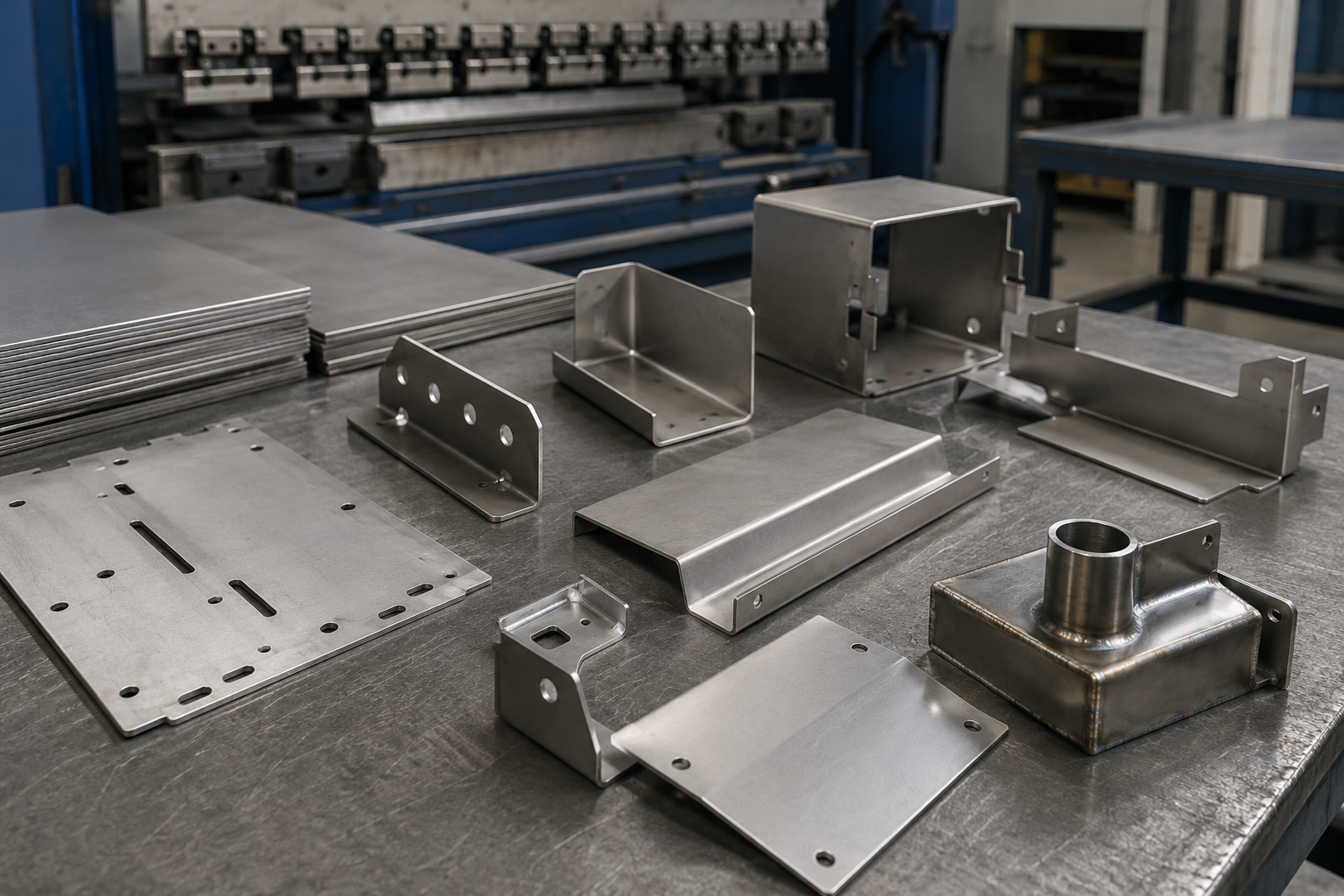
Buigen is een cruciale stap in de fabricage van plaatmateriaal. Roestvast staal heeft een goede sterkte, maar vertoont ook veerkracht (springback). Dit betekent dat het materiaal na het buigen licht terugglijdt.
Belangrijke factoren bij buigen zijn:
- Kwaliteit
- Dikte
- Boogstraal
- Korrelrichting
- Gereedschap
- Oppervlakfinish
- Gewenste hoek
Een kleine buigradius kan scheuren veroorzaken, vooral bij dikker of harder materiaal. Fabricagebedrijven moeten een geschikte binnenradius gebruiken, gebaseerd op de materiaaldikte en kwaliteit.
Voor zichtbare onderdelen is ook oppervlaktebescherming belangrijk. Geborsteld of gepolijst roestvast stalen plaatmateriaal kan tijdens het buigen worden gekrast als het gereedschapsoppervlak niet schoon is.
Roestvrijstalen plaatmateriaal voor lassen
Roestvrijstalen plaatmateriaal wordt vaak gelast tot tanks, frames, kasten, voedselapparatuur en machineonderdelen. De lasmethode en het kwaliteitsniveau beïnvloeden beiden de uiteindelijke kwaliteit.
Veelgebruikte lasmethoden
- TIG Lassen
- MIG Lassen
- Spotlassen
- Laserlassen
Belangrijke aandachtspunten bij het lassen
- Gebruik geschikt toevoegmateriaal
- Regel de warmtetoevoer
- Vermijd oververhitting van dunne platen
- Reinig het oppervlak vóór het lassen
- Voorkom verontreiniging met koolstofstaal
roestvrijstaalsoorten 304 en 316 worden veel gebruikt bij fabricageprocessen waarbij gelast moet worden. Lage-koolstofvarianten zoals 304L en 316L kunnen worden gekozen wanneer gelaste constructies een betere weerstand tegen carbideprecipitatie nodig hebben onder bepaalde gebruiksomstandigheden.
Slechte laspraktijken kunnen de corrosieweerstand verminderen. Warmteverkleuring, ruwe lassen en verontreiniging kunnen zwakke punten vormen waar corrosie kan beginnen.
Oppervlakteafwerking en bescherming tijdens de fabricage
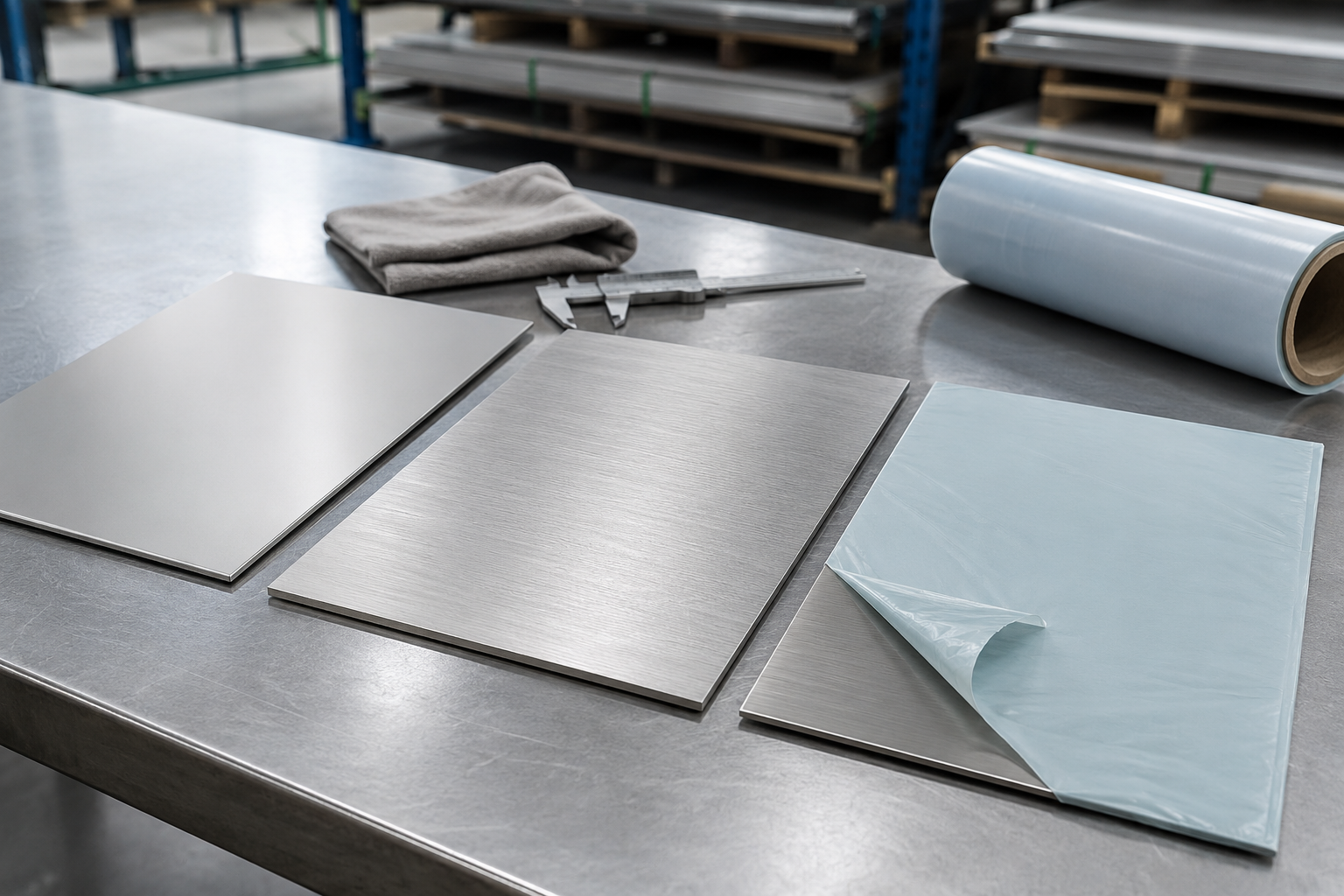
Oppervlakteafwerking gaat niet alleen over het uiterlijk. Het kan ook van invloed zijn op reiniging, wrijving, corrosiegedrag en bewerking.
| Finish | Uiterlijk | Algemene fabricagegebruik |
|---|---|---|
| 2b | Glad, licht reflecterend | Algemene apparatuur, tanks, voedingsmiddelenmachines |
| BA | Helder en reflecterend | Decoratieve onderdelen, huishoudelijke apparaten, zichtbare panelen |
| Nr. 4 | Gestreepte afwerking | Keukenapparatuur, liftpanelen, wandpanelen |
| HL | Langgerekte haartextuur | Architectuur, interieurdecoratie, zichtbare panelen |
| Nr. 1 | Warmgewalst, gezuurde oppervlakte | Zware bewerking, dikker materiaal, industriële tanks |
Voor meer details over de afwerking kunnen kopers deze gerelateerde handleiding raadplegen over oppervlakten van roestvast staal voordat zij zichtbare of decoratieve onderdelen bevestigen.
Hoe MOQ en verpakking invloed hebben op bestellingen van roestvrijstalen plaatmateriaal
De minimale bestelhoeveelheid (MOQ) hangt af van de kwaliteit, dikte, afmeting, afwerking en voorraadbeschikbaarheid. Voorraadartikelen kunnen kleinere hoeveelheden toestaan. Een aangepaste dikte, speciale afwerking, ongebruikelijke kwaliteit of nauwe toleranties vereisen mogelijk een grotere MOQ.
MOQ-factoren
- Beschikbare voorraadafmetingen
- Aanpassingsvereiste voor snijden
- MOQ voor oppervlakteafwerking
- Speciale kwaliteit of dikte
- Levertijd en productieschema
Verpakkingsgegevens voor export
- Waterdichte papier
- Houten pallets
- Randbescherming
- Bevestiging van staalstrip
- Vochtbescherming
- Duidelijke productetiketten
Checklist voor aankoop van roestvrijstalen plaatmateriaal voor bewerking
Voorafgaand aan de bestelling van roestvrijstalen plaatmateriaal dient u een duidelijke specificatie op te stellen. Een volledig onderzoek helpt leveranciers om nauwkeuriger offertes te verstrekken en de communicatie heen en weer te verminderen.
Een duidelijk onderzoek voor bewerking moet de kwaliteit, dikte, afmetingen, oppervlakteafwerking, bewerkingsmethode en verpakkingsvereisten omvatten.Aankoopchecklist
304 roestvrij staal plaatmateriaal, 1,5 mm dikte, 1219 × 2438 mm, 2B-afwerking, PVC-folie, ASTM A240, voor lasercut- en buigmachineafdekkingen, 3 ton, exportverpakking vereist.
Veelgemaakte fouten bij de aankoop van roestvrij staal plaatmateriaal voor bewerking
Kwaliteit kiezen op basis van prijs alleen
Een goedkoper kwaliteitsniveau kan onvoldoende presteren in vochtige, maritieme, voedings- of chemische omgevingen.
Negeer de boogstraal bij buigen
Een te kleine boogstraal kan barsten of een slechte afwerking veroorzaken, met name bij dikker plaatmateriaal.
Het vergeten van veerterugslag
Roestvrij staal vertoont veerkracht (springback) tijdens het buigen, dus gereedschap en hoekontwerp moeten hier rekening mee houden.
Onjuiste oppervlakteafwerking gebruiken
2B is geschikt voor industriële onderdelen, terwijl zichtbare panelen mogelijk No. 4, HL, BA of spiegelafwerking vereisen.
Het oppervlak niet beschermen
Krasjes tijdens het snijden, buigen, verpakken of vervoer kunnen herwerk of afkeuring veroorzaken.
Ontbrekende lasvereisten
Indien lassen vereist is, moeten kopers de kwaliteit, vulmateriaal, reiniging van de lasnaden en behoefte aan een koolstofarme kwaliteit bevestigen.
Indien het project ook bijpassende buizen of lange producten vereist, kunnen kopers de specificaties vergelijken met roestvaste staal buis en staalstaaf voor een completer materiaalaankoopplan.
Samenvatting
Roestvrij staalplaat is een praktisch materiaal voor industriële fabricage, maar juiste selectie is belangrijk. Kwaliteit, dikte, snijmethode, buigradius, lasbehoeften, oppervlakteafwerking, MOQ en verpakking beïnvloeden allemaal het eindresultaat.
Voor algemene fabricage wordt roestvrij staalplaat van kwaliteit 304 veel gebruikt. Voor mariene, kust- of chloride-rijke omgevingen is kwaliteit 316 mogelijk geschikter. Voor binnenlandse decoratieve onderdelen kunnen kwaliteiten 430 of 201 worden overwogen wanneer de omgeving gecontroleerd is. Voor veeleisend industrieel gebruik kan duplex roestvast staal nodig zijn.
Een duidelijke aankoopspecificatie moet graad, dikte, afmeting, oppervlakteafwerking, hoeveelheid, norm, bewerkingsmethode, toepassing, oppervlaktebescherming en verpakkingsvereiste omvatten. Dit helpt productieproblemen te verminderen en versnelt het opstellen van offertes.
Hebt u roestvrij staalplaatmateriaal nodig voor fabricage?
Voyage Metal levert roestvrij staalplaatmateriaal voor fabricage, machines, bouw, decoratie en projectgerichte aankoop. Kopers kunnen graad, dikte, afmeting, oppervlakteafwerking, hoeveelheid en toepassingsgegevens versturen voor offerteopstelling en ondersteuning bij materiaalkeuze.
Nuttige gegevens om op te nemen in een aanvraag:
- Graad, zoals 304, 316, 304L, 316L, 430, 201 of 2205
- Dikte, plaatafmeting en tolerantievereiste
- Behoefte aan snijden, buigen, lassen of oppervlakteafwerking
- Hoeveelheid, norm, bestemmingshaven en verpakkingsvereiste
- Toepassing en vereiste levertijd
Bekijk gerelateerde producten: Roestvrij Staal Blad & Plaat
Veelgestelde vragen
Waar wordt roestvrij staalplaatmateriaal voor gebruikt?
Roestvrij staalplaatmateriaal wordt gebruikt voor machineafdekkingen, behuizingen, kasten, keukenapparatuur, voedselverwerkingsmachines, tanks, beugels, decoratieve panelen, HVAC-onderdelen, auto-onderdelen en vele gefabriceerde componenten.
Hoe kiezen kopers de kwaliteit van roestvrij staalplaatmateriaal?
Kopers moeten de kwaliteit kiezen op basis van de corrosieomgeving, de fabricagemethode, de lasbehoeften, het gewenste oppervlak, de doelkosten en de vereiste norm. 304 is algemeen gebruikt voor algemeen gebruik, terwijl 316 beter geschikt is voor chloorrijke omgevingen.
Welke dikte is gebruikelijk voor de fabricage van roestvrij staalplaatmateriaal?
Gebruikelijke fabricagediktes zijn 1,0 mm, 1,5 mm, 2,0 mm en 3,0 mm. Dunne platen worden gebruikt voor lichte panelen en afdekkingen. Dikkere platen worden gebruikt voor sterkere onderdelen, tanks en industriële componenten.
Waarom barst roestvrij staalplaatmateriaal tijdens het buigen?
Barsten kunnen optreden wanneer de buigradius te klein is, het materiaal te dik of te hard is, de buigrichting ongeschikt is of de gereedschappen niet correct zijn. Proefbuigen is nuttig voor veeleisende onderdelen.
Hoe beïnvloedt lassen roestvast staalplaatmateriaal?
Lassen kan het uiterlijk en de corrosiebestendigheid beïnvloeden indien de warmte-invoer, het toevoegmateriaal, de reiniging of de nabehandeling na het lassen niet goed worden gecontroleerd. Voor sommige gelaste toepassingen worden mogelijk 304L of 316L gekozen.
Welke afwerking is geschikt voor gefabriceerde onderdelen van roestvast staal?
de 2B-afwerking is gebruikelijk voor algemene gefabriceerde onderdelen. De No.4- en HL-afwerkingen worden gebruikt voor zichtbare panelen. De BA- en spiegelafwerkingen worden gebruikt voor glanzende decoratieve onderdelen. De No.1-afwerking wordt vaker gebruikt voor warmgewalst industrieel materiaal.
Hoe moet roestvast staalplaatmateriaal worden verpakt voor export?
Exportverpakking omvat vaak waterdichte papier, houten pallets, randbescherming, stalen banden voor bevestiging, vochtbescherming en duidelijke etiketten. Decoratieve platen kunnen ook een PVC-beschermfolie of tussenpapier nodig hebben.