
 EN
EN




Aluminum vs Stainless Steel: Key Differences for Industrial Buyers
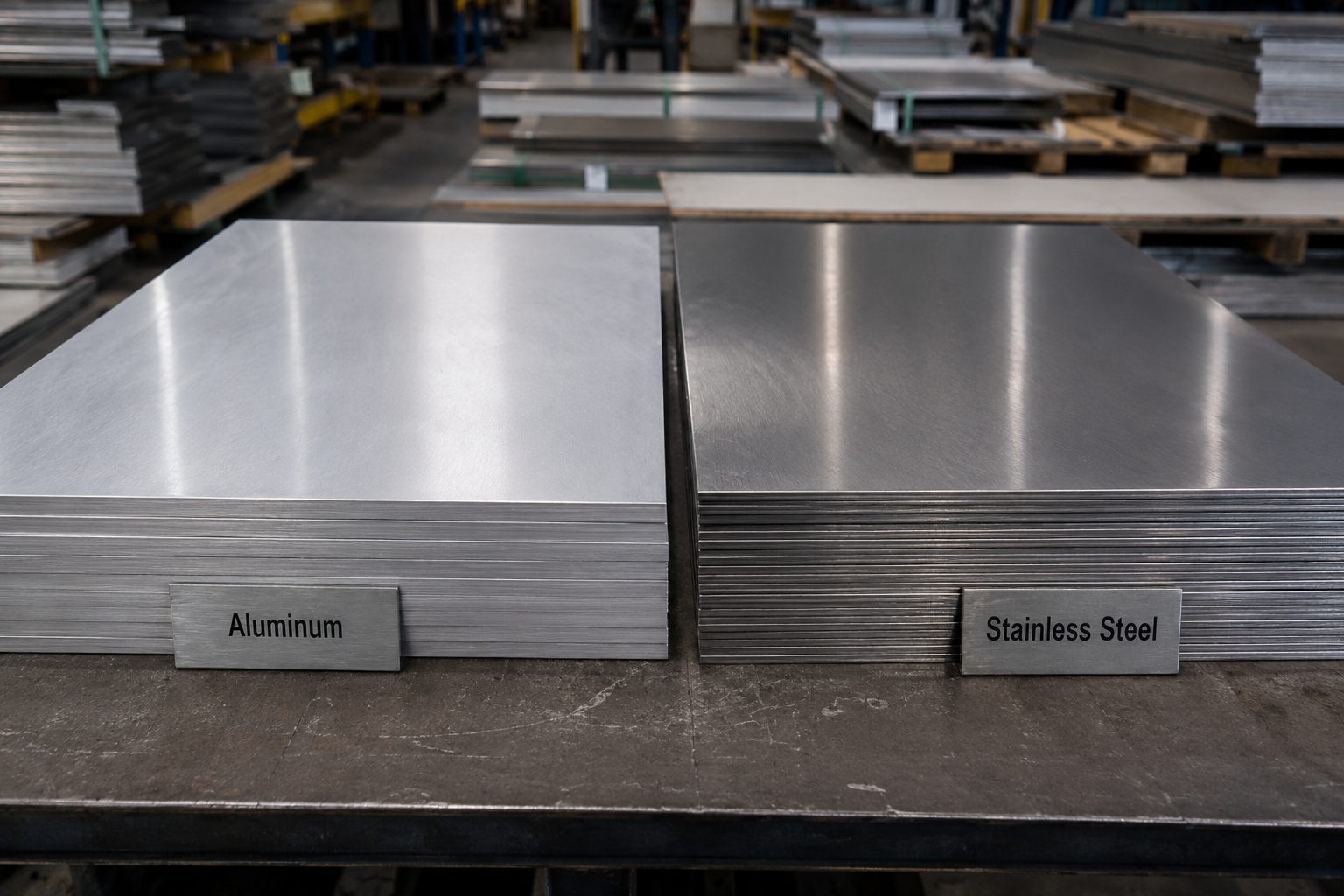
Aluminum and stainless steel are both common materials in industrial projects. Buyers often compare them for sheet, plate, pipe, tube, bar, enclosures, tanks, frames, and fabricated parts. They may both look clean and metallic, but their weight, strength, corrosion resistance, heat resistance, cost, and fabrication behavior are very different.
Choosing the wrong material can increase cost or create production problems. A lightweight aluminum part may not survive the required load or temperature. A stainless steel part may work well but add unnecessary weight and machining cost. For buyers comparing aluminum materials and stainless steel materials, the right choice depends on the application, environment, and processing method.
What Is Aluminum?
Aluminum is a lightweight non-ferrous metal. “Non-ferrous” means it is not based on iron. It naturally forms a thin aluminum oxide layer on the surface, which helps protect it from corrosion in many normal environments.
Industrial aluminum is usually not pure aluminum. It is often alloyed with elements such as magnesium, silicon, copper, manganese, or zinc to improve strength, formability, corrosion resistance, or machining performance.
- 1050 aluminum is often used where high purity and conductivity matter.
- 3003 aluminum is common for general sheet work.
- 5052 aluminum is widely used for marine sheet, panels, and formed parts.
- 6061 aluminum is common for machined and structural parts.
- 7075 aluminum is used for high-strength applications where its limits are understood.
Aluminum is commonly used in transportation parts, marine panels, machinery components, enclosures, heat exchangers, construction panels, and lightweight structures. For continuous forming or panel production, buyers may also compare aluminum coil products by alloy, temper, thickness, and surface finish.
What Is Stainless Steel?
Stainless steel is an iron-based alloy. It contains chromium, which forms a thin passive film on the surface. This film helps stainless steel resist rust and corrosion.
Stainless steel may also contain nickel, molybdenum, carbon, manganese, nitrogen, titanium, or niobium. These elements change corrosion resistance, strength, heat resistance, welding behavior, and cost.
- 304 stainless steel is common for general corrosion resistance.
- 316 stainless steel is often used where chlorides or cleaning chemicals are present.
- 430 stainless steel is used for decorative and appliance applications.
- 321 stainless steel is used for certain heat-related applications.
- 2205 duplex stainless steel is used where strength and chloride stress corrosion resistance are important.
Stainless steel is common in food processing equipment, chemical tanks, marine hardware, pressure equipment, construction, medical equipment, and high-temperature components.
Aluminum vs Stainless Steel: Main Difference
The main difference between aluminum and stainless steel is the balance between weight, strength, corrosion behavior, heat resistance, and fabrication cost.
When the project needs:
- Lower weight
- Good thermal or electrical conductivity
- Easy machining
- Panels, covers, frames, or enclosures
- Weight-sensitive transportation parts
When the project needs:
- Higher strength or hardness
- Better heat resistance
- Hygienic equipment surfaces
- Chemical or chloride resistance
- Pressure, wear, or heavy-duty service
Weight Comparison: Aluminum Is Much Lighter
Aluminum is much lighter than stainless steel. This is one of the strongest reasons buyers choose aluminum for transportation, marine panels, portable equipment, and lightweight structures.
Lighter parts can help reduce shipping weight, make installation easier, and improve fuel efficiency in vehicles or moving equipment.
- Vehicle bodies
- Aircraft parts
- Lightweight panels
- Marine panels
- Portable equipment
- Frames where weight reduction matters
Lower weight does not automatically make aluminum the right material. If the part needs high strength, high stiffness, impact resistance, or high-temperature performance, stainless steel may still be more suitable.
Strength Comparison: Stainless Steel Is Usually Stronger
Stainless steel is usually stronger and harder than many common aluminum alloys. It also resists wear, impact, and deformation better in many heavy-duty applications.
Aluminum can still be strong enough for many projects, especially when the design uses a suitable alloy such as 6061-T6 or 7075-T6. Engineers may also increase the section size of aluminum parts to meet strength needs while still saving weight.
Buyer note: Strength should be checked by grade, temper, product form, and design. Do not compare aluminum and stainless steel only by appearance or general material name.
Corrosion Resistance: Which Material Performs Better?
Both aluminum and stainless steel resist corrosion, but they do it differently. Aluminum forms an aluminum oxide layer. Stainless steel forms a chromium oxide passive film.
Stainless steel, especially 316 and duplex grades, often performs better in many chemical, hygienic, and chloride-related applications. Aluminum grades such as 5052 and 5083 are widely used for marine sheet and panels, but they still need the right design, drainage, and surface protection.
Corrosion resistance depends on:
- Alloy grade
- Surface finish
- Temperature
- Chloride level
- Cleaning chemicals
- Contact with other metals
- Maintenance and drainage
Heat Resistance: Stainless Steel Handles Higher Temperatures
Stainless steel generally keeps strength better at higher temperatures. Aluminum loses strength faster when temperature rises and has a much lower melting point than stainless steel.
This is why stainless steel is often selected for furnace parts, exhaust systems, high-temperature tanks, thermal processing equipment, and food or chemical heating equipment.
Aluminum still has value in thermal applications because it conducts heat well. It is common in heat sinks, cooling parts, and heat exchanger components when the service temperature is suitable.
Thermal and Electrical Conductivity: Aluminum Performs Better
Aluminum conducts heat and electricity better than stainless steel. This makes it useful in electrical and thermal applications where conductivity matters.
- Heat sinks
- Electrical busbars
- Power equipment
- Heat exchanger fins
- Lightweight cooling parts
Stainless steel is not usually selected when high electrical conductivity is the main requirement. It is more often chosen for strength, corrosion resistance, hygiene, and heat resistance.
Machining and Fabrication
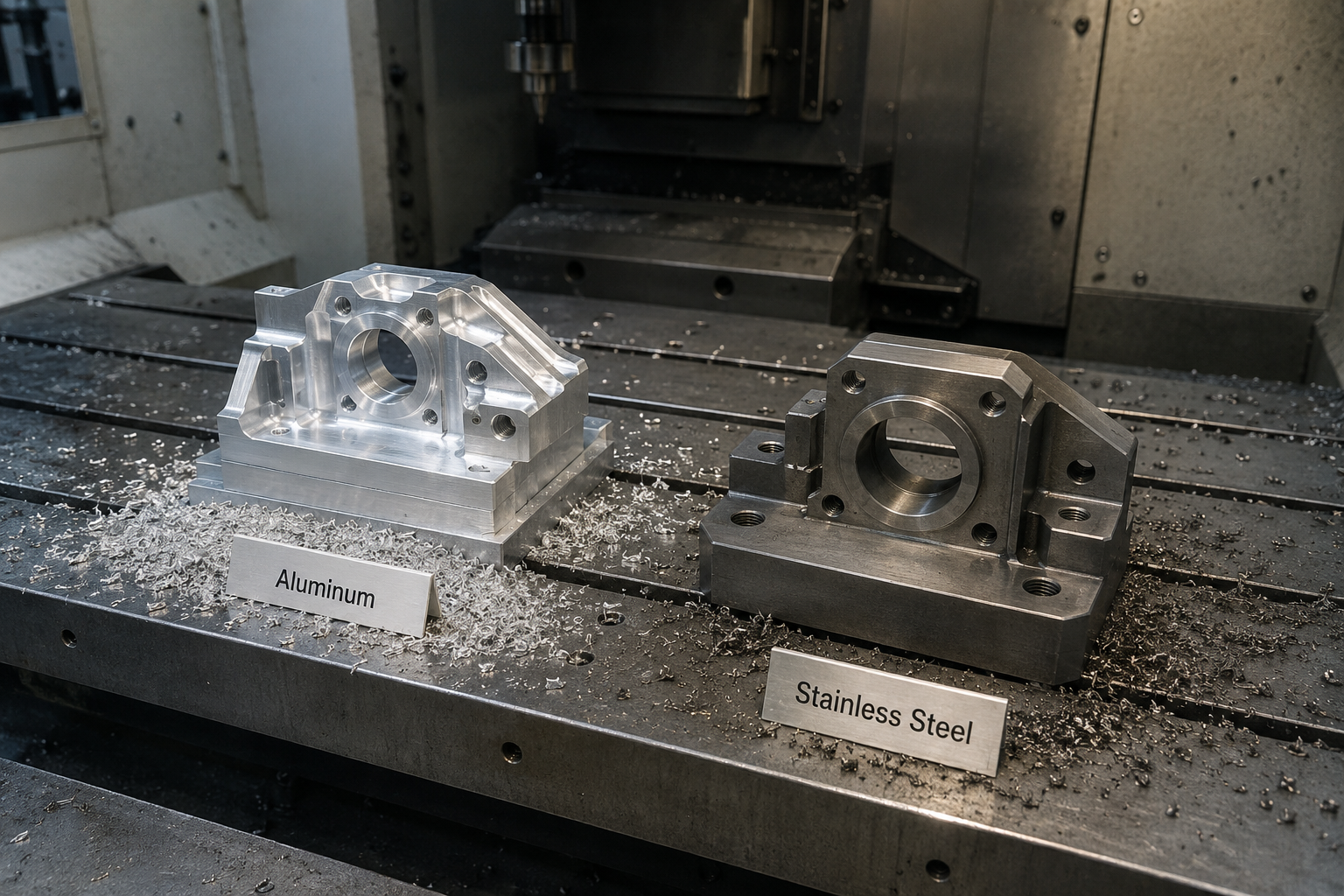
Aluminum is usually easier to machine than stainless steel. It often needs lower cutting force and can support faster machining speed. This makes aluminum practical for CNC parts, lightweight brackets, housings, and prototypes.
Stainless steel is harder to machine. It can cause more tool wear and needs better cutting control. However, it can be the better choice for parts that need wear resistance, strength, toughness, or corrosion resistance after fabrication.
Material cost is not the only cost. Machining time, scrap rate, tool wear, welding time, finishing work, and inspection all affect final project cost.
Welding: Aluminum vs Stainless Steel
Both materials can be welded, but the process requirements are different.
Aluminum welding needs clean surface preparation because the oxide layer can affect weld quality. Heat control is important. Common methods include Tungsten Inert Gas welding, often called TIG welding, and Metal Inert Gas welding, often called MIG welding.
Stainless steel welding is common in many industrial settings, but grade selection matters. Low-carbon grades such as 304L and 316L are often used for welded parts. Duplex stainless steel needs more careful welding control to keep balanced properties.
Practical tip: Always confirm grade, welding method, filler material, post-weld treatment, and final strength requirements before ordering aluminum or stainless steel for welded projects.
Surface Finish and Appearance
Aluminum can be anodized, brushed, polished, painted, or powder coated. Anodizing improves surface protection and gives a clean appearance for panels, enclosures, and visible parts.
Stainless steel can be supplied in finishes such as 2B, BA, No.4, hairline, brushed, or mirror polished. It is often selected where clean appearance, hygiene, and long service life matter.
For visible products, buyers should confirm surface finish before production. A general material name is not enough for appearance-sensitive parts.
Cost Comparison: Which Material Is More Cost-Effective?
There is no single answer. Aluminum may reduce weight and shipping cost. Stainless steel may cost more in some cases but can offer longer service life in harsh environments.
Real cost depends on:
- Grade and temper
- Thickness and product form
- Quantity
- Processing method
- Surface finish
- Shipping weight
- Maintenance and replacement risk
Do not compare only price per kilogram. A lighter aluminum design may use more volume. A stainless steel part may cost more at first but last longer in chemical or hygienic service.
Quick Comparison Table: Aluminum vs Stainless Steel
| Factor | Aluminum | Stainless Steel |
|---|---|---|
| Weight | Much lighter | Heavier |
| Strength | Good, grade-dependent | Usually higher |
| Corrosion resistance | Good, alloy-dependent | Very good, grade-dependent |
| Heat resistance | Lower | Better |
| Conductivity | High thermal and electrical conductivity | Lower conductivity |
| Machining | Usually easier | More difficult |
| Welding | Needs careful surface and heat control | Common, but grade-dependent |
| Surface finish | Anodized, painted, brushed, polished | 2B, BA, No.4, HL, mirror, brushed |
| Typical use | Lightweight panels, frames, heat-transfer parts | Tanks, piping, food, chemical, structural parts |
When Should Buyers Choose Aluminum?
Choose aluminum when weight reduction, conductivity, or machining efficiency matters.
- The project needs lighter panels, frames, or covers.
- The part needs good thermal or electrical conductivity.
- The service temperature is suitable for aluminum.
- The required strength can be met by alloy and design.
- CNC machining speed or lower part weight is important.
For tubular aluminum components, buyers may also review aluminum pipe and tube materials for lightweight structures, equipment frames, and fluid or mechanical applications.
When Should Buyers Choose Stainless Steel?
Choose stainless steel when strength, hygiene, heat resistance, or harsh corrosion resistance matters more than low weight.
- The project involves food, pharmaceutical, or hygienic equipment.
- The environment contains chemicals, chlorides, or cleaning agents.
- The part needs higher hardness, wear resistance, or pressure resistance.
- The service temperature is too high for aluminum.
- Long service life in a demanding environment matters.
For machined shafts, rods, fasteners, and industrial components, Voyage Metal also supplies stainless steel bar and rod materials in common industrial grades.
Common Buying Mistakes to Avoid
Mistake 1: Choosing only by weight
Aluminum is lighter, but it may not meet strength, heat, or wear requirements.
Mistake 2: Choosing only by corrosion resistance
Both materials resist corrosion, but grade and environment decide real performance.
Mistake 3: Comparing only price per kilogram
Total cost includes fabrication, shipping, maintenance, service life, and replacement risk.
Mistake 4: Ignoring galvanic corrosion
Aluminum and stainless steel can create galvanic corrosion when they contact each other in wet or salty environments. Insulation, coating, drainage, and design control may be needed.
Mistake 5: Ignoring product form and condition
Aluminum temper affects strength and bending. Stainless steel grade, condition, and surface finish affect forming, welding, and corrosion resistance.
Practical Purchasing Checklist
Before choosing aluminum or stainless steel, buyers should confirm the full project requirements.
- Application environment
- Required strength
- Weight limit
- Temperature range
- Corrosion exposure
- Product form: sheet, plate, coil, pipe, tube, bar, or profile
- Grade and temper or grade and condition
- Surface finish
- Welding or machining method
- Required standard
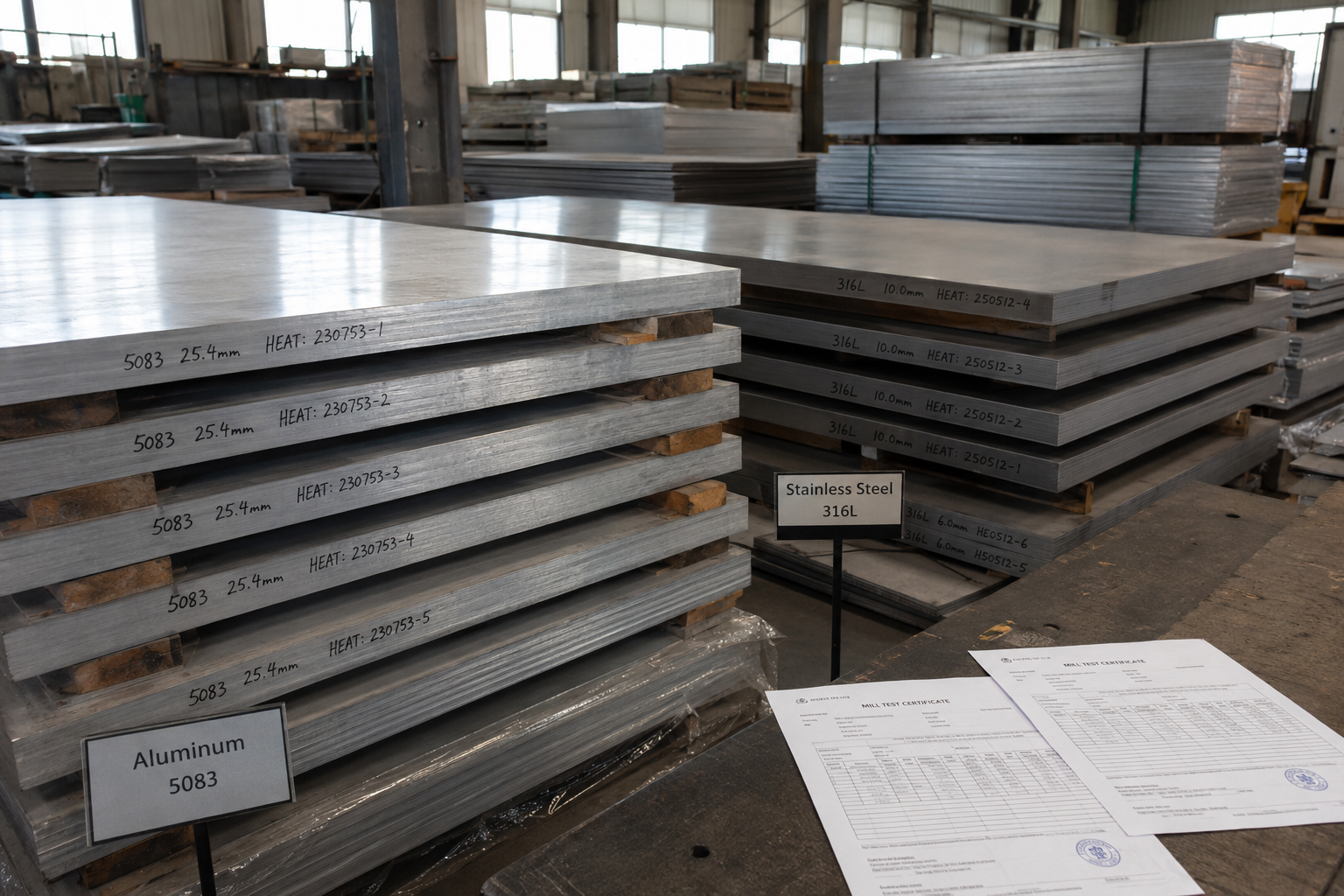
- Mill Test Certificate, or MTC
- Packaging and shipping requirements
- Contact with other metals
- Expected service life
Summary: Aluminum vs Stainless Steel
Aluminum and stainless steel can both perform well, but they solve different problems.
- Aluminum is lighter, easier to machine, and useful for many weight-sensitive applications.
- Stainless steel is stronger, more heat-resistant, and often better for demanding corrosion, hygiene, and heavy-duty service.
- Both materials need correct grade selection, product form, surface finish, and fabrication control.
- Buyers should compare total project requirements, not only price or appearance.
The right material depends on the working environment, part design, fabrication method, and expected service life.
Need Aluminum or Stainless Steel Materials for Your Project?
For industrial projects, the right material choice affects cost, fabrication, weight, corrosion resistance, and service life. Voyage Metal supports B2B buyers with aluminum and stainless steel materials, grade comparison, material certificates, and export packaging for overseas projects.
- Aluminum and stainless steel grade comparison
- Sheet, plate, coil, pipe, tube, and bar supply
- Material certificate and heat number support
- Cut-to-size and surface finish options
- Export packaging for overseas shipment
- Application-based material suggestions
- Support for fabrication, machining, and industrial projects
- Supply support for overseas B2B buyers
FAQ
What is the main difference between aluminum and stainless steel?
Aluminum is much lighter and usually easier to machine. Stainless steel is usually stronger, harder, more heat-resistant, and better for demanding hygienic or corrosive environments. The right choice depends on the part design and service conditions.
Why choose aluminum instead of stainless steel?
Choose aluminum when weight reduction, thermal conductivity, electrical conductivity, or machining efficiency matters. It is common for panels, frames, enclosures, transportation parts, and heat-transfer components.
How strong is stainless steel compared with aluminum?
Stainless steel is usually stronger than common aluminum alloys. Some aluminum alloys are strong, but strength depends on alloy, temper, product form, and part design.
What is better for corrosion resistance, aluminum or stainless steel?
Both can resist corrosion. Stainless steel, especially 316 or duplex grades, often works better in harsh chemical or chloride environments. Aluminum grades such as 5052 and 5083 are often used for marine sheet applications.
How should buyers choose between aluminum and stainless steel?
Buyers should compare weight, strength, corrosion environment, temperature, fabrication method, cost, and service life. The order should also specify grade, standard, product form, surface finish, and required inspection documents.
References
- The Aluminum Association, “Industry Standards.” View source
- World Stainless Association, “What is Stainless Steel?” View source
- Voyage Metal, “Aluminum.” View source
- Voyage Metal, “Stainless Steel.” View source