
 EN
EN




When engineers and procurement professionals evaluate materials for structural applications, the choice of metal can define the long-term performance, safety, and cost profile of an entire project. Among the many options available, stainless steel plates have established themselves as one of the most reliable and versatile materials across a broad range of industries. From civil infrastructure and marine construction to chemical processing facilities and architectural facades, the structural use of stainless steel plates continues to grow as project demands become increasingly complex.
Understanding the specific advantages of stainless steel plates in structural contexts helps decision-makers justify material selection with confidence. These are not generic benefits that apply to any metal — they are concrete, application-specific strengths that directly affect structural integrity, service life, maintenance requirements, and overall project economics. This article explores those advantages in detail so that engineers, architects, and procurement teams have a clear, evidence-based framework for evaluating stainless steel plates in their next structural project.
Exceptional Corrosion Resistance in Structural Environments
The Role of Chromium in Long-Term Structural Protection
The defining characteristic of stainless steel plates that makes them particularly valuable for structural applications is corrosion resistance. This property stems from the presence of chromium — typically a minimum of 10.5% by mass — which reacts with oxygen in the atmosphere to form a thin, stable, self-regenerating oxide layer on the surface of the plate. This passive film acts as a barrier against moisture, chemicals, and environmental contaminants that would otherwise cause oxidation and material degradation.
In structural applications, corrosion is not merely an aesthetic problem. It compromises cross-sectional area, weakens load-bearing capacity, and ultimately jeopardizes the safety of the entire structure. Stainless steel plates resist this degradation even in harsh environments such as coastal zones with salt air, industrial sites with chemical exposure, or high-humidity indoor environments. The self-healing nature of the passive layer means that even if the surface is scratched or abraded, corrosion resistance is restored automatically when the material is re-exposed to oxygen.
This makes stainless steel plates fundamentally different from carbon steel alternatives, which require ongoing surface treatment, coating, and maintenance to prevent rust. Over the lifespan of a structure, that difference translates directly into reduced maintenance costs and greater structural reliability.
Grade Selection and Environmental Suitability
Different grades of stainless steel plates are formulated for different levels of corrosive exposure, giving structural engineers the flexibility to match material selection to actual site conditions. The 304 grade is the most widely used and provides excellent corrosion resistance in general atmospheric environments. For more demanding conditions such as marine environments or chemical processing facilities, the 316 grade — which includes molybdenum — offers superior resistance to chloride-induced pitting and crevice corrosion.
Duplex grades such as 2205 combine austenitic and ferritic microstructures to deliver even higher corrosion resistance alongside elevated mechanical strength, making them a preferred choice for structural components in offshore platforms and subsea infrastructure. The availability of multiple grades means that structural designers can specify stainless steel plates with confidence that the material will perform as intended throughout the full service life of the structure, without requiring the kind of periodic re-coating that carbon steel demands.
Superior Mechanical Strength and Load-Bearing Performance
Yield Strength and Structural Efficiency
Stainless steel plates offer mechanical properties that are well-suited to demanding structural roles. The yield strength of standard austenitic grades such as 304 and 316 typically ranges from 205 to 310 MPa, while duplex stainless steels can reach yield strengths of 450 MPa or higher. This means structural components made from stainless steel plates can carry substantial loads without permanent deformation, which is critical for beams, columns, brackets, gussets, and connection plates.
High strength-to-weight ratios also matter in structural engineering, particularly where self-weight is a design concern. Stainless steel plates allow engineers to design slender, lightweight structural members without sacrificing safety margins. This is especially relevant in long-span structures, elevated walkways, and suspended architectural elements where minimizing dead load is a primary objective.
Ductility and Impact Resistance Under Load
Beyond raw strength, stainless steel plates exhibit excellent ductility — the ability to undergo plastic deformation before fracture. This property is critical in structural applications because it provides warning signs before catastrophic failure, allowing for inspection and intervention. Brittle materials, by contrast, can fail suddenly and without warning, which is unacceptable in most structural engineering contexts.
The toughness of stainless steel plates also means they perform reliably under dynamic and impact loads. In structures subject to vibration, seismic activity, or accidental impact — such as bridges, industrial platforms, or building frames in earthquake-prone regions — the energy absorption capacity of stainless steel plates adds a critical layer of structural safety. This combination of strength, ductility, and toughness makes stainless steel plates one of the most structurally versatile metallic materials available.
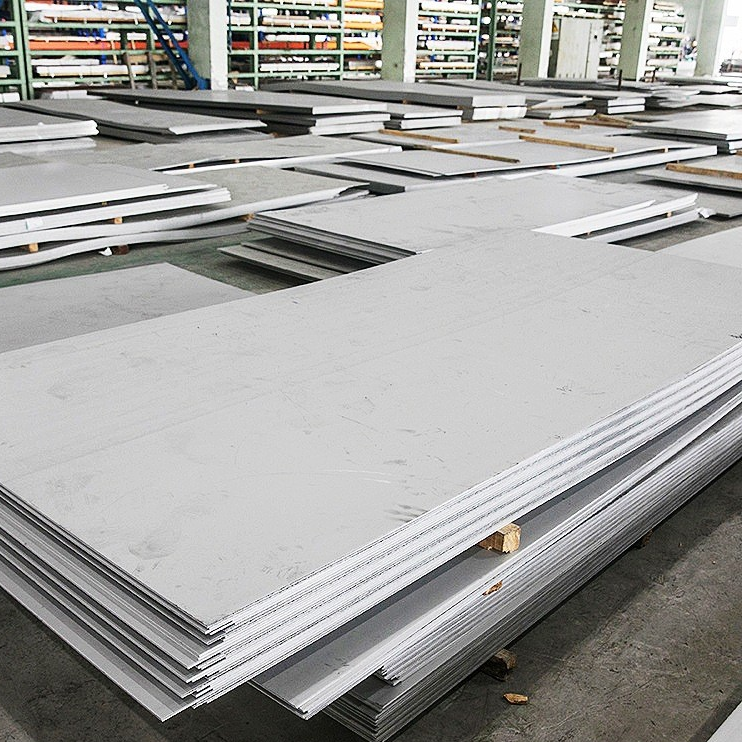
Furthermore, stainless steel plates maintain their mechanical properties across a wide temperature range. Austenitic grades, in particular, remain ductile even at cryogenic temperatures, making stainless steel plates suitable for structural use in liquefied gas facilities and cold storage infrastructure where low-temperature embrittlement is a serious concern with other materials.
Aesthetic Value and Architectural Design Flexibility
Surface Finish Options for Structural and Decorative Use
One advantage of stainless steel plates that is often underappreciated in purely structural discussions is their visual appeal. In modern architecture and design-led engineering projects, structural materials are increasingly expected to contribute positively to the visual identity of a building or infrastructure. Stainless steel plates are available in a wide range of surface finishes — from mill-finish and brushed (No. 4) to mirror-polished (No. 8) and bead-blasted — giving architects and structural engineers significant design freedom.
This versatility allows stainless steel plates to serve dual roles as both structural elements and finished architectural surfaces. Cladding panels, structural facade elements, support brackets exposed to public view, and handrail systems are all applications where the inherent elegance of stainless steel plates adds aesthetic value without requiring additional finishing materials or coatings. The consistent, clean appearance of stainless steel ages gracefully and aligns with the design language of contemporary structures.
Dimensional Stability and Fabrication Compatibility
Stainless steel plates maintain excellent dimensional stability during fabrication processes such as cutting, bending, welding, and machining. This is particularly important in structural applications where precise dimensional tolerances are required for safe assembly and load transfer. Plates can be cut to exact dimensions using plasma, laser, or waterjet methods, and can be formed into complex shapes without cracking or surface degradation.
Weldability is another important fabrication advantage. Most grades of stainless steel plates can be welded using standard arc welding techniques, and the resulting welds retain the corrosion resistance and mechanical properties of the parent material when proper procedures and filler metals are used. For structural fabricators, this means that stainless steel plates can be incorporated into complex assemblies — including moment-resisting frames, trusses, and custom connection details — with the same confidence as conventional structural steels.
Long-Term Cost Efficiency and Lifecycle Performance
Reduced Maintenance and Replacement Costs Over Time
One of the most compelling economic arguments for specifying stainless steel plates in structural applications is the total cost of ownership over the life of a structure. While the upfront material cost of stainless steel plates may be higher than carbon steel or aluminum alternatives, the long-term economics strongly favor stainless steel when maintenance, inspection, and replacement costs are factored in. Structures built with carbon steel require regular repainting and anticorrosion treatment, which involves not only material costs but also labor, access scaffolding, and operational downtime.
Stainless steel plates, by contrast, require minimal maintenance. Their natural corrosion resistance eliminates the need for protective coatings, and periodic cleaning is typically sufficient to maintain both appearance and performance. In infrastructure projects designed for 50-year or 100-year service lives — bridges, tunnels, water treatment facilities, and public buildings — this reduction in maintenance burden represents a significant financial advantage. Lifecycle cost analyses consistently show that stainless steel plates deliver superior value over these extended time horizons.
Recyclability and Environmental Performance
Structural materials increasingly need to meet sustainability criteria as the construction industry faces mounting pressure to reduce its environmental footprint. Stainless steel plates are fully recyclable, and a high proportion of the stainless steel produced globally is made from recycled scrap. At the end of a structure's service life, stainless steel plates retain substantial material value and can be recovered and reprocessed without loss of quality.
This recyclability aligns stainless steel plates with circular economy principles and helps projects qualify for green building certification schemes. For clients and developers committed to sustainability targets, specifying stainless steel plates in structural applications is a decision that supports both immediate project objectives and longer-term environmental accountability. The combination of durability — which reduces the frequency of material replacement — and end-of-life recyclability makes stainless steel plates one of the more environmentally responsible structural material choices available.
In sectors where environmental compliance is regulated — such as water treatment, food processing, and pharmaceutical manufacturing — the use of stainless steel plates in structural and equipment supports is not simply a preference but often a regulatory requirement. Their non-reactive, hygienic surface properties mean that stainless steel plates do not leach contaminants into surrounding materials or fluids, which is a critical structural advantage in these sensitive operating environments.
Structural Versatility Across Diverse Industry Applications
Infrastructure and Civil Engineering Use Cases
The versatility of stainless steel plates across structural applications is one of their most commercially significant attributes. In civil infrastructure, stainless steel plates are used for bridge bearing plates, expansion joint assemblies, tunnel lining supports, and reinforcing components in coastal or marine structures. Their resistance to the chloride-rich environments found in harbors, sea walls, and river crossings makes them a logical choice for structural elements that would otherwise require frequent replacement if made from conventional steel.
In water and wastewater treatment, stainless steel plates form the structural basis for tank walls, weirs, baffles, and support frames in environments that combine mechanical load with continuous chemical exposure. The ability of stainless steel plates to withstand both structural stress and corrosive media simultaneously is a key reason why they are the default material in these applications.
Industrial and Process Facility Structural Support
In industrial facilities — including chemical plants, refineries, food processing factories, and pharmaceutical production centers — structural steelwork is routinely exposed to process chemicals, steam, temperature cycling, and sanitation chemicals. Stainless steel plates used for structural platforms, equipment bases, support frames, and overhead conveyor structures in these environments deliver lasting performance without the degradation that would occur with coated carbon steel.
The use of stainless steel plates in food and beverage processing is particularly well established, where hygiene regulations mandate materials that can withstand aggressive cleaning protocols involving hot water, steam, and caustic detergents. Structural components made from stainless steel plates in these environments satisfy both the structural load requirements and the stringent surface hygiene standards simultaneously, eliminating the need for additional protective treatments that might themselves become sources of contamination.
Architectural applications in commercial and public buildings — including structural glass facades, internal feature staircases, exposed column cladding, and rooftop mechanical supports — also benefit from the combination of structural performance and aesthetic quality that stainless steel plates provide. As architects increasingly specify exposed structural elements as design features, the premium surface quality and long-term appearance retention of stainless steel plates make them the material of choice in high-specification projects.
FAQ
What grades of stainless steel plates are most commonly used for structural applications?
The most commonly specified grades of stainless steel plates for structural use are 304, 316, and duplex 2205. Grade 304 is suitable for general atmospheric structural environments, while Grade 316 offers enhanced resistance to chlorides and is preferred in marine or chemically aggressive settings. Duplex 2205 provides the highest combination of strength and corrosion resistance for critical or high-load structural components.
Are stainless steel plates more expensive than carbon steel for structural projects?
The initial material cost of stainless steel plates is typically higher than carbon steel. However, when total lifecycle costs are considered — including the elimination of protective coating, reduced inspection frequency, and lower maintenance expenditure over decades — stainless steel plates are often the more economical choice for structures designed for long service lives or located in corrosive environments.
Can stainless steel plates be welded and fabricated like conventional structural steel?
Yes. Most grades of stainless steel plates can be cut, bent, drilled, and welded using standard fabrication processes. Welding should be performed with appropriate filler metals and shielding gas to preserve corrosion resistance at the weld zone. Post-weld passivation or pickling is recommended for applications requiring the highest level of corrosion protection.
How do stainless steel plates perform in high-temperature structural applications?
Stainless steel plates maintain good mechanical properties and oxidation resistance at elevated temperatures. Austenitic grades such as 310S and 321 are specifically designed for high-temperature structural applications and retain strength and stability at temperatures where carbon steel would suffer significant strength loss or scaling. This makes stainless steel plates a practical choice for furnace structures, exhaust supports, and industrial heat processing environments.
Table of Contents
- Exceptional Corrosion Resistance in Structural Environments
- Superior Mechanical Strength and Load-Bearing Performance
- Aesthetic Value and Architectural Design Flexibility
- Long-Term Cost Efficiency and Lifecycle Performance
- Structural Versatility Across Diverse Industry Applications
-
FAQ
- What grades of stainless steel plates are most commonly used for structural applications?
- Are stainless steel plates more expensive than carbon steel for structural projects?
- Can stainless steel plates be welded and fabricated like conventional structural steel?
- How do stainless steel plates perform in high-temperature structural applications?