
 EN
EN



Haynes 282 vs Inconel 718: What’s the Difference?
Haynes 282 and Inconel 718 are both nickel-based superalloys used where ordinary stainless steel cannot handle the heat, stress, or corrosion risk. They often appear in aerospace, gas turbine, power generation, chemical processing, and high-performance industrial projects. The challenge is that they are not direct substitutes. Each alloy solves a different engineering problem.
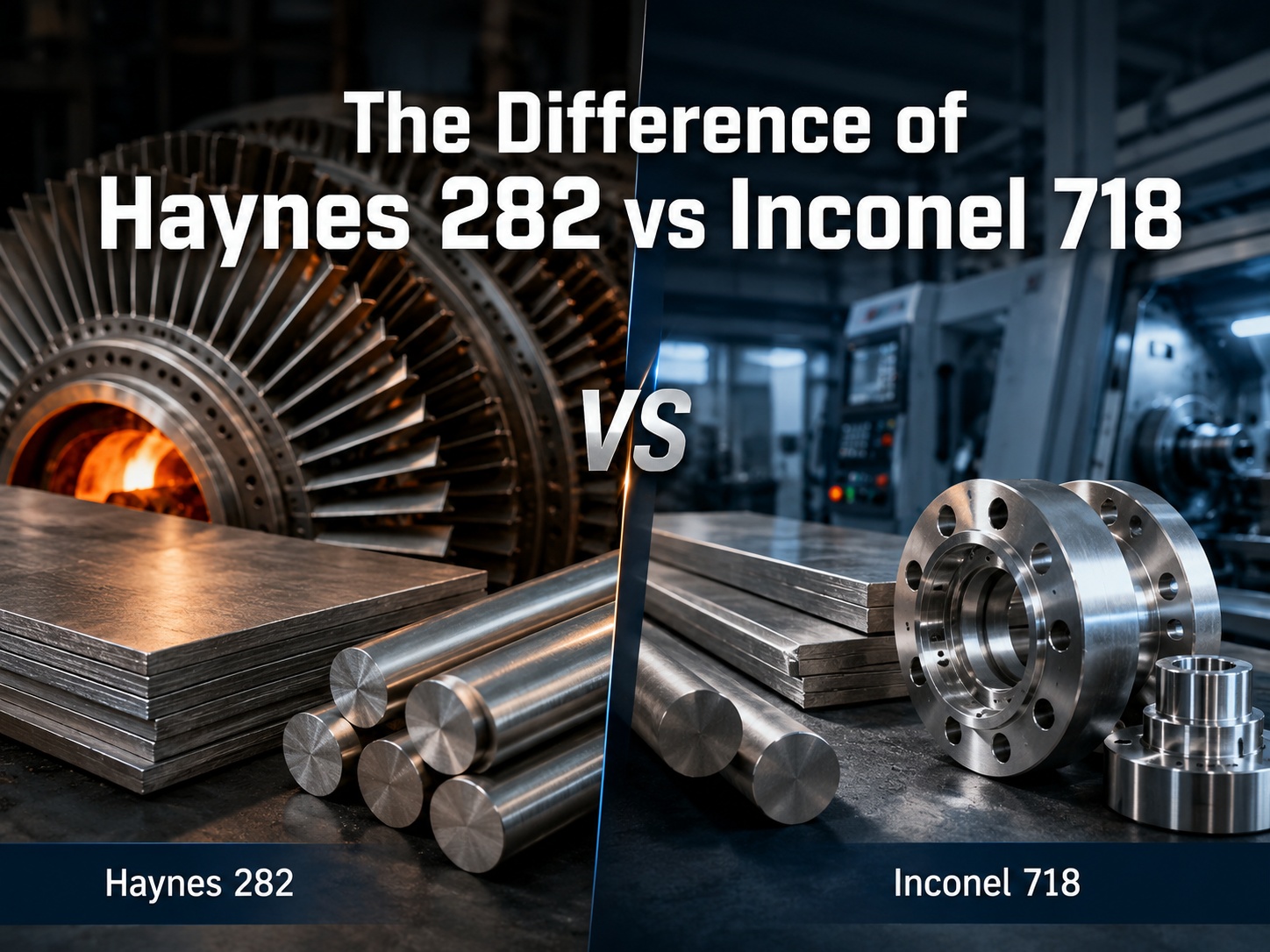
For U.S. buyers, engineers, and sourcing teams, the right choice often depends on operating temperature, creep requirement, weldability, heat treatment, product form, lead time, and total project cost. This guide explains the practical difference between Haynes 282 vs Inconel 718 in a way that supports real RFQ and material selection decisions.
Buyers comparing nickel alloy product forms can also review related options from nickel alloy plate, nickel alloy pipe, nickel alloy bar, and nickel alloy coil.
What Is Haynes 282?
Haynes 282 is a wrought, gamma-prime strengthened nickel-based superalloy. It was developed for high-temperature structural applications, especially in aero and industrial gas turbine engines.
Its main value is the combination of creep strength, thermal stability, weldability, and fabricability. In simple terms, Haynes 282 is designed for parts that must keep their strength while exposed to high heat for long periods.
Typical Haynes 282 Uses
- Gas turbine components
- Combustor parts
- Transition ducts
- High-temperature structural parts
- Aerospace engine components
- Power generation equipment
Practical Buying Note
Haynes 282 is often considered when creep strength and long-term stability at higher temperature are more important than broad stock availability or lower material cost.
What Is Inconel 718?
Inconel 718 is a precipitation-hardenable nickel-chromium alloy. It is one of the most widely used nickel-based superalloys because it offers a practical balance of high strength, corrosion resistance, weldability, and availability.
Inconel 718 is commonly used from cryogenic temperatures to about 1300°F in many industrial and aerospace applications. It is also known for strong welding characteristics compared with many other high-strength nickel alloys.
Typical Inconel 718 Uses
- Aerospace components
- Gas turbine parts
- Rocket engine components
- Fasteners and springs
- Valves and flanges
- Oil and gas equipment
Practical Buying Note
Inconel 718 is often easier to source in plate, bar, pipe, wire, fastener, and forged forms. It is frequently selected when the application needs proven performance and a mature supply chain.
Haynes 282 vs Inconel 718 Quick Comparison
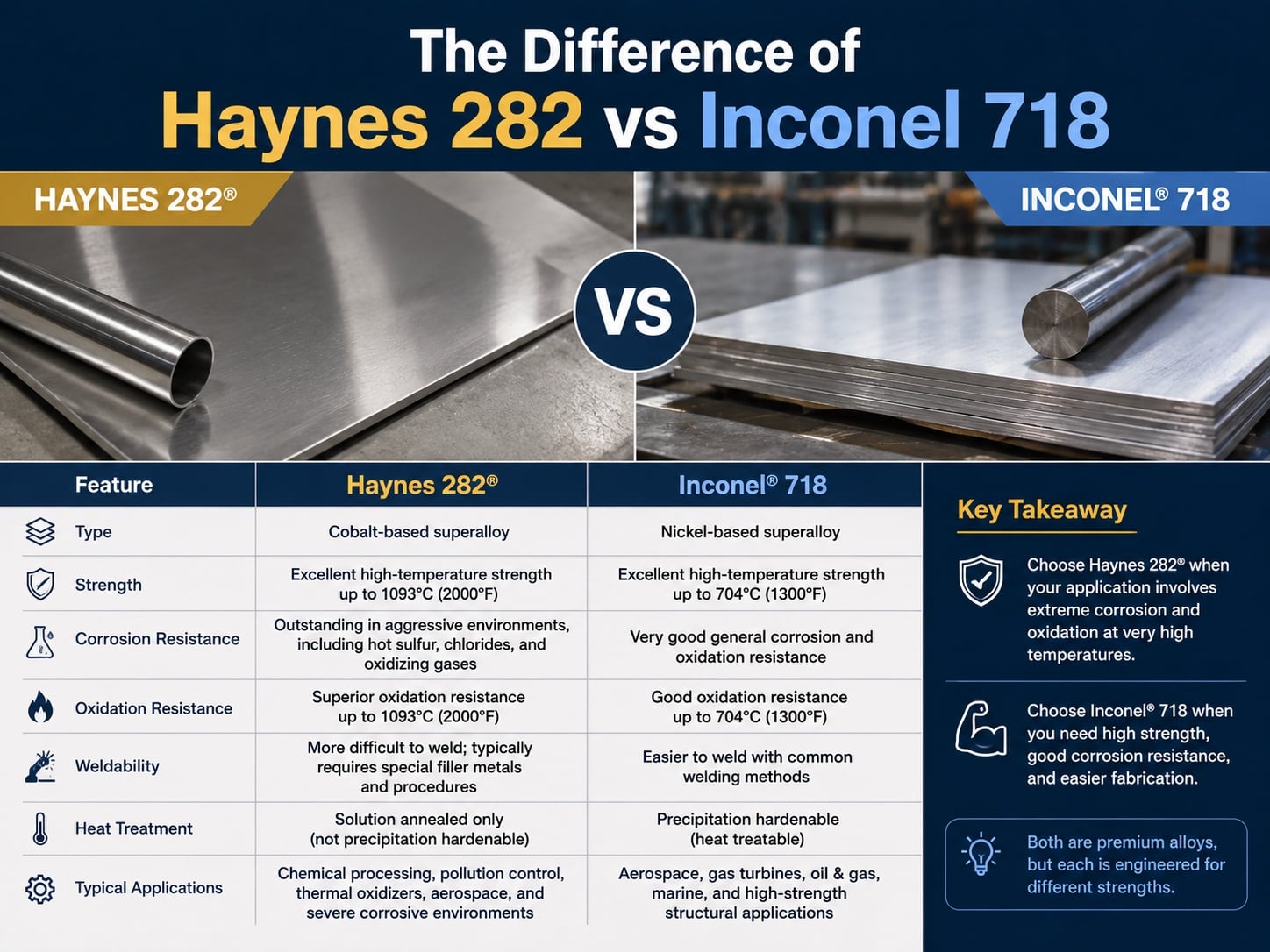
| Feature | Haynes 282 | Inconel 718 |
|---|---|---|
| Alloy family | Nickel-based gamma-prime strengthened superalloy | Nickel-chromium precipitation-hardenable superalloy |
| UNS number | UNS N07208 | UNS N07718 |
| Main advantage | High-temperature creep strength and thermal stability | Balanced strength, corrosion resistance, weldability, and availability |
| Temperature focus | Higher-temperature structural service | Cryogenic to moderate high-temperature service |
| Weldability | Good for its strength class, but procedure control matters | Excellent for a high-strength nickel alloy |
| Availability | More specialized | Widely available in many product forms |
| Typical applications | Gas turbines, combustors, transition ducts, high-temperature structures | Aerospace parts, fasteners, springs, valves, flanges, turbines, oil and gas parts |
Simple decision: Choose Haynes 282 when long-term high-temperature creep strength is the main concern. Choose Inconel 718 when the job needs a proven nickel alloy with strong availability, good weldability, high strength, and corrosion resistance.
Chemical Composition: Why These Alloys Perform Differently
Both alloys are nickel-based, but their strengthening systems and alloying balance are different. That difference affects service temperature, creep strength, fabrication behavior, and cost.
| Element / Feature | Haynes 282 | Inconel 718 | Why It Matters |
|---|---|---|---|
| Nickel | Nickel base | Nickel base | Supports high-temperature strength and corrosion resistance |
| Chromium | Significant chromium content | Significant chromium content | Improves oxidation and corrosion resistance |
| Molybdenum | Used for solid-solution strengthening | Used for strength and corrosion resistance | Supports strength and performance in demanding environments |
| Cobalt | Important alloying element | Not a major design focus | Helps support high-temperature strength in Haynes 282 |
| Niobium | Not the main strengthening feature | Key strengthening element with precipitation hardening | Helps give Inconel 718 its well-known high strength |
| Titanium and aluminum | Used for gamma-prime strengthening | Present in smaller strengthening roles | Important for precipitation strengthening behavior |
The main takeaway is simple: Haynes 282 is designed around high-temperature creep strength and thermal stability, while Inconel 718 is designed around strong all-around performance, age hardening, weldability, and broad industrial use.
Temperature Capability: Haynes 282 Has the High-Temperature Edge
Temperature is often the first question when comparing Haynes 282 vs Inconel 718. If the part sees long exposure at elevated temperature, creep strength and thermal stability become critical.
Haynes 282 was developed for high-temperature structural applications. It is often considered for gas turbine and aero engine components where material must resist deformation under heat and stress over time.
Inconel 718 also performs well in demanding service, but it is commonly selected for applications up to about 1300°F. Above that range, buyers often review alternatives when long-term creep strength becomes a key design concern.
Engineering note: Do not choose these alloys by temperature alone. Final selection should also review stress level, exposure time, oxidation risk, heat treatment condition, part geometry, and applicable design code.
Creep Strength and Thermal Stability
Creep means slow deformation under stress at high temperature. It matters in turbine engines, combustors, transition ducts, and other hot-section components.
Haynes 282 is often selected when creep strength is a primary requirement. Its alloy design gives it strong resistance to time-dependent deformation at elevated temperature.
Inconel 718 has good strength, but it is not usually the first choice when the application pushes beyond its comfortable long-term temperature range. It remains valuable where high strength, corrosion resistance, and weldability are needed within its service window.
Weldability and Fabrication
Inconel 718 is well known for good weldability among high-strength nickel alloys. It can be readily fabricated into complex parts, which is one reason it has become a common choice in aerospace, energy, and industrial applications.
Haynes 282 was also developed with weldability and fabricability in mind. That is important because some high-temperature superalloys can be difficult to weld after strengthening.
Still, both alloys require proper welding procedures, clean handling, controlled heat treatment, and documentation. For critical parts, welding should follow qualified procedures and project specifications.
Oxidation and Corrosion Resistance
Both Haynes 282 and Inconel 718 offer oxidation and corrosion resistance, but they are usually selected for different reasons.
Haynes 282 is often selected for hot structural applications where oxidation resistance and creep strength must work together. Inconel 718 is widely used in environments where strength and corrosion resistance are needed together, including aerospace, oil and gas, and some chemical processing applications.
For severe chemical corrosion, buyers should not assume either alloy is automatically suitable. The chemical name, concentration, temperature, pressure, and exposure time should be reviewed before final grade selection.
Availability, Cost, and Supply Chain
Availability matters in real purchasing. Inconel 718 has a mature supply chain and is commonly available in many product forms, including plate, sheet, bar, wire, fasteners, forgings, and pipe-related products.
Haynes 282 is more specialized. It can be the better technical choice for certain high-temperature parts, but lead time, minimum order quantity, product form, and price should be checked early.
Cost should be reviewed as total project cost, not only price per pound. A lower-cost alloy can become expensive if it fails under creep, heat, or corrosion. A higher-cost alloy may be justified when it reduces downtime, inspection risk, or replacement frequency.
Product Forms and Common Buying Options
Before requesting a quote, buyers should confirm which product form is needed. Haynes 282 and Inconel 718 may be supplied in different availability levels depending on form, size, condition, and certification.
| Product Form | Common Use | Buying Note |
|---|---|---|
| Plate and sheet | Hot-section structures, brackets, fabricated parts | Confirm thickness, heat treatment condition, and flatness |
| Bar and rod | Shafts, fasteners, machined parts | Confirm diameter, tolerance, and mechanical property requirement |
| Pipe and tube | High-temperature or corrosion-resistant systems | Confirm seamless or welded type, size, wall thickness, and standard |
| Wire | Springs, welding products, small components | Confirm diameter, temper, and surface condition |
| Fasteners | High-strength bolting and assemblies | Confirm thread, strength, heat treatment, and inspection needs |
| Forgings | Critical aerospace and energy components | Confirm drawing, ultrasonic testing, heat treatment, and certification |
Applications of Haynes 282
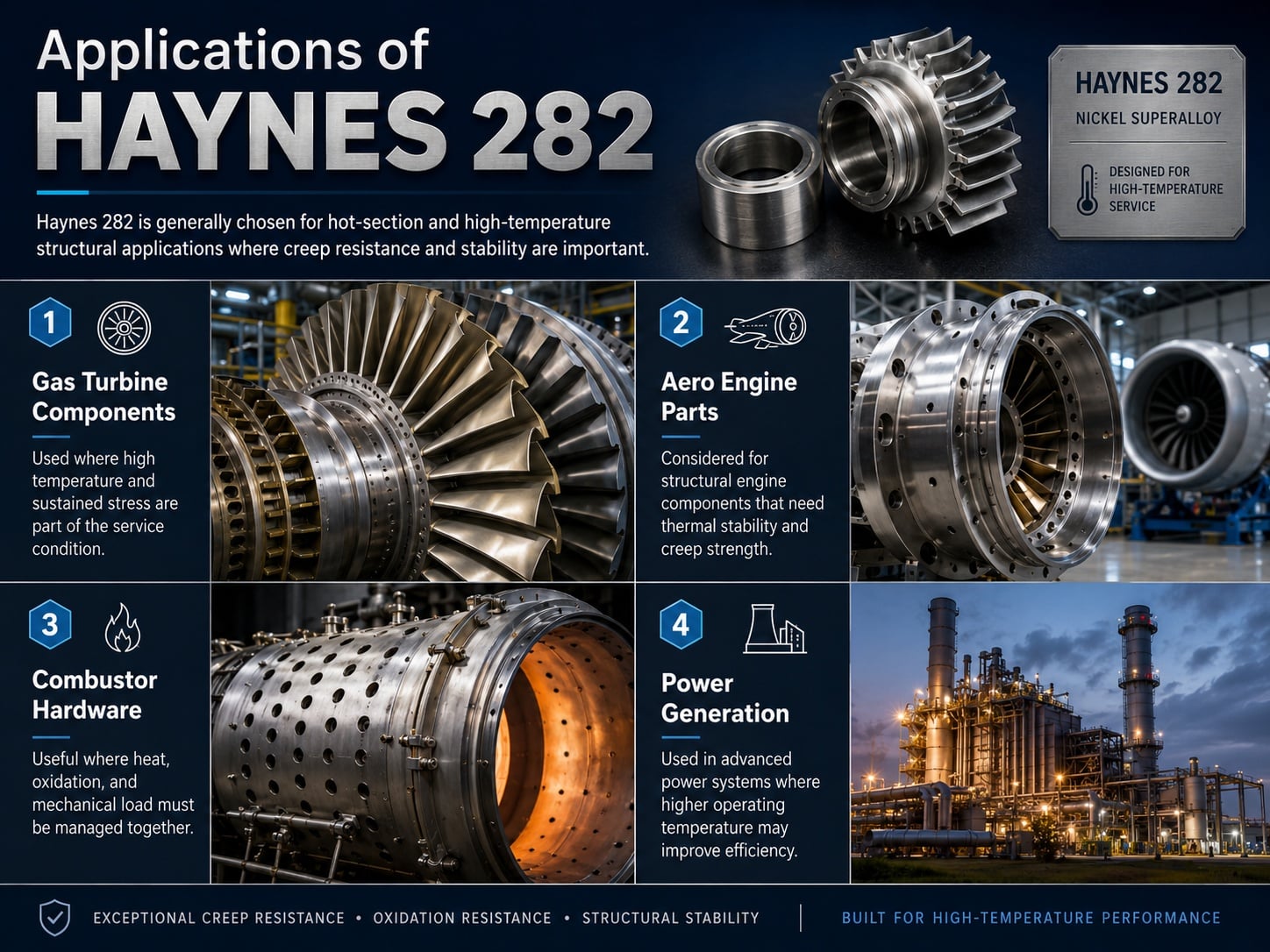
Haynes 282 is generally chosen for hot-section and high-temperature structural applications where creep resistance and stability are important.
Gas Turbine Components
Used where high temperature and sustained stress are part of the service condition.
Aero Engine Parts
Considered for structural engine components that need thermal stability and creep strength.
Combustor Hardware
Useful where heat, oxidation, and mechanical load must be managed together.
Power Generation
Used in advanced power systems where higher operating temperature may improve efficiency.
Applications of Inconel 718
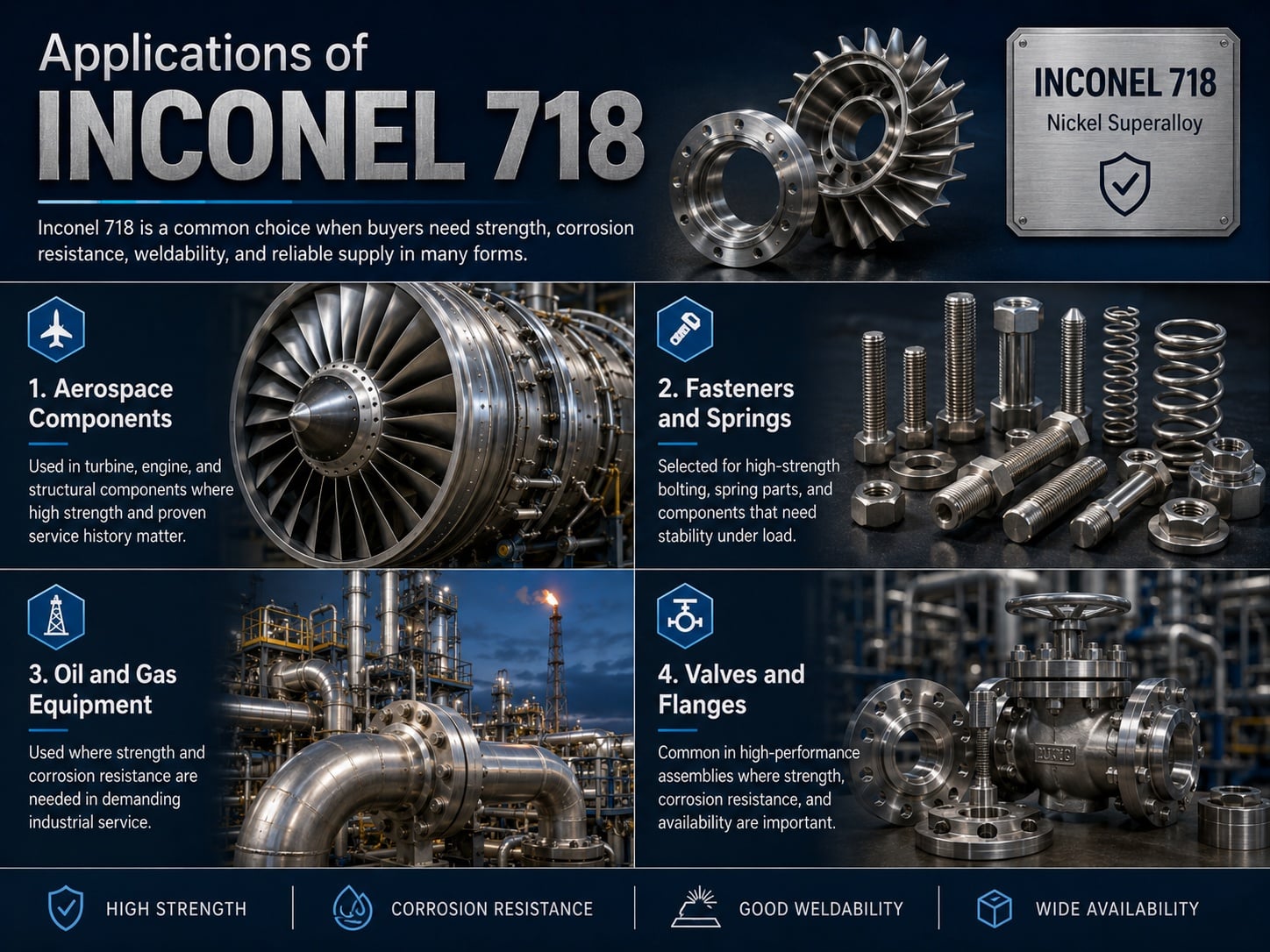
Inconel 718 is a common choice when buyers need strength, corrosion resistance, weldability, and reliable supply in many forms.
Aerospace Components
Used in turbine, engine, and structural components where high strength and proven service history matter.
Fasteners and Springs
Selected for high-strength bolting, spring parts, and components that need stability under load.
Oil and Gas Equipment
Used where strength and corrosion resistance are needed in demanding industrial service.
Valves and Flanges
Common in high-performance assemblies where strength, corrosion resistance, and availability are important.
How to Choose Between Haynes 282 and Inconel 718
Choose Haynes 282 When
- Long-term high-temperature strength is critical
- Creep resistance is a primary design requirement
- The part operates in a hot-section environment
- Thermal stability matters more than broad availability
- The project can support specialized sourcing and lead time
Choose Inconel 718 When
- The application needs a proven nickel alloy
- Strength and corrosion resistance are both important
- Weldability and fabrication are major concerns
- Availability and product form flexibility matter
- The operating temperature stays within its practical service range
RFQ Tips for Haynes 282 and Inconel 718
A clear RFQ helps suppliers check stock, heat treatment condition, certification, lead time, and price faster. RFQ means Request for Quotation.
Haynes 282 plate, UNS N07208, 0.250" thickness, solution treated condition, MTC required, for high-temperature gas turbine component fabrication, quantity 500 lb.
Inconel 718 round bar, UNS N07718, 1.500" diameter, AMS or ASTM standard required, age-hardened condition, MTC required, for machined aerospace fastener parts.
Buying Checklist
Summary
Haynes 282 and Inconel 718 are both high-performance nickel-based superalloys, but they are used for different reasons.
Haynes 282 is generally selected when higher-temperature creep strength, thermal stability, and hot-section structural performance are the main concerns. It is a strong option for gas turbines, combustor parts, transition ducts, and demanding power generation applications.
Inconel 718 is selected when buyers need a proven alloy with high strength, corrosion resistance, good weldability, wide availability, and many product form options. It remains widely used in aerospace, oil and gas, fasteners, valves, springs, and industrial components.
The right choice depends on operating temperature, stress, exposure time, fabrication method, heat treatment, inspection requirement, and project budget.
Need Haynes 282 or Inconel 718 for an Industrial Project?
Voyage Metal supplies nickel alloy materials for industrial buyers, fabricators, equipment manufacturers, and project purchasing teams. Buyers can send alloy grade, product form, size, standard, heat treatment condition, quantity, and application details for quotation and material selection support.
Related product pages: Nickel Alloy Plate, Nickel Alloy Pipe, Nickel Alloy Bar, and Nickel Alloy Coil.
FAQ
What is the main difference between Haynes 282 and Inconel 718?
Haynes 282 is mainly selected for higher-temperature creep strength and thermal stability. Inconel 718 is mainly selected for its balance of strength, corrosion resistance, weldability, availability, and proven industrial performance.
Why is Haynes 282 used in gas turbine applications?
Haynes 282 is used in gas turbine applications because it offers strong creep resistance, thermal stability, weldability, and high-temperature structural performance.
What is Inconel 718 used for?
Inconel 718 is used for aerospace components, gas turbine parts, fasteners, springs, valves, flanges, oil and gas equipment, and high-strength corrosion-resistant industrial parts.
How do buyers choose between Haynes 282 and Inconel 718?
Buyers should compare operating temperature, stress level, creep requirement, corrosion exposure, weldability, heat treatment condition, product form, lead time, and total project cost.
What alloy is better for high-temperature creep resistance?
Haynes 282 is generally the stronger choice when long-term high-temperature creep resistance is the main design requirement.
Why is Inconel 718 often easier to source?
Inconel 718 has a mature supply chain and is widely available in many product forms, including plate, bar, wire, fasteners, forgings, and pipe-related products.
How should Haynes 282 or Inconel 718 be specified in an RFQ?
A clear RFQ should include alloy name, UNS number, product form, size, standard, heat treatment condition, mechanical property requirement, quantity, MTC requirement, application, and delivery time.
Data Sources and References
- Haynes International: HAYNES® 282® alloy information, including UNS N07208, gamma-prime strengthened nickel superalloy design, creep strength, thermal stability, weldability, and fabricability.
- Haynes International: HAYNES® 282® alloy brochure and technical product information for high-temperature structural applications.
- Special Metals: INCONEL® alloy 718 technical bulletin, including UNS N07718, nickel-chromium alloy description, high strength, corrosion resistance, service temperature guidance, fabrication, and welding characteristics.
- Common ASTM, AMS, ASME, and nickel alloy purchasing practice for high-temperature alloy RFQs, MTC review, heat treatment condition, and product form selection.