
 EN
EN



How to Prevent Aluminum Sheet Corrosion: Practical Guide for Industrial Buyers
Aluminum sheet is widely used in transportation, roofing, façades, food equipment, electrical cabinets, marine parts, and general fabrication. It is light, easy to process, and naturally corrosion resistant, but humid storage, coastal air, long-distance shipping, and poor handling can still cause stains, white marks, or pitting.
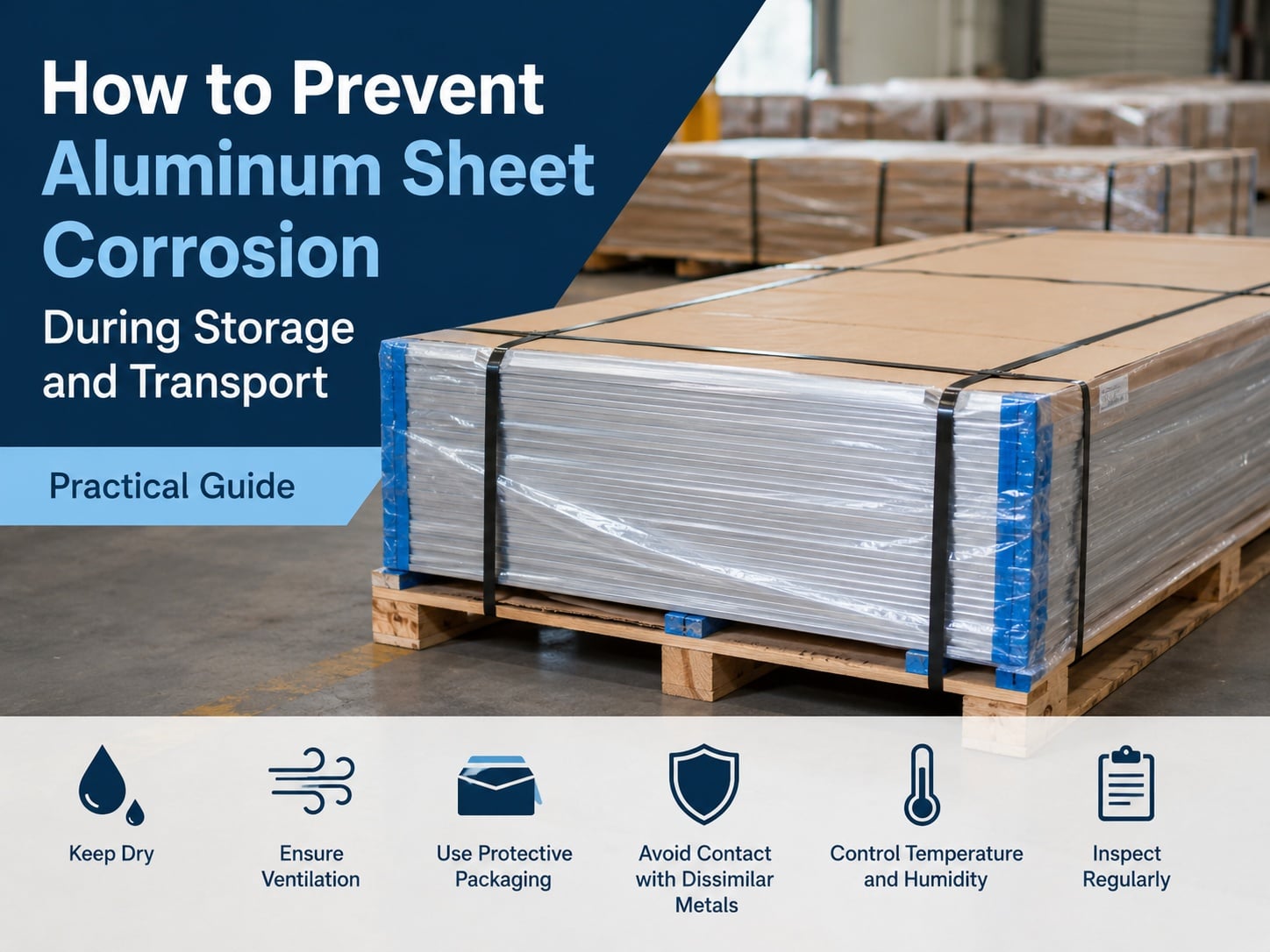
In many industrial markets, aluminum sheet does not corrode because of one single mistake. Problems often start when moisture, salt air, damaged packaging, poor ventilation, and long storage time happen together. This is why many Brazilian-style purchasing teams pay close attention to practical details such as export packing, port handling, covered storage, and clear RFQ specifications before confirming an order.
This guide explains how to prevent aluminum sheet corrosion in real industrial conditions, from material selection to shipping, storage, handling, and final use.
Buyers comparing aluminum materials can also review related products from aluminum plate, aluminum coil, and aluminum pipe.
Why Aluminum Sheet Can Still Corrode
Aluminum forms a thin oxide layer when exposed to oxygen. This layer helps protect the surface and is one reason aluminum performs well in many environments.
But this protection has limits. Moisture, salt air, industrial chemicals, trapped water, and metal contact can damage or weaken the surface condition.
Moisture
Condensation inside packaging can create white stains or surface oxidation between stacked sheets.
Salt Air
Coastal air and humid logistics can increase pitting risk, especially when sheets are stored poorly.
Metal Contact
Contact with steel, copper, or other metals in wet conditions can increase galvanic corrosion risk.
Practical market note: In humid or coastal supply chains, storage and packaging control are not small details. They can directly affect the surface quality after delivery, especially when aluminum sheets are shipped by sea or stored for weeks before fabrication.
Common Types of Aluminum Sheet Corrosion
Not all corrosion looks the same. Understanding the type of surface issue helps buyers identify the cause and prevent repeat problems.
| Corrosion Type | What It Looks Like | Common Cause |
|---|---|---|
| Surface oxidation | Dull surface or light white marks | Moisture, air exposure, poor drying |
| Water stain | White or gray patches between sheets | Condensation or trapped water |
| Pitting corrosion | Small holes or dark spots | Chlorides, salt air, chemicals |
| Galvanic corrosion | Local attack near contact points | Contact with steel, copper, or other metals |
| Crevice corrosion | Damage in gaps or overlaps | Trapped moisture and poor ventilation |
| Chemical attack | Uneven stains or etched areas | Acids, alkalis, cleaning agents, industrial fluids |
Start with the Right Aluminum Alloy
Alloy selection is one of the first steps in aluminum sheet corrosion prevention. Different aluminum series behave differently. Some alloys offer stronger corrosion resistance, while others focus more on strength or machining performance.
| Aluminum Series | Common Grades | Corrosion Resistance Note | General Feature |
|---|---|---|---|
| 1xxx | 1050, 1060, 1070, 1100 | High-purity aluminum | Very good corrosion resistance, lower strength |
| 3xxx | 3003, 3004, 3005, 3105 | Aluminum-manganese alloy | Good corrosion resistance and formability |
| 5xxx | 5052, 5083, 5086, 5754, 5454 | Aluminum-magnesium alloy | Good corrosion resistance, often used in marine and transport applications |
| 6xxx | 6061, 6063, 6082, 6005A | Aluminum-magnesium-silicon alloy | Good balance of strength, formability, and corrosion resistance |
| 2xxx | 2017, 2024, 2A12, 2219 | Aluminum-copper alloy | Higher strength, lower corrosion resistance |
| 7xxx | 7005, 7050, 7075, 7A04 | Aluminum-zinc alloy | High strength, corrosion control should be reviewed carefully |
For general sheet applications, 3003, 5052, 5083, 5754, and 6061 are often considered depending on strength, forming, and environmental exposure. For example, 5052 or 5083 may be considered for marine or transport use, while 3003 may be practical for indoor panels and general fabrication.
For high-purity aluminum sheet options, buyers can review 1050 aluminum sheet.
Control Moisture During Shipping and Storage
Many aluminum sheet corrosion problems start during shipping or storage, not during final use. This is especially true for long-distance shipments, warehouse temperature changes, and humid storage conditions.
Moisture risk is higher when:
- ·Sheets are shipped by sea
- ·Packaging is damaged
- ·Material passes through humid ports
- ·Cold sheets are opened quickly in a warm warehouse
- ·Sheets are stored directly on the floor
- ·Air cannot circulate around the stack
Practical storage rule: If aluminum sheets arrive cold after transport, do not open the package immediately in a warm and humid warehouse. Let the material adjust gradually to room temperature first. This helps reduce condensation between sheets.
Use Proper Packaging for Aluminum Sheet
Packaging is a major part of corrosion prevention. For long-distance buyers, moisture-resistant export packing can reduce surface problems during sea freight, inland transport, and warehouse storage.
Useful Packaging Options
- Waterproof paper
- Plastic film
- Moisture barrier film
- Desiccant packs
- Wooden pallets
- Edge protection
- Interleaving paper
Problems from Poor Packing
- Water stains
- Surface scratches
- Edge damage
- Condensation marks
- Packaging imprint marks
- Local corrosion spots
For polished, coated, or appearance-sensitive aluminum sheets, extra protection may be needed. This can include protective film, interleaving paper, or stronger pallet design.
Avoid Galvanic Corrosion
Galvanic corrosion can happen when aluminum touches another metal in the presence of moisture. This is common in construction, transport, machinery, and installation work.
Risk increases when aluminum is in wet contact with:
- ·Carbon steel
- ·Copper
- ·Brass
- ·Stainless steel
- ·Incompatible fasteners
How to Reduce the Risk
- Use insulating washers or gaskets
- Separate aluminum from other metals
- Seal joints where moisture can stay
- Choose compatible fasteners
- Avoid trapped water at contact points
Where to Watch Closely
- Outdoor structures
- Truck bodies and trailers
- Marine equipment
- Roofing and cladding
- Industrial machinery frames
Keep the Surface Clean During Handling
Daily handling is simple, but it matters. Surface contamination can create stains, scratches, or local corrosion points.
Aluminum sheet surfaces can be affected by:
- ·Fingerprints
- ·Oil
- ·Dust
- ·Steel particles
- ·Cutting fluid
- ·Packaging residue
- ·Standing water
- ·Unsuitable cleaning chemicals
Simple shop-floor habit: Keep sheets clean and dry. Do not drag aluminum sheets across rough surfaces. Keep aluminum away from carbon steel grinding dust in fabrication workshops.
Choose the Right Surface Protection
Some applications need more protection than bare aluminum sheet can provide. The right protection depends on the environment, appearance requirement, and service life target.
| Protection Method | Suitable For | Buying Note |
|---|---|---|
| Protective film | Decorative or visible surfaces | Helps reduce scratches during processing |
| Anodizing | Architectural and decorative use | Improves surface hardness and corrosion resistance |
| Paint coating | Outdoor panels and building products | Requires proper coating system and edge protection |
| Powder coating | Decorative and durable finish | Common for architectural and industrial parts |
| Chemical conversion coating | Pre-treatment before painting | Helps coating adhesion and corrosion control |
| Interleaving paper | Sheet stacks during shipping | Helps reduce friction and surface marks |
Storage Checklist for Aluminum Sheets
A dry and organized warehouse can prevent many aluminum sheet corrosion problems. This matters in coastal and humid regions, and also in inland areas during rainy seasons or long storage periods.
Warehouse Checklist
Transportation Checklist for Import and Export Orders
For aluminum sheet import or export orders, corrosion prevention should continue during container loading, port handling, inland delivery, and warehouse receiving.
Before Shipment
- Confirm export packing method
- Check moisture barrier requirement
- Confirm desiccant use if needed
- Review pallet strength
- Confirm edge protection
- Check container dryness
After Arrival
- Inspect packaging before unloading
- Check for water marks or damaged wrapping
- Move sheets to dry indoor storage
- Do not open cold material immediately
- Report visible shipping damage quickly
Common Buyer Mistakes
Assuming Aluminum Never Corrodes
Aluminum resists corrosion well, but it can still stain, pit, or oxidize under poor conditions.
Choosing Only by Price
A lower-cost alloy may not work well in humid, marine, chemical, or outdoor environments.
Ignoring Packaging
For sea freight, packaging can be as important as alloy selection.
Storing Sheets on the Floor
Direct ground contact increases the risk of moisture exposure and surface contamination.
Mixing Metals Without Insulation
Aluminum touching steel, copper, or stainless steel in wet conditions can increase galvanic corrosion risk.
Using Harsh Cleaners
Strong acidic or alkaline cleaners can attack aluminum if they are not suitable for the alloy and finish.
How to Specify Aluminum Sheet to Reduce Corrosion Risk
A clear request for quotation helps suppliers recommend the right alloy, finish, and packaging. RFQ means Request for Quotation.
RFQ Checklist
5052-H32 aluminum sheet, 2.0 mm thickness, 1220 x 2440 mm, protective film required, for outdoor equipment panels near a coastal area, export moisture-proof packing, destination port: Santos.
Summary
Preventing aluminum sheet corrosion is not about one single action. It requires good decisions at every stage: alloy selection, surface protection, packaging, storage, transportation, handling, and final installation.
Aluminum naturally forms a protective oxide layer, but moisture, salt, chemicals, trapped water, and metal contact can still cause surface problems. Choosing the right alloy, keeping sheets dry, using suitable packaging, avoiding galvanic contact, and cleaning the surface properly can greatly reduce risk.
In purchasing habits similar to Brazil’s industrial market, practical details matter: metric specifications, clear RFQs, moisture-proof packing, port handling, and dry warehouse storage all help reduce avoidable corrosion risk.
Need Aluminum Sheet for an Industrial Project?
Voyage Metal supplies aluminum sheets, plates, coils, and other metal materials for industrial buyers, fabricators, and project purchasing teams. Buyers can send alloy, temper, thickness, size, surface requirement, packaging needs, destination port, and application details for quotation and material selection support.
Related product pages: Aluminum Plate, Aluminum Coil, and Aluminum Pipe.
FAQ
What causes aluminum sheet corrosion?
Aluminum sheet corrosion is often caused by moisture, salt air, chemicals, trapped water, galvanic contact with other metals, poor storage, or damaged packaging.
Why does aluminum sheet get white stains?
White stains usually come from oxidation or water staining. They often happen when moisture is trapped between sheets during storage or shipping.
How can buyers prevent aluminum sheet corrosion during storage?
Buyers should store aluminum sheets indoors, keep them dry, avoid ground contact, protect packaging, allow cold material to warm slowly before unpacking, and inspect long-term stock regularly.
What aluminum sheet alloy has good corrosion resistance?
1xxx, 3xxx, 5xxx, and some 6xxx aluminum alloys generally offer good corrosion resistance. 5052, 5083, 5754, and 6061 are common options depending on strength and application needs.
How can aluminum sheet be protected in coastal environments?
Coastal applications may need suitable alloy selection, protective coating, sealed joints, moisture control, and careful separation from other metals to reduce corrosion risk.
What packaging helps prevent aluminum sheet corrosion during export?
Moisture-proof packaging, waterproof paper, plastic film, barrier film, desiccants, edge protection, and strong pallets can help reduce corrosion risk during export shipping.
How should aluminum sheet be specified in an RFQ?
A clear RFQ should include alloy, temper, thickness, size, surface finish, quantity, application, corrosion exposure, protective film, packing method, destination port, and delivery time.
Data Sources and References
- ASTM B209 / B209M: Standard specification covering aluminum and aluminum-alloy sheet and plate.
- Aluminum Association: Aluminum alloy series information and general industry standards.
- NIST / ASM aluminum reference: Aluminum oxide film and general corrosion resistance behavior.
- Alumeco: Aluminum corrosion, storage, handling, and condensation guidance.
- AZoM: Aluminum handling, storage, maintenance, and cleaning guidance.
- Common industrial practice for aluminum sheet export packing, warehouse storage, RFQ preparation, and corrosion risk control.