
 EN
EN




Stainless Steel Pipe vs Tube: Key Differences, Sizes, Standards, and Selection Guide
When comparing stainless steel pipe vs tube, the difference is not only the product shape. The two products are usually specified, measured, and purchased according to different requirements. Stainless steel pipe is commonly selected for fluid transportation systems where standards, pressure requirements, and connection compatibility are critical. Stainless steel tube is often chosen when outside diameter, wall thickness, dimensional tolerance, fabrication, or assembly requirements are more important.
Choosing the wrong product form can create problems during installation, fabrication, inspection, or final use. A quotation should not be compared only by stainless steel grade or appearance. Buyers should confirm the product form, applicable standard, dimensions, tolerance requirements, manufacturing method, and documentation before placing an order.
Quick Answer: Stainless Steel Pipe vs Tube
The simplest difference is:
Stainless Steel Tube: Mainly selected for applications where actual dimensions, dimensional accuracy, fabrication, or component fit are important. It is commonly specified by outside diameter, wall thickness, and tolerance.
However, pipe is not automatically stronger than tube, and tube is not automatically more precise than pipe. The correct choice depends on the application, engineering requirements, applicable standards, and project specifications.
Stainless Steel Pipe vs Tube: Main Differences at a Glance
| Comparison | Stainless Steel Pipe | Stainless Steel Tube |
|---|---|---|
| Primary purpose | Fluid transportation, piping systems, process equipment | Fabrication, heat transfer, instrumentation, structural and precision applications |
| Common size description | Nominal Pipe Size (NPS), schedule, wall designation | Actual outside diameter (OD), wall thickness, tolerance |
| Main purchasing concern | Pressure requirements, standards, fittings, connections | Dimensional accuracy, fit-up, fabrication requirements |
| Common standards | ASTM A312, ASTM A358, ASME B36.19 and related specifications | ASTM A213, ASTM A249, ASTM A269 and related specifications |
| Typical applications | Chemical pipelines, oil & gas systems, water systems, industrial piping | Heat exchangers, instrumentation tubing, fabricated assemblies |
Why Stainless Steel Pipe and Tube Are Often Confused
Stainless steel pipe and stainless steel tube are both available in similar grades, including common austenitic stainless steels such as 304, 304L, 316, and 316L stainless steel. They may also have similar surface finishes and manufacturing methods, including welded and seamless production.
Because of their similar appearance, buyers sometimes use the terms interchangeably. In industrial purchasing, however, the difference is important because suppliers quote according to the requested standard and measurement system.
For example, a request for "stainless steel pipe" may lead suppliers to consider nominal size and schedule information, while a request for "stainless steel tube" usually requires actual outside diameter, wall thickness, and tolerance details.
Start With the Application, Not the Product Name
The best way to select between stainless steel pipe and tube is to first understand what the component needs to do.
- If the product is part of a piping system carrying fluid, gas, or process media, stainless steel pipe is often the starting point.
- If the product needs controlled dimensions for assembly, bending, welding, machining, or fabrication, stainless steel tube may be more suitable.
- If the project involves pressure, temperature, corrosion resistance, or regulatory requirements, the applicable specification should determine the final choice.
Before requesting a quotation, buyers should provide information such as service environment, operating conditions, connection requirements, fabrication method, and required documents.
For available stainless steel material options, review Voyagemetal stainless steel products to compare different stainless steel forms and grades.
Stainless Steel Pipe vs Tube: How Size Is Measured
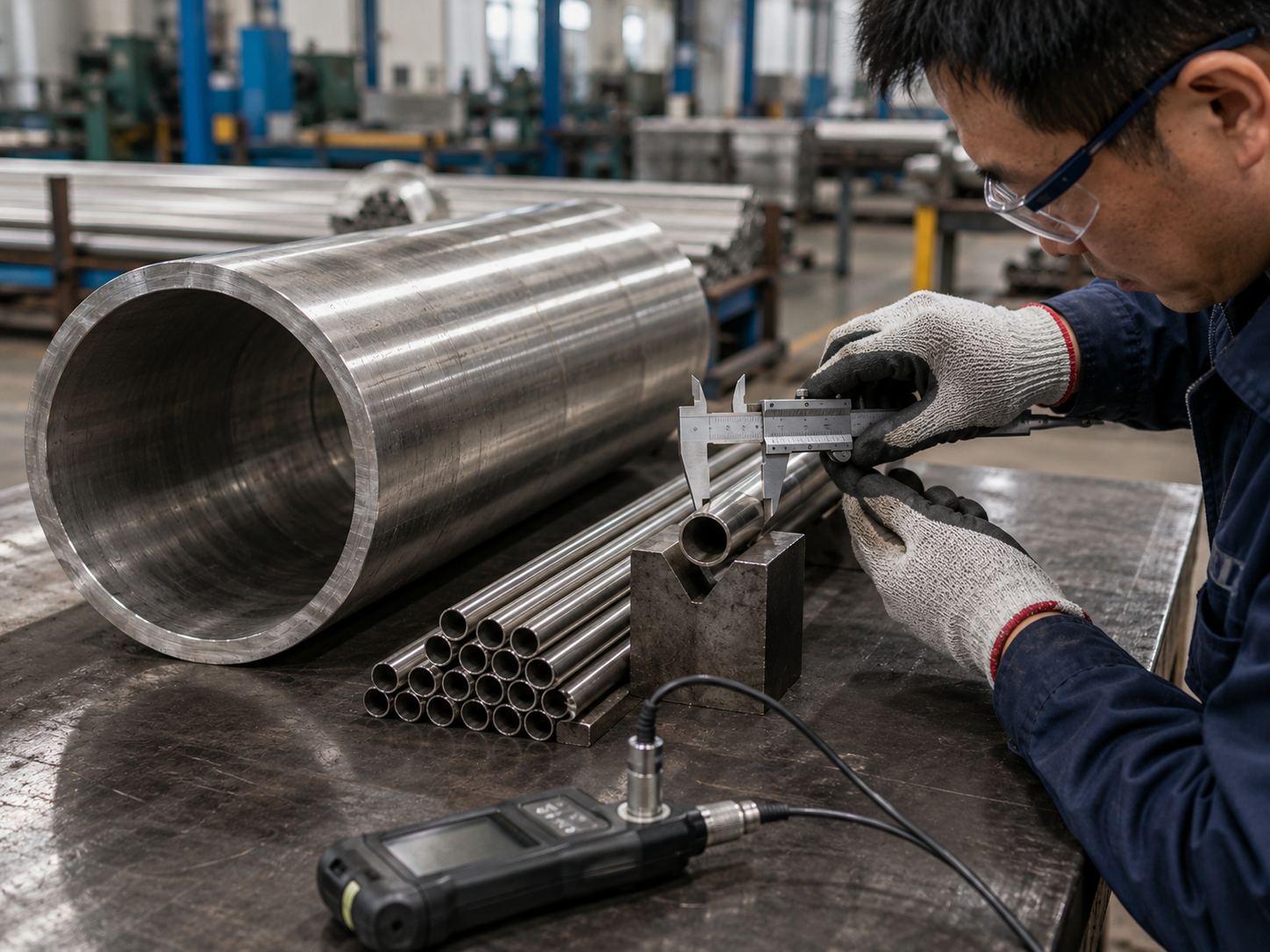
One of the biggest differences between stainless steel pipe and tube is the way dimensions are communicated.
Stainless Steel Pipe Size
Pipe is usually described using nominal pipe size (NPS) together with schedule or wall thickness designation. The nominal size does not always represent the actual outside diameter, so the applicable standard must be confirmed.
For example, a stainless steel pipe quotation should clearly identify:
- Nominal pipe size
- Schedule or wall thickness
- Applicable standard
- Stainless steel grade
- End condition
- Length requirement
Stainless Steel Tube Size
Tube is generally ordered using actual dimensions. Buyers normally need to specify:
- Outside diameter (OD)
- Wall thickness
- Dimensional tolerance
- Straightness requirements
- Surface finish
- Cut length
For precision assemblies, even small dimensional differences can affect installation or fabrication results. Therefore, tube specifications should always identify the critical controlled dimensions.
Stainless Steel Pipe vs Tube Applications
Understanding the typical applications of stainless steel pipe and tube helps buyers choose the correct product form before sending an RFQ. The same stainless steel grade can be used in different product forms, but the engineering requirements are usually different.

| Application | Common Product Choice | Main Selection Consideration |
|---|---|---|
| Process piping and fluid transportation | Stainless steel pipe | Pressure requirements, piping standards, fittings, welding requirements |
| Chemical and pharmaceutical pipelines | Stainless steel pipe | Corrosion resistance, cleanliness requirements, material traceability |
| Heat exchangers and heat transfer equipment | Stainless steel tube | Heat transfer efficiency, OD accuracy, wall thickness control |
| Instrumentation and control systems | Stainless steel tube | Dimensional accuracy, pressure rating, connection compatibility |
| Fabricated frames and assemblies | Stainless steel tube | Bending, welding, machining, surface requirements |
The product name alone should not determine the selection. A stainless steel tube used in a fabrication project may require tighter dimensional control, while stainless steel pipe used in a process system may require compliance with specific piping standards.
For buyers sourcing stainless steel materials for different applications, product form, grade, and manufacturing condition should always be confirmed together.
Stainless Steel Pipe vs Tube: Strength and Pressure Considerations
A common question from buyers is whether stainless steel pipe is stronger than stainless steel tube. The answer depends on the design requirements, dimensions, material grade, and applicable standard.
For pressure-containing systems, stainless steel pipe is usually selected based on pressure design calculations, piping codes, operating temperature, and connection requirements. The schedule or wall thickness plays an important role in determining pressure capability.
For stainless steel tube applications, performance is often related to dimensional accuracy, wall consistency, fabrication requirements, and the final assembly design. Tube may be selected for heat exchangers, instrumentation, or mechanical components where controlled dimensions are important.
Is Stainless Steel Pipe More Expensive Than Tube?
The price difference between stainless steel pipe and tube depends on many factors, including stainless steel grade, size, wall thickness, manufacturing method, tolerance requirements, surface finish, and order quantity.
Stainless steel tube can sometimes have a higher unit price because some applications require tighter dimensional control, additional processing, or special finishes. However, stainless steel pipe may also become more expensive when it requires special pressure ratings, heavy walls, large diameters, testing, or specific standards.
A fair quotation comparison should always be based on identical specifications. Comparing a stainless steel pipe quotation with a stainless steel tube quotation without confirming dimensions and standards can lead to incorrect cost assumptions.
Welded vs Seamless Stainless Steel Pipe and Tube
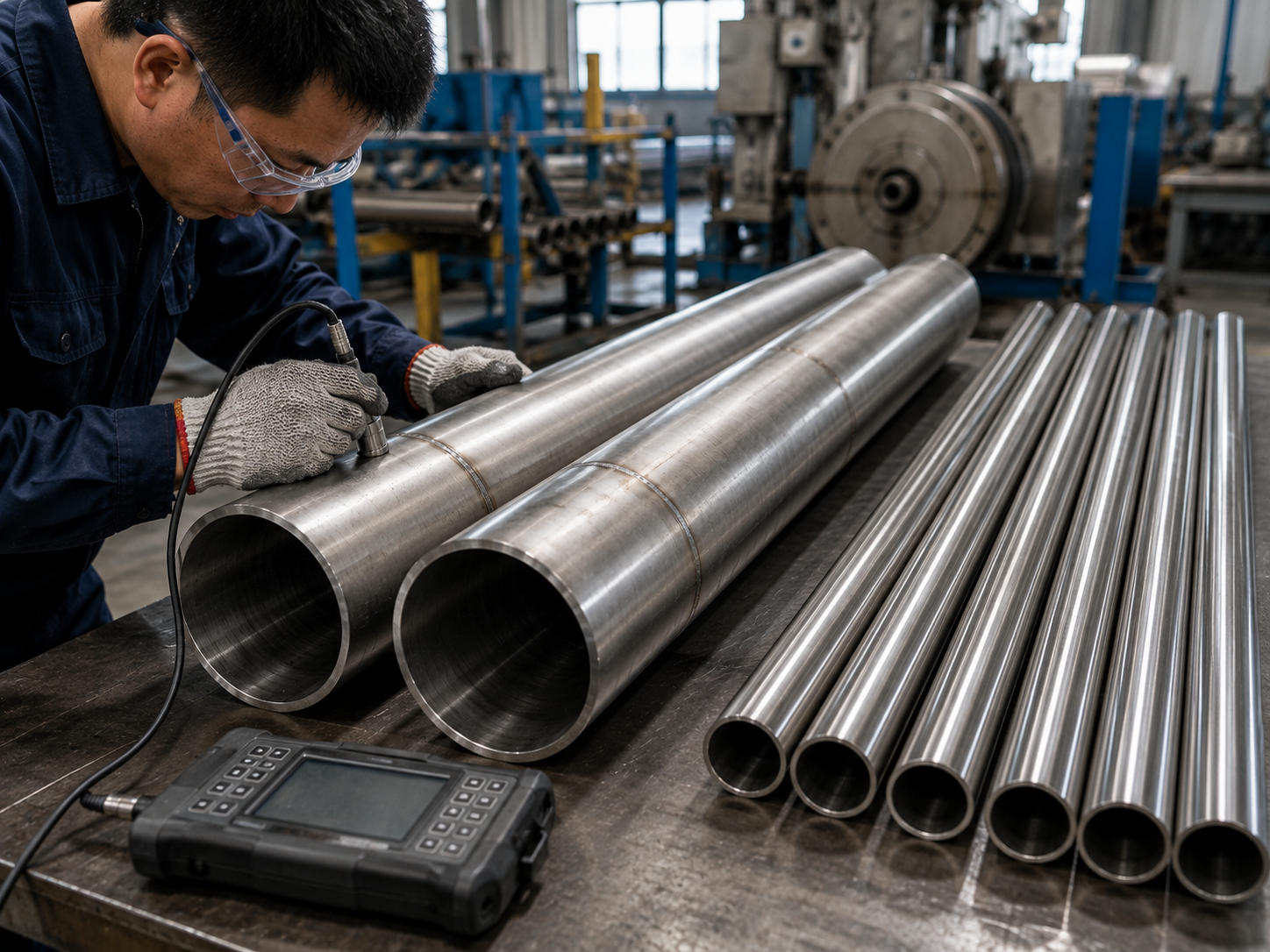
Welded and seamless are manufacturing methods, not a simple ranking of good or bad. The correct choice depends on the project specification, service environment, dimensions, inspection requirements, and applicable standards.
Welded Stainless Steel Pipe and Tube
Welded products are manufactured by forming stainless steel strip or plate and joining the seam through welding. They are widely used in many industrial applications where the required standard and inspection requirements are satisfied.
Buyers should confirm:
- Weld condition and treatment requirements
- Required testing or inspection
- Surface finish requirements
- Fabrication and installation requirements
Seamless Stainless Steel Pipe and Tube
Seamless products are produced without a welded seam and are often selected for applications requiring specific manufacturing conditions, pressure requirements, or customer specifications.
However, seamless does not eliminate the need to confirm dimensions, tolerances, surface condition, grade, and documentation.
When requesting seamless or welded stainless steel products, buyers should clearly state the required delivery condition rather than assuming every supplier will quote the same interpretation.
Choosing the Right Stainless Steel Grade
Stainless steel pipe and tube are available in many grades. The product form does not determine corrosion resistance or service performance. Grade selection should be based on the operating environment, fabrication method, and project requirements.
Common stainless steel grades include:
| Grade | Typical Characteristics | Common Applications |
|---|---|---|
| 304 / 304L Stainless Steel | General corrosion resistance, good fabrication performance | General industrial equipment, food processing, architectural applications |
| 316 / 316L Stainless Steel | Improved corrosion resistance due to molybdenum addition | Marine environments, chemical processing, pharmaceutical equipment |
| Duplex Stainless Steel | High strength and corrosion resistance combination | Chemical, offshore, and demanding industrial applications |
The selected grade should always match the required specification. For example, 316 stainless steel may be preferred over 304 stainless steel in some chloride-containing environments, but the final choice should follow engineering requirements.
Buyers can review available stainless steel materials and confirm suitable grades according to their application.
Standards and Inspection Documents to Confirm
Industrial stainless steel pipe and tube purchasing requires clear specification control. The applicable standard defines requirements related to material, dimensions, manufacturing condition, and inspection.
Common standards may include:
- ASTM standards for stainless steel pipe and tube products
- ASME requirements for pressure-related applications
- EN, JIS, or GB/T standards depending on project location and customer requirements
Before placing an order, buyers should confirm:
- Material grade and product form
- Applicable standard
- Dimensions and tolerance requirements
- Testing requirements
- Mill Test Certificate (MTC) requirements
- Marking and packing requirements
Stainless Steel Pipe vs Tube RFQ Checklist for Buyers
A clear RFQ helps suppliers provide comparable quotations and reduces the risk of receiving different interpretations of the same requirement. Before requesting a stainless steel pipe or tube quotation, buyers should prepare the following information.
- Product form: Confirm whether the requirement is stainless steel pipe or stainless steel tube.
- Material grade: Specify the required grade, such as 304, 304L, 316, 316L, duplex, or another approved grade.
- Applicable standard: State ASTM, ASME, EN, JIS, GB/T, or project-specific requirements.
- Dimensions: Provide NPS and schedule for pipe, or OD, wall thickness, and tolerance for tube.
- Manufacturing method: Clarify whether welded or seamless production is required.
- Surface condition: Specify finish requirements, including mill finish, polished surface, pickled condition, or other requirements.
- Length requirements: Confirm random length, fixed length, cut tolerance, and packaging requirements.
- Inspection documents: Define MTC, inspection reports, testing requirements, and traceability needs.
- Application information: Provide service environment, fabrication process, and final usage when possible.
Providing these details allows suppliers to quote the same technical requirement. It also helps buyers identify quotations that differ in material standard, dimensional basis, documentation scope, or manufacturing condition.
Common Mistakes When Buying Stainless Steel Pipe and Tube
Many purchasing problems happen because the initial inquiry does not define the requirement clearly. The following mistakes are common in international sourcing.
1. Comparing Prices Without Confirming Dimensions
A stainless steel pipe quote based on nominal size cannot always be directly compared with a tube quote based on actual outside diameter and wall thickness. Always confirm the measurement system before comparing prices.
2. Choosing by Grade Only
A stainless steel grade such as 304 or 316 does not define the complete product requirement. The correct selection also depends on product form, standard, dimensions, fabrication method, and service environment.
3. Ignoring Documentation Requirements
For industrial projects, documents such as mill test certificates, inspection reports, and traceability records may be required. These requirements should be included in the original RFQ instead of added after production.
4. Assuming Welded and Seamless Are Interchangeable
Welded and seamless products may have different manufacturing characteristics. Buyers should follow the project specification instead of assuming one option is always better.
Frequently Asked Questions About Stainless Steel Pipe vs Tube
What is the main difference between stainless steel pipe and tube?
The main difference is how they are specified and commonly used. Stainless steel pipe is typically used for fluid transportation systems and specified by nominal size, schedule, and piping standards. Stainless steel tube is often selected for applications requiring actual dimensions, tolerance control, and fabrication compatibility.
Is stainless steel pipe stronger than stainless steel tube?
Not necessarily. Strength depends on material grade, wall thickness, dimensions, manufacturing method, and design requirements. The correct product should be selected according to the application and applicable specification.
Can stainless steel tube replace stainless steel pipe?
Only when the dimensions, standards, pressure requirements, connection method, and application requirements are compatible. Similar appearance does not mean the products are interchangeable.
Which is more expensive, stainless steel pipe or tube?
The price depends on grade, size, wall thickness, tolerance, manufacturing process, surface finish, quantity, and documentation requirements. Neither pipe nor tube is always more expensive.
Should I choose welded or seamless stainless steel pipe?
The choice depends on the project specification, service conditions, applicable standards, and inspection requirements. Buyers should confirm the required manufacturing method before quotation.
What information should I include in a stainless steel pipe or tube RFQ?
A complete RFQ should include product form, grade, standard, dimensions, tolerance, manufacturing method, surface finish, quantity, inspection documents, packing requirements, and application information.
 Dimensional verification helps ensure stainless steel tube and pipe meet fabrication and installation requirements.
Choose the Right Stainless Steel Product for Your Project
Selecting stainless steel pipe or tube requires more than comparing appearance or material grade. The correct choice depends on the application, dimensional requirements, standards, fabrication process, and documentation needs.
For industrial sourcing, buyers should provide a complete specification so suppliers can recommend suitable production methods and quote accurately.
Request a Stainless Steel Pipe or Tube Quote
For a comparable stainless steel pipe or tube quotation, send your:
- Product form (pipe or tube)
- Stainless steel grade
- ASTM / ASME / EN standard
- Size, OD, wall thickness, or schedule
- Welded or seamless requirement
- Surface finish and tolerance requirements
- Quantity and inspection documents
- Application details
You can contact Voyagemetal for stainless steel sourcing support, or explore more technical articles from the Voyagemetal blog for material selection guidance.