
 EN
EN



Does Nickel Rust? What Buyers Should Know About Nickel Corrosion
Buyers asking does nickel rust usually need more than a simple yes-or-no answer. Nickel does not rust in the same way as carbon steel because rust usually refers to iron oxide formed on iron or steel. However, nickel and nickel alloys can still experience corrosion, oxidation, staining, pitting, crevice attack, or weld-area problems depending on the environment, temperature, contaminants, fabrication condition, and product form.
For industrial sourcing, the better question is not only whether nickel rusts, but whether the selected nickel material is suitable for the actual service condition. Confirm grade, service medium, temperature, weld condition, standard, dimensions, tolerance, surface condition, inspection documents, and packing requirements before comparing quotations.
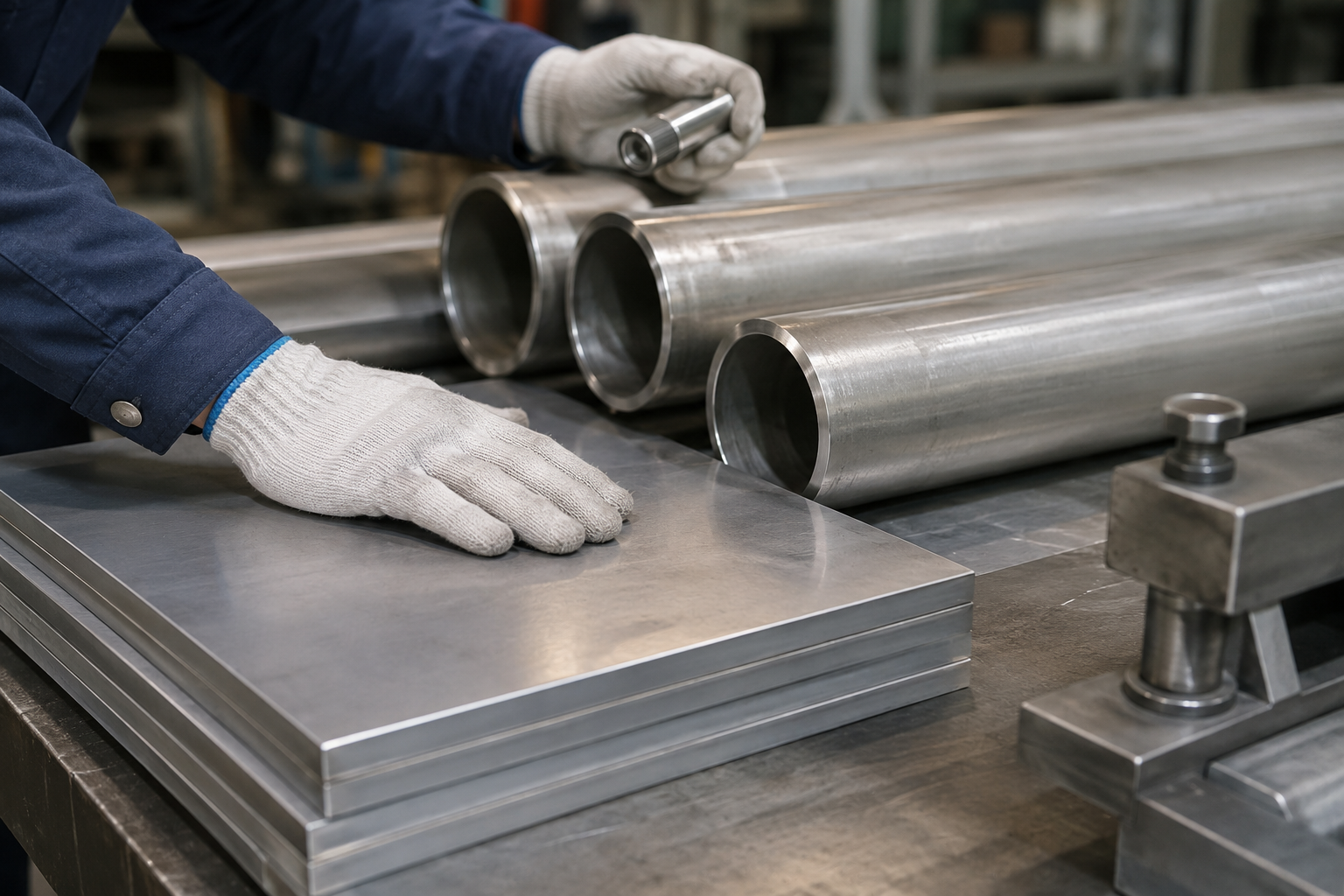
Quick Answer: Does Nickel Rust?
Nickel does not rust like ordinary carbon steel. Rust normally refers to iron-based corrosion products. Since nickel is not carbon steel, it does not form the same red-brown rust layer in the same way.
However, this does not mean nickel is immune to corrosion. Nickel materials may discolor, oxidize, pit, stain, or suffer localized corrosion when exposed to unsuitable chemicals, chlorides, moisture, heat, deposits, crevices, or poor fabrication conditions. For nickel alloy pipe, tube, plate, sheet, bar, or welded components, the exact grade and service condition must be reviewed together.
Rust, Corrosion, Oxidation, and Staining: What Is the Difference?
In purchasing discussions, the words rust, corrosion, oxidation, and staining are often used loosely. For engineering and RFQ communication, they should not be treated as the same issue.
| Term | Meaning in material selection | Buyer concern |
|---|---|---|
| Rust | Usually refers to iron oxide on iron or carbon steel | Nickel does not rust in the same way as carbon steel |
| Corrosion | Material degradation caused by the service environment | Nickel alloys can still corrode if the grade is not suitable |
| Oxidation | Surface reaction with oxygen, often affected by temperature | High-temperature service may require a specific nickel alloy |
| Staining or discoloration | Visible surface change from deposits, handling, heat tint, or chemicals | Appearance alone does not prove failure or suitability |
Nickel vs Carbon Steel vs Stainless Steel
Nickel, carbon steel, and stainless steel behave differently in corrosive environments. A material that performs well in one condition may not be suitable in another.
| Material | Rust or corrosion behavior | What buyers should know |
|---|---|---|
| Carbon steel | Can form red-brown rust when exposed to moisture and oxygen | Often needs coating, painting, galvanizing, or corrosion allowance |
| Stainless steel | Does not rust like carbon steel, but may stain or pit in chloride environments | Grade selection matters, especially for 304, 316, duplex, or higher alloys |
| Nickel and nickel alloys | Do not rust like ordinary steel, but may corrode, oxidize, pit, or discolor under certain conditions | Confirm alloy family, service medium, temperature, welding, and inspection standard |
Will Nickel Rust Outdoors or in Water?
Nickel does not rust like carbon steel in normal atmospheric exposure, but outdoor, humid, marine, or chloride-containing environments can still cause staining, oxidation, pitting, or localized corrosion depending on the nickel grade, surface condition, contaminants, and exposure cycle.
For water or saltwater exposure, buyers should avoid general assumptions. Fresh water, seawater, cooling water, chemical cleaning solutions, and process liquids may create very different corrosion risks. The correct nickel material should be selected based on the project-approved grade, service medium, temperature, deposits, flow condition, crevice risk, and inspection requirement.
Why the Service Environment Matters
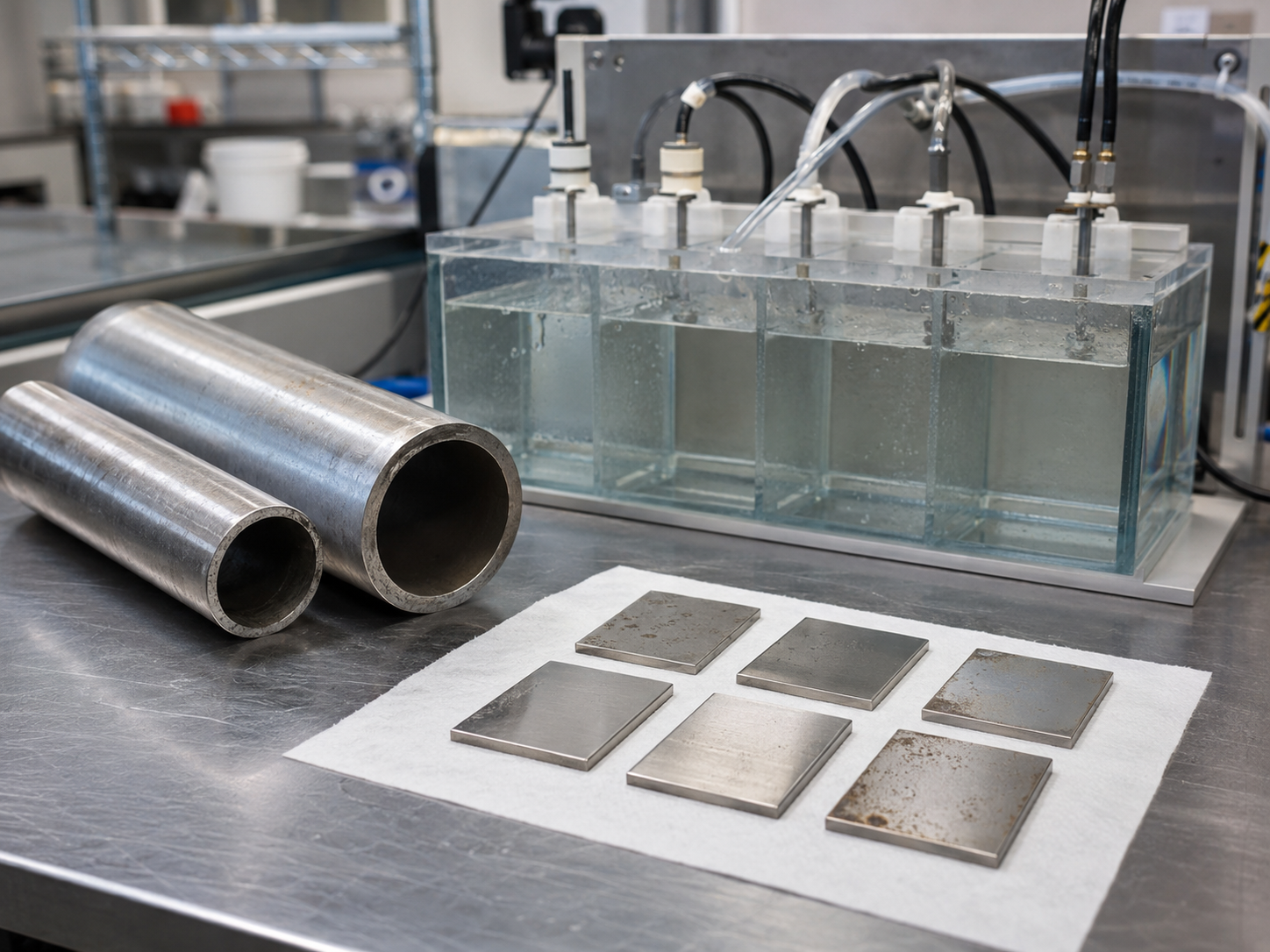
Do not describe the application only as “corrosive.” A nickel alloy may be selected for one acid, chloride condition, temperature range, or process environment, but that does not mean it is suitable for every chemical or operating condition.
Before requesting a quote, confirm the actual medium, concentration if available, chloride content, moisture, temperature, cleaning method, deposits, exposure cycle, pressure condition, crevices, and welded zones. These details can affect grade selection, inspection scope, surface condition, and whether welded or seamless material is preferred.
| Buyer question | What to confirm |
|---|---|
| Material supplied | Exact grade, alloy family, product form, standard, and MTC requirement |
| Service environment | Process medium, temperature range, chloride exposure, contamination, and cleaning cycle |
| Fabrication | Welded or seamless condition, bending, machining, surface finish, and post-fabrication requirements |
| Acceptance | Size, thickness or wall thickness, tolerance, surface condition, testing, documents, and packing |
Pure Nickel vs Nickel Alloys
Pure nickel and nickel alloys should not be treated as the same purchasing item. Pure nickel grades such as Nickel 200 and Nickel 201 may be specified for certain chemical, electrical, or project-specific requirements, while nickel alloys such as Inconel, Monel, Incoloy, and Hastelloy are selected for different combinations of corrosion resistance, heat resistance, strength, and fabrication performance.
This is why buyers should confirm the exact grade, UNS number if required, standard, product form, and delivery condition before comparing offers. A quote for “nickel material” is not enough if the project requires a specific alloy family, approved grade, or inspection document.
Common Nickel Materials Buyers May Compare
Nickel material selection should not be based only on the word “nickel.” Pure nickel, nickel-copper alloys, nickel-chromium alloys, nickel-molybdenum alloys, and nickel-chromium-molybdenum alloys are not interchangeable. Buyers often compare Nickel 200, Nickel 201, Monel, Inconel, Incoloy, and Hastelloy materials for different corrosion, heat, strength, and fabrication requirements.
| Material family | Typical examples | Common buyer focus |
|---|---|---|
| Pure nickel | Nickel 200, Nickel 201 | General nickel material requirements, electrical applications, or chemical-related applications depending on specification |
| Nickel-copper alloy | Monel 400, Monel K-500 | Marine, seawater, and selected chemical service where approved by project specification |
| Nickel-chromium alloy | Inconel 600, Inconel 625, Inconel 718 | Heat resistance, strength, oxidation resistance, and corrosion-related applications |
| Nickel-iron-chromium alloy | Incoloy 800, Incoloy 825, Incoloy 925 | Heat, oxidation, pressure, and corrosion-service requirements depending on grade |
| Nickel-molybdenum or nickel-chromium-molybdenum alloy | Hastelloy B-2, Hastelloy C-22, Hastelloy C-276 | Acid, chloride, and aggressive chemical environments where engineering approval is required |
Buyer note: A proposed substitute may be workable, but it should not be accepted only because the material names look similar. Confirm UNS number, standard, product form, delivery condition, and engineering approval before substitution.
Nickel Alloy Product Forms: Pipe, Tube, Plate, Sheet, and Bar
Product form changes the RFQ details. Nickel alloy pipe, tube, plate, sheet, strip, coil, bar, wire, and forged components have different standards, tolerances, inspection methods, and packing requirements.
| Product form | Details to confirm | Common RFQ mistake |
|---|---|---|
| Nickel alloy pipe | Outside diameter, wall thickness, length, standard, welded or seamless condition, end type, inspection documents | Only sending nominal size without wall thickness or standard |
| Nickel alloy tube | OD, wall thickness, tolerance, length, surface condition, seamless or welded condition, testing requirements | Confusing pipe and tube requirements |
| Nickel plate and sheet | Thickness, width, length, flatness, finish, cut size, tolerance, MTC requirement | Requesting only material grade without size and finish |
| Nickel bar and rod | Diameter, length, straightness, surface condition, machining allowance, standard | Ignoring machining allowance or surface requirement |
| Nickel strip and coil | Thickness, width, coil ID, edge condition, temper or delivery condition, surface requirement | Missing tolerance and edge condition |
Surface Appearance, Welds, and Fabrication Conditions
A discolored area does not automatically identify the cause or severity of a corrosion issue. It may be connected to deposits, handling, process residue, heat tint near a weld, cleaning chemicals, or the service medium. A clean-looking surface also does not prove that a material is suitable. Buyers should not accept or reject nickel material from appearance alone.
Welded and seamless material are not a universal quality ranking. The correct choice depends on design, governing standard, manufacturing route, size range, inspection requirement, and service duty. For a fabricated spool, pressure part, heat exchanger tube, or process pipe, the RFQ should state whether weld documentation, examination, surface treatment, or a particular delivery condition is required.
Standards, Tolerances, and Inspection Documents
For nickel alloy orders, buyers should request the applicable ASTM, ASME, EN, JIS, GB/T, or project standard where relevant. A quote based only on material name may not be enough for engineering or procurement approval.
Before purchase, confirm grade, UNS number if required, product form, dimensions, tolerance, surface condition, quantity, delivery condition, packing, inspection documents, and any third-party inspection needs. For welded items, state any special requirements for welds, cut edges, pickling, passivation, non-destructive testing, or finished surfaces.
| RFQ item | Why it matters |
|---|---|
| Grade and UNS number | Reduces confusion between similar nickel alloy names |
| Standard | Controls chemical, mechanical, dimensional, and testing requirements |
| Product form | Pipe, tube, plate, sheet, bar, strip, and wire follow different order details |
| Inspection documents | Helps verify material identity and compliance before shipment |
| Packing and marking | Helps reduce contamination, handling damage, and document mismatch |
A Buyer Decision Path Before Selecting Nickel Material
- Define the medium, operating temperature, pressure, exposure cycle, cleaning chemicals, and contaminants known to the project.
- Confirm the component function and fabrication route, including welding, bending, machining, forming, heat treatment, or surface treatment.
- State product form, standard, dimensions, tolerance, surface condition, inspection documents, packing, quantity, and destination.
- Ask engineering to approve the grade, UNS number, or alloy family before accepting a substitute.
- Compare quotations by grade, standard, delivery condition, document scope, and testing package before comparing only price.
This prevents a common sourcing mistake: comparing quotations that use similar material names but different grades, product forms, standards, tolerances, or document requirements.
RFQ Checklist for Nickel Alloy Corrosion Service
What to Ask When the Service Medium Is Unclear
Sometimes the purchasing team receives only a material name and a rough application description. Do not fill the gaps with assumptions. Ask the end user or engineering team whether the part sees continuous or intermittent exposure, whether deposits can remain on the surface, whether the component is cleaned in place, and whether joining or field welding happens after delivery.
If the service medium cannot be disclosed in full, request the project-approved grade and standard instead. The quote can then be prepared against a controlled material requirement without pretending that a general corrosion statement is enough.
Documents and Packing Matter Too
For an industrial order, material identity must stay connected to the delivered product. Buyers should agree on the inspection-document requirement before quotation and state any marking, bundle, crate, moisture-protection, or export-packing needs. Packing does not make a material corrosion-proof, but it can reduce avoidable handling damage and contamination before installation.
- grade, UNS number, or approved alloy family;
- product form and welded or seamless requirement where relevant;
- standard, size, thickness or wall thickness, and tolerance;
- service medium and operating conditions available to the buyer;
- surface condition, inspection document, packing, quantity, and destination;
- special requirements for welding, cutting, testing, marking, or third-party inspection.
Frequently Asked Questions
Does nickel rust in water?
Nickel does not rust like carbon steel, but water chemistry, chlorides, temperature, deposits, and crevices can affect corrosion behavior. Confirm the exact grade and service condition before selection.
Does nickel rust outside?
Nickel does not rust like carbon steel in normal outdoor exposure, but moisture, pollution, salt, deposits, and cleaning chemicals may cause staining or corrosion depending on the grade and surface condition.
Does nickel rust in saltwater?
Saltwater and chloride exposure require careful alloy selection. Some nickel alloys may be considered for marine or chloride-containing environments, but the correct grade must be confirmed by project specification and engineering review.
Does nickel corrode?
Yes. Nickel and nickel alloys can corrode in unsuitable environments. The corrosion mode may appear as staining, oxidation, pitting, crevice attack, weld-area corrosion, or surface degradation.
Is nickel better than stainless steel for corrosion resistance?
Not always. Nickel alloys are often selected for more demanding chemical, marine, high-temperature, or corrosion-service applications, but the correct choice depends on medium, temperature, pressure, fabrication, and project standard.
Which nickel alloy is best for corrosion resistance?
There is no universal best alloy. Buyers often compare Inconel, Hastelloy, Monel, Incoloy, Nickel 200, and Nickel 201 based on the approved specification and service environment.
Can one nickel alloy replace another?
Not without project-specific confirmation. Review service medium, temperature, pressure, fabrication route, standard, dimensions, tolerance, inspection documents, and engineering approval before substitution.
What should I send for a nickel alloy RFQ?
Send the grade, standard, product form, size, thickness or wall thickness, tolerance, surface condition, quantity, inspection document requirements, packing, destination, and available application details.
Send a Clear Nickel Alloy RFQ
To request a nickel alloy quotation, provide grade, standard, product form, size, thickness or wall thickness, tolerance, surface condition, quantity, inspection-document needs, packing, destination, and application details. If the corrosion environment is not fixed, say so clearly; a proposed material still needs engineering confirmation.