
 EN
EN




Stainless Steel Plate Thickness, Standard Sizes, Grades and ASTM Standards
Selecting stainless steel plate starts with the project specification: grade, thickness, size, tolerance, surface condition, standard, document requirement, quantity, and service environment. This guide helps industrial buyers prepare those details before requesting a quotation.
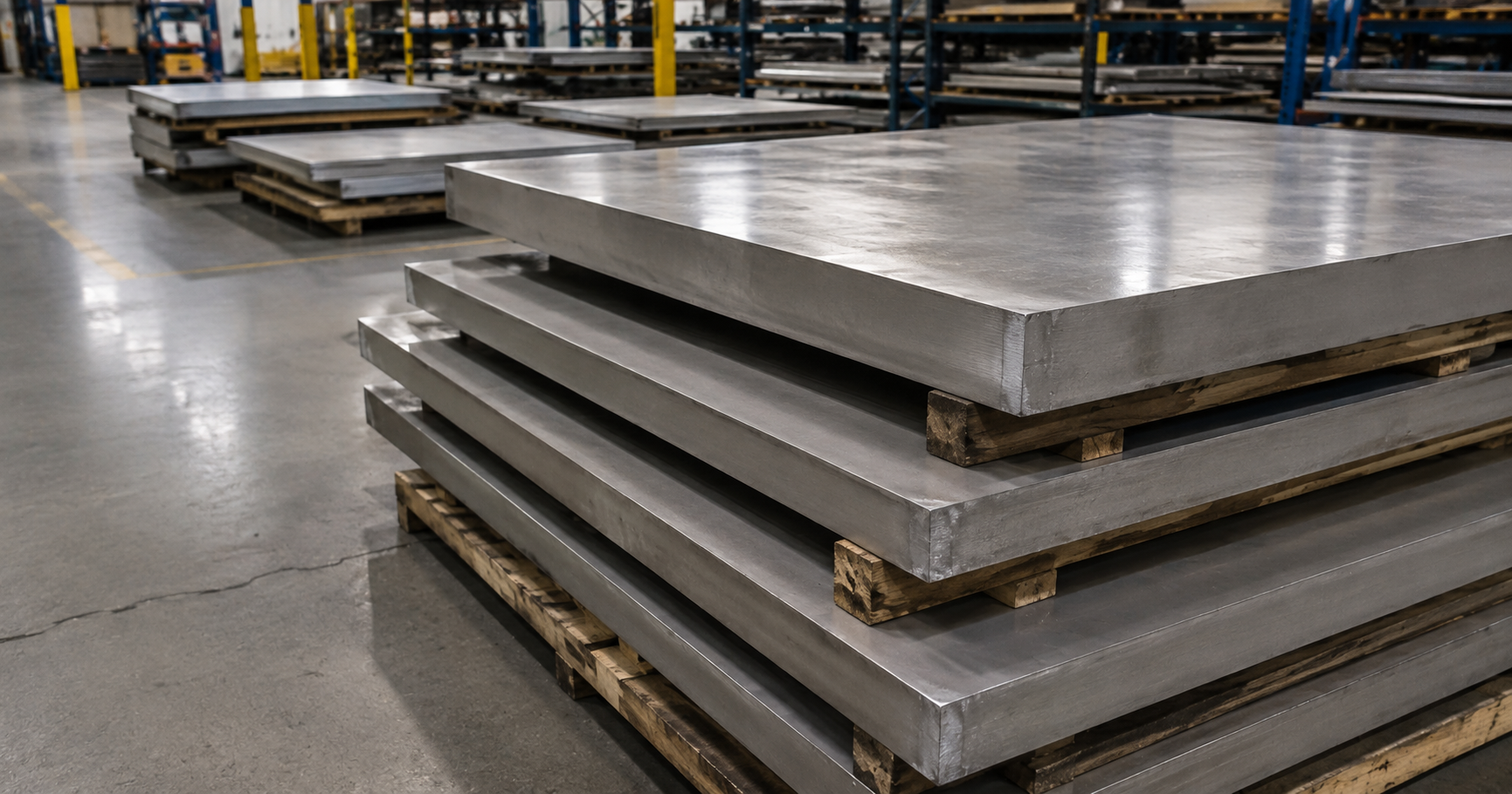
Before asking for “304 plate” or “316 plate,” confirm the working environment and project requirement. The supplier can then review grade, thickness, ASTM or EN standard, surface condition, Mill Test Certificate (MTC), cutting needs, and packing requirement with the buyer.
This guide explains how to compare plate grades, thicknesses, standard sizes, and ASTM references for industrial purchasing. Final material selection should follow the applicable project specification and service conditions.
What Are Stainless Steel Plates?
Stainless steel plates are flat stainless steel products used for heavier-duty applications than common thin sheet metal. In many purchasing cases, plates are selected when the part needs higher strength, better rigidity, more load-bearing ability, or stronger corrosion resistance.
Common Forms
Hot rolled plates, annealed and pickled plates, cut-to-size plates, polished plates, and CNC-cut plate parts.
Main Buying Focus
Grade, thickness, standard, MTC, surface condition, cutting tolerance, and packing method.
Typical Buyers
Fabricators, tank builders, machinery plants, contractors, engineering companies, and distributors.
For flat stainless products, buyers can review the related stainless steel plate product page before confirming the final grade, dimensions, and finish.
Stainless Steel Plates vs. Stainless Steel Sheets
In the U.S. market, buyers often separate stainless steel sheet and stainless steel plate by thickness and application. The exact dividing line can vary by supplier, standard, and project requirement, so the safest method is to state the exact thickness.
| Item | Stainless Steel Sheet | Stainless Steel Plate |
|---|---|---|
| Typical Use | Light fabrication, panels, covers, cabinets | Tanks, structures, machinery, pressure-related parts |
| Thickness | Usually thinner | Usually thicker |
| Common Sizes | 4' x 8', 4' x 10', 5' x 10' | 4' x 8', 5' x 10', 6' x 12', custom cut |
| Surface Focus | 2B, BA, No.4, HL, appearance | No.1, annealed and pickled, thickness, MTC |
| Processing | Cutting, bending, forming | Cutting, welding, machining, heavy fabrication |
For example, a 16 gauge stainless sheet may be used for an equipment panel, while a 1/2 inch stainless steel plate may be used for a machinery base, tank part, or structural component.
Common Stainless Steel Plate Grades
Different stainless steel plate grades are designed for different environments. The right choice depends on corrosion risk, strength, welding needs, temperature, and project code.
| Grade | Main Feature | Common Applications | Buying Note |
|---|---|---|---|
| 304 | General corrosion resistance and good weldability | Tanks, food equipment, machinery parts, general fabrication | Often considered for general service; confirm the exposure, cleaning method, and project requirement. |
| 304L | Low-carbon version of 304 | Welded tanks, welded structures, process equipment | Often used when welding is important. |
| 316 | Better chloride corrosion resistance than 304 | Marine parts, coastal projects, chemical equipment | May be considered where chloride exposure is relevant; confirm the medium, temperature, concentration, and project specification. |
| 316L | Low-carbon version of 316 | Welded chemical tanks, marine equipment, pressure-related parts | Often reviewed for welded projects; confirm the welding procedure and service environment. |
| 321 | Titanium-stabilized stainless steel | Heat-related equipment, welded high-temperature parts | May be considered for heat-related service; confirm the actual temperature and applicable standard. |
| 310S | High-temperature oxidation resistance | Furnaces, heat treatment equipment, thermal parts | May be considered for high-temperature service; confirm the temperature and design requirement. |
| 2205 Duplex | Higher strength and strong corrosion resistance | Chemical tanks, marine structures, oil and gas parts | Requires project-specific welding and fabrication review. |
| 904L | High-alloy corrosion-resistant stainless steel | Acid-related equipment and demanding chemical service | May be considered for demanding corrosion conditions after a project-specific review. |
U.S. buying habit: Buyers may ask for 304/304L dual-certified plate or 316/316L dual-certified plate. Dual certification can be useful when a project needs both standard grade performance and low-carbon welding benefits.
304 Stainless Steel Plate
304 stainless steel plate is one of the most common choices for general industrial use. It offers good corrosion resistance, good weldability, and practical performance in many normal environments.
Common Uses
- Food processing equipment
- Storage tanks
- Machinery parts
- General fabrication
- Equipment bases
Selection Note
304 may be considered for general service. Buyers should confirm chloride exposure, chemicals, cleaning method, temperature, and the applicable project specification before selection.
316 and 316L Stainless Steel Plate
316 stainless steel plate contains molybdenum and is often evaluated where chloride exposure is a concern compared with 304. Whether 316 or 316L is suitable still depends on the medium, concentration, temperature, fabrication method, and project specification.
Common Uses
- Marine equipment
- Coastal construction
- Chemical tanks
- Pharmaceutical equipment
- Welded corrosion-resistant structures
Selection Note
316L has lower carbon content than 316 and may be specified for welded structures. The required grade and welding approach should be confirmed against the project requirement.
Stainless Steel Plate Thickness: Reference Range and Buying Checks
Thickness is one of the most important purchase details. It affects the design, cutting method, welding process, machining allowance, handling, and freight. The values below are buying references, not a statement of current availability or a substitute for a project specification.
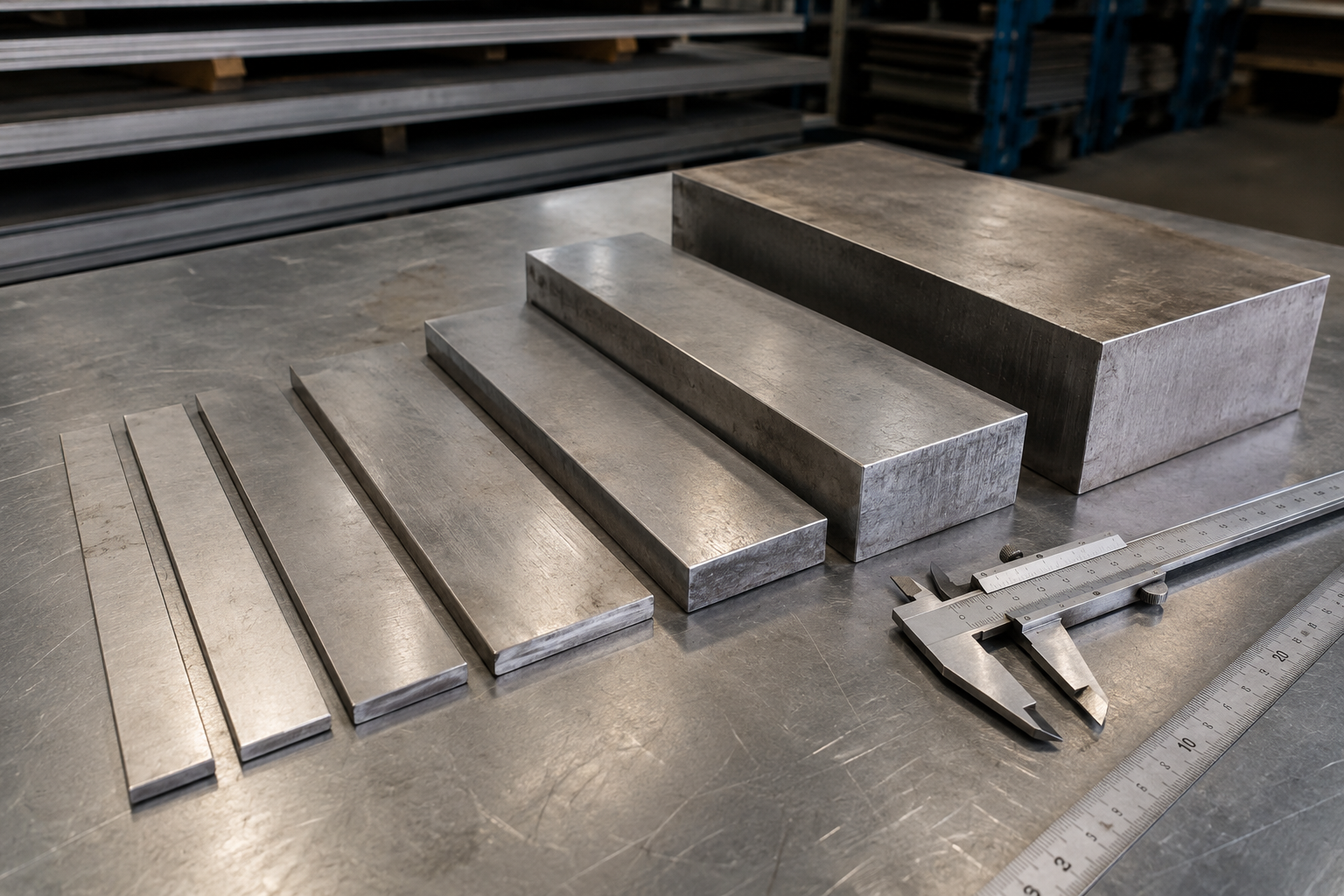
| Thickness | Approx. Inch Size | Common Use | Buying Note |
|---|---|---|---|
| 3 mm | About 1/8" | Light plates, covers, small tanks | Often overlaps with heavy sheet use. |
| 6 mm | About 1/4" | Equipment parts, brackets, base plates | Common for general fabrication. |
| 10–12 mm | About 3/8"–1/2" | Tanks, machinery parts, frames | Cutting and welding requirements matter more. |
| 20–25 mm | About 3/4"–1" | Heavy fabrication, structural parts | Check cutting method and lifting capacity. |
| 30–50 mm | About 1-1/4"–2" | Heavy machinery, thick parts, load-bearing components | Confirm cutting method, handling plan, and requested delivery date with the supplier. |
| Above 50 mm | Above 2" | Special heavy-duty projects | Confirm achievable dimensions, tolerance, condition, and project documentation before ordering. |
Important: Plate thickness, tolerance, width, length, flatness, and delivery condition should be stated on the inquiry or drawing. Common examples do not mean every size is suitable or available for every grade and standard.
When choosing stainless steel plate thickness, buyers should consider:
- Load requirement and corrosion allowance
- Welding method and cutting method
- Machining allowance and final part size
- Project design code
- Handling and lifting capacity
- Budget and lead time
Common Stainless Steel Plate Sizes
U.S. buyers often describe plate size in feet and inches, while international buyers may use millimeters. The table is a purchase-reference guide; the exact width, length, tolerance, and delivery condition should be confirmed for the selected grade and standard.
| Common Size | Metric Equivalent | Typical Use |
|---|---|---|
| 4' x 8' | 1219 x 2438 mm | Common purchase-reference size for fabrication |
| 4' x 10' | 1219 x 3048 mm | Equipment panels and fabrication |
| 5' x 10' | 1524 x 3048 mm | Tanks, machinery parts, larger components |
| 5' x 20' | 1524 x 6096 mm | Long panels and industrial fabrication |
| 6' x 12' | 1829 x 3658 mm | Large parts and heavy fabrication |
| Custom cut | Based on drawing | CNC cutting, plate parts, project supply |
ASTM Standards for Stainless Steel Plates
Standards help define chemical composition, mechanical properties, tolerances, delivery condition, and inspection requirements. For U.S. buyers, ASTM and ASME standards are especially common.
| Standard | What It Covers | Common Buying Use |
|---|---|---|
| ASTM A240 / A240M | Chromium and chromium-nickel stainless steel plate, sheet, and strip | Common stainless steel plate purchase standard |
| ASTM A480 / A480M | General requirements for flat-rolled stainless steel plate, sheet, and strip | Tolerance, finish, and general delivery requirements |
| ASME SA240 | ASME version often used for pressure equipment | Pressure vessel and code-related projects |
| EN 10088-2 | European standard for corrosion-resistant stainless steel flat products | EU and international projects |
| JIS G4304 | Hot-rolled stainless steel plate, sheet, and strip | Japanese standard hot-rolled flat products |
| JIS G4305 | Cold-rolled stainless steel plate, sheet, and strip | Japanese standard cold-rolled flat products |
316L stainless steel plate, 1/2" thickness, 60" x 120", No.1 finish, ASTM A240, MTC required.
Why MTC Matters for Stainless Steel Plates
MTC means Mill Test Certificate. It is one of the most important documents for industrial stainless steel plate orders.
A Typical MTC May Include
- Material grade and heat number
- Chemical composition
- Mechanical properties
- Standard reference
- Plate size and thickness
- Delivery condition and inspection result
Why Buyers Need It
For tanks, chemical equipment, pressure-related parts, marine projects, and engineering jobs, an MTC can support traceability and document review. Buyers should confirm the exact certificate format and project acceptance requirements before ordering.
Surface Condition and Finish Options
Stainless steel plates often use different surface conditions from thinner stainless sheets. For industrial plates, No.1 finish is common because many plates are hot rolled, annealed, and pickled.
| Surface Condition | Appearance | Common Use |
|---|---|---|
| No.1 | Hot rolled, annealed, and pickled | Heavy fabrication, tanks, industrial equipment |
| 2B | Smooth cold-rolled surface | Thinner plates, equipment panels, food machinery |
| Brushed / No.4 | Directional brushed surface | Visible panels and machinery covers |
| Polished | Smoother decorative or functional surface | Food, equipment, and visible parts |
| Pickled | Cleaned surface after hot rolling or welding | Industrial fabrication and corrosion control |
For more detail, buyers can review this related guide on stainless steel surface finish.
Cut-to-Size Stainless Steel Plate Services
Many buyers do not need full plates. They need cut-to-size stainless steel plates based on drawings, part dimensions, or fabrication plans.
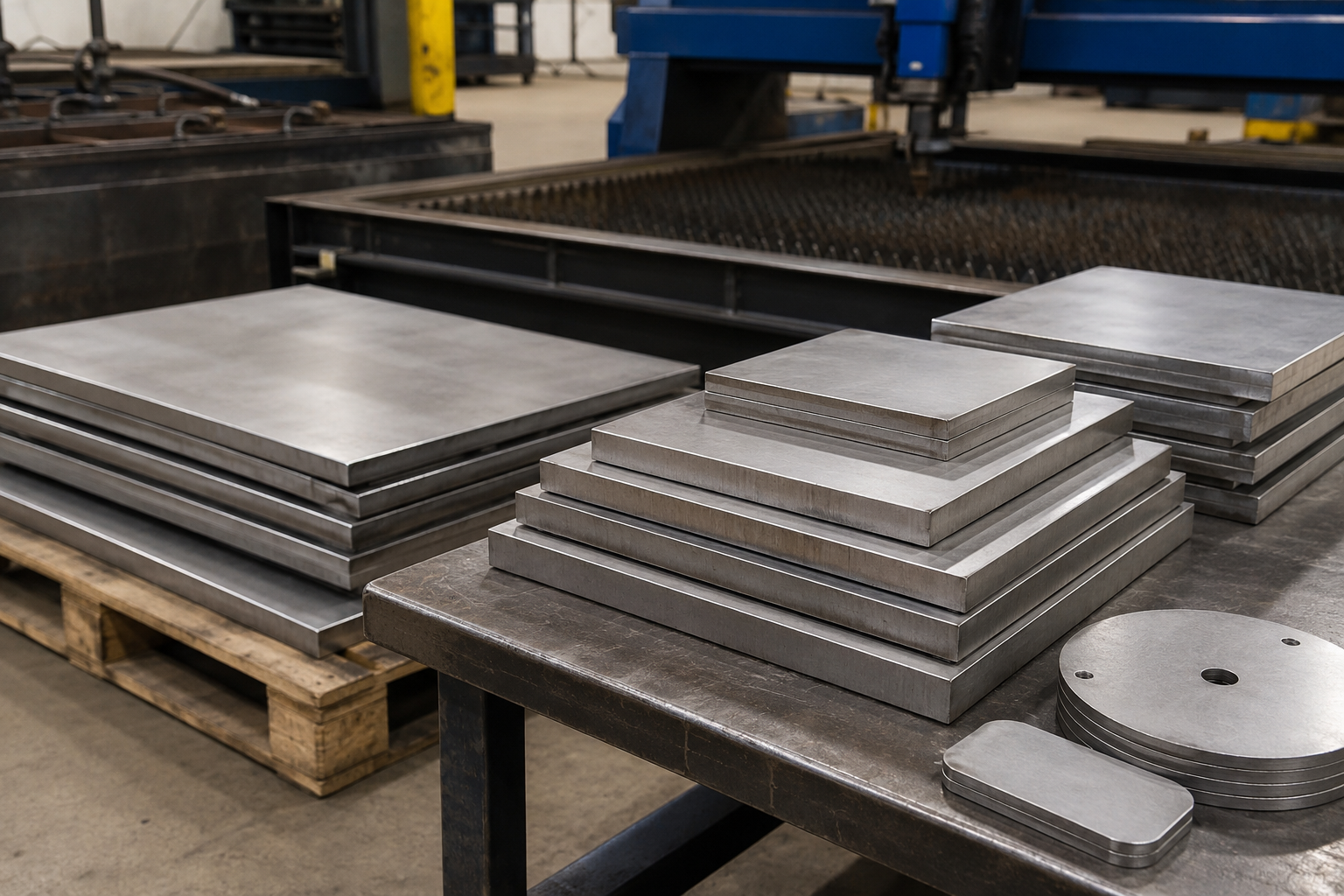
| Cutting Method | Suitable For | Main Advantage |
|---|---|---|
| Shearing | Thin plates and straight cuts | Fast and cost-effective |
| Plasma Cutting | Medium and thick plates | Practical for heavy plate cutting |
| Laser Cutting | Thin to medium plates with accurate shapes | Clean edges and tight shapes |
| Waterjet Cutting | Thick plates or heat-sensitive parts | Low heat effect and complex shapes |
| Saw Cutting | Blocks or thick plate sections | Stable for straight heavy cuts |
Before ordering cut-to-size plates, buyers should confirm:
- Drawing or part size
- Thickness and cutting tolerance
- Edge condition
- Quantity and hole size
- Machining allowance
- Surface protection and packing method
How to Choose Stainless Steel Plates by Application
Different applications need different stainless steel plate grades, thicknesses, and standards.
Tanks and Containers
304, 304L, 316, and 316L stainless steel plates are common. Grade depends on liquid type, temperature, cleaning process, and corrosion risk.
Chemical Equipment
316L, 2205 duplex, 904L, or other special grades may be required depending on chemical type, concentration, and temperature.
Marine and Coastal Projects
316 or 316L may be evaluated where the service environment requires it. Duplex stainless steel may also be considered where strength and corrosion conditions require project-specific review.
Food Processing Equipment
304 and 316 stainless steel plates are common. Surface finish, cleanability, weld quality, and hygiene requirements should be considered.
Heavy Machinery
Heavy machinery parts often require thicker plates, stable cutting quality, and good dimensional control.
Project Supply
For mixed material projects, buyers may also need matching stainless steel pipe or stainless steel bar.
Stainless Steel Plate Buying Checklist
Before placing an order, buyers should prepare a clear stainless steel plate specification.
Buying Checklist
316L stainless steel plates, 1/2" thickness, 60" x 120", No.1 finish, ASTM A240, MTC required, for welded chemical tank fabrication, 8 tons, export packing required.
Buyers who need coil-fed production or slitting can also compare stainless steel coil options before confirming the final purchasing plan.
Common Mistakes When Buying Stainless Steel Plates
Only Asking for “304 Plate”
“304 plate” is not enough. The supplier still needs thickness, size, standard, surface condition, quantity, and MTC requirement.
Ignoring the ASTM or Project Standard
Different projects may require ASTM, ASME, EN, JIS, or other standards. Missing the standard can cause approval problems later.
Not Confirming MTC
For industrial use, MTC is often important. It should be confirmed before production or shipment.
Choosing Thickness Without Processing Review
A thick plate may provide strength, but it may also be harder to cut, weld, bend, machine, and transport.
Ignoring Cutting Tolerance
Cut-to-size stainless steel plates need clear tolerance. For precision parts, drawings should be provided.
Overlooking Export Packing
Heavy stainless steel plates need strong packing, edge protection, moisture control, and safe loading plans.
Summary
Stainless steel plates are important materials for heavy fabrication and industrial projects. The right choice depends on grade, thickness, ASTM or project standard, surface condition, application, MTC requirement, and cutting needs.
304 and 316 are commonly evaluated for industrial work, while 304L, 316L, 321, 310S, duplex, and high-alloy grades may be relevant for particular welding, temperature, corrosion, or strength requirements. Final selection depends on service conditions and the applicable project specification.
A complete inquiry should include grade, standard, thickness, size, tolerance, surface condition, quantity, application, cutting requirement, MTC, packing, destination, and requested delivery date. Clear specifications help reduce purchasing risk and make supplier review more efficient.
Need Stainless Steel Plates for an Industrial Project?
Contact Voyage Metal to discuss a stainless steel plate requirement. Share the project details below so the team can review the request and reply with the appropriate next step. Final material suitability, documentation, and supply details should be confirmed for the project.
Useful details to include in an inquiry:
- Grade, such as 304, 304L, 316, 316L, 321, 310S, 2205, or 904L
- Thickness, plate size, and tolerance requirement
- ASTM, ASME, EN, JIS, or project standard
- Surface condition, cutting requirement, and MTC requirement
- Quantity, destination, packing, and requested delivery date
View related products: Stainless Steel Sheet & Plate
FAQ
What are stainless steel plates used for?
Stainless steel plates are used for tanks, pressure equipment, chemical plants, shipbuilding, machinery parts, food processing equipment, construction parts, and heavy fabrication.
What is the difference between stainless steel plates and sheets?
Stainless steel sheets are usually thinner flat products, while stainless steel plates are thicker and used for heavier fabrication. The exact thickness boundary may vary, so buyers should always state the exact thickness.
How do buyers choose stainless steel plate grade?
Buyers should choose stainless steel plate grade based on corrosion environment, strength requirement, welding needs, temperature, project standard, and budget. 304 and 316 are common, while 2205, 904L, 321, or 310S may be used for special conditions.
What thicknesses are common for stainless steel plates?
Common purchase-reference thicknesses include 1/8", 1/4", 3/8", 1/2", 3/4", 1", and thicker sizes. Metric references such as 3 mm, 6 mm, 10 mm, 12 mm, 20 mm, and 25 mm are also frequently requested. The exact thickness, tolerance, grade, and delivery condition should be confirmed for the project.
What are common stainless steel plate standard sizes?
Common purchase-reference sizes include 4' x 8', 4' x 10', 5' x 10', 5' x 20', and 6' x 12'. These are not a promise of availability. Buyers should state the required width, length, thickness, tolerance, grade, standard, and cut-to-size requirement for confirmation.
Why is MTC important for stainless steel plates?
An MTC commonly records material and test information such as grade, heat number, chemical composition, mechanical properties, standard reference, and inspection information. Buyers should state the certificate and project-document requirements in advance.
What ASTM standard is used for stainless steel plates?
ASTM A240 / A240M is commonly used for chromium and chromium-nickel stainless steel plate, sheet, and strip. ASTM A480 / A480M covers general requirements for flat-rolled stainless steel plate, sheet, and strip.
How should stainless steel plates be specified in an inquiry?
A clear inquiry should include grade, standard, exact thickness, size, tolerance, surface condition, quantity, application, cutting requirement, MTC requirement, packing, destination, and requested delivery date.