
 EN
EN




Stainless Steel Sheet: Grades, Finishes and Specification Checklist for Buyers
Buying stainless steel sheet is not only a grade decision. Thickness, size, tolerance, surface finish, standard, protective film, and the actual service environment should be confirmed together. This helps buyers avoid receiving a sheet that does not match the drawing, fabrication process, surface expectation, or project requirement.
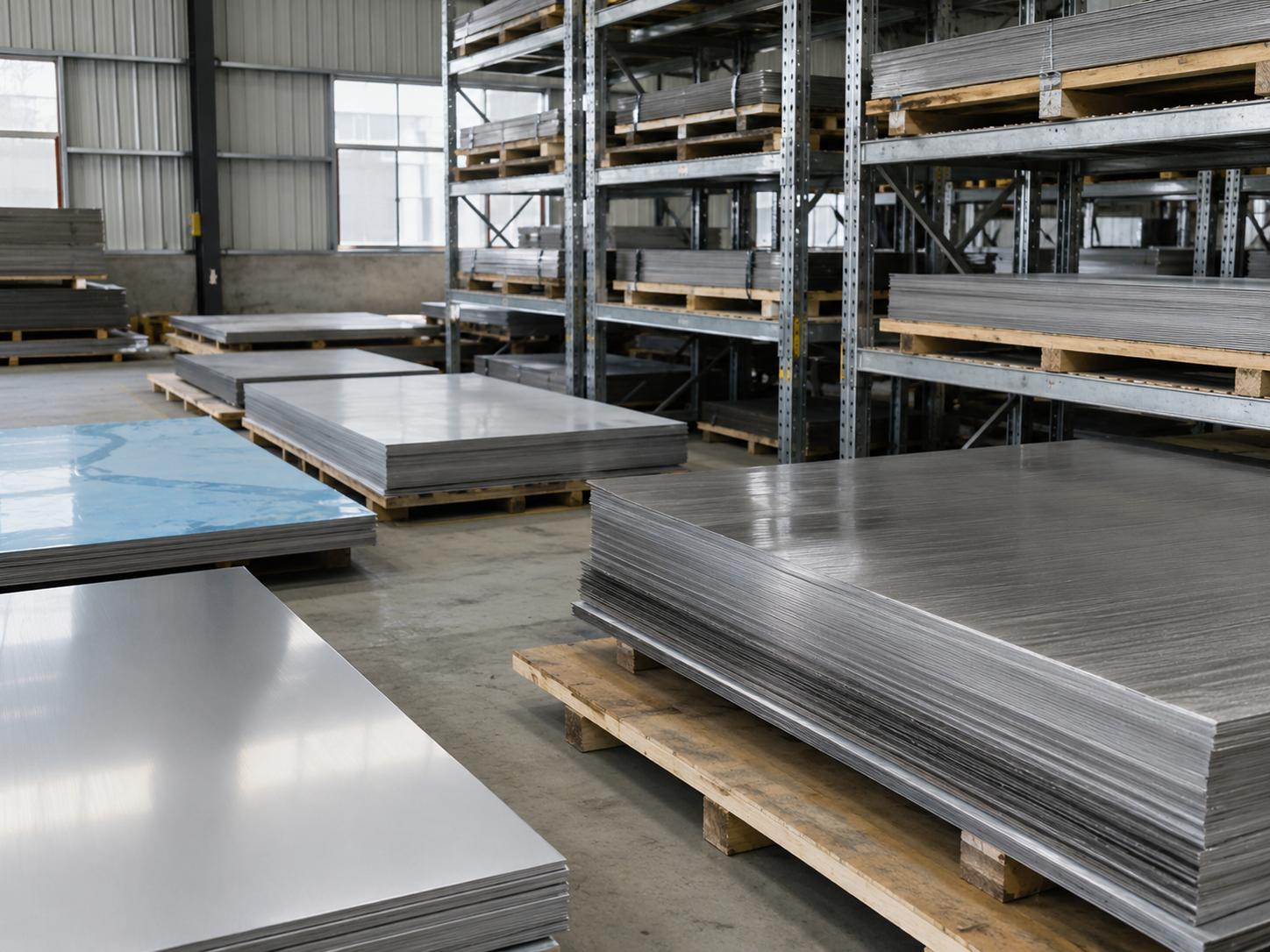
This guide explains the buyer checks that should be confirmed with Voyage Metal before material selection and a manual reply.
What Is Stainless Steel Sheet?
Stainless steel sheet is a flat, thin stainless steel product. It is usually supplied in cut sheets or processed from stainless steel coil. In many markets, sheet is used for thinner flat material, while plate is used for thicker and heavier material.
Common Forms
Cut sheet, flat sheet, polished sheet, brushed sheet, and sheet processed from coil.
Main Strengths
Available performance depends on the selected grade, finish, fabrication method, and actual service environment.
Typical Buyers
Fabricators, equipment manufacturers, contractors, engineering companies, and distributors.
Stainless steel sheet is used in kitchen equipment, food processing machinery, chemical equipment, elevator panels, wall cladding, tanks, HVAC parts, automotive parts, marine fittings, and general metal fabrication.
For buyers who need flat stainless steel material for fabrication or project supply, stainless steel plate and sheet products are commonly selected by grade, thickness, finish, and application.
How to Confirm Stainless Steel Sheet Size
Stainless steel sheet can be requested in standard or project-specific dimensions. Do not assume a published size is available for every grade, finish, thickness, or order quantity; confirm the required dimensions with the supplier before approval.
| Size | Common Use | Buying Note |
|---|---|---|
| Drawing or cut-list size | Fabricated parts, panels, covers | Send the finished-part requirement and allow for the planned processing route. |
| Standard sheet size | General fabrication | Confirm availability for the requested grade, thickness, finish, and quantity. |
| Large-panel size | Machinery and fabricated panels | Check handling, packing, transport, and flatness requirements. |
| Long-length size | Project fabrication | Confirm the exact requirement and any special handling constraints. |
| Custom cut size | Project-based fabrication | Helps reduce waste when drawings are already confirmed. |
Before confirming size, buyers should check:
- 1) Final part size after cutting
- 2) Cutting allowance
- 3) Bending direction
- 4) Surface protection needs
- 5) Container loading limits
- 6)Processing method at the workshop
How to Confirm Stainless Steel Sheet Thickness
Thickness and tolerance are project-specific. A small difference can affect forming, weight, fit-up, and acceptance, so buyers should state the required nominal thickness and permitted tolerance rather than relying on a general range.
| Thickness | Typical Application | Selection Tip |
|---|---|---|
| Light-gauge sheet | Light covers, small panels, decorative parts | Useful for lightweight parts but easier to deform. |
| Medium-gauge sheet | Kitchen equipment, light fabrication | Common range for many general sheet metal parts. |
| Heavier-gauge sheet | Machinery covers, tanks, stronger panels | Better for parts that need more strength. |
| Heavy flat product | Heavy fabrication, structural parts | Often used where strength and rigidity matter. |
| Sheet / plate naming boundary | Terminology can vary by market and specification | Use the exact thickness, applicable standard, and product requirement instead of relying on the name alone. |
Some buyers use gauge numbers instead of millimeters or inches. This can create confusion because gauge values are not always the same across materials or regions. For international purchasing, it is safer to write thickness clearly in millimeters, inches, and tolerance requirements when needed.
[Grade] stainless steel sheet, [required thickness and tolerance], [required dimensions], [surface finish], [surface protection], [applicable standard], [quantity], [application], and [destination].
Common Stainless Steel Sheet Grades
Different grades can suit different fabrication and service conditions. Grade selection should start with the working environment and project specification, then be confirmed with the applicable standard and material documentation.
| Grade | Main Feature | Common Applications | Suitable Environment |
|---|---|---|---|
| 304 | Commonly considered for general fabrication | Kitchen equipment, tanks, panels, general fabrication | Final fit depends on service conditions and project specification |
| 316 | Often considered where chloride exposure needs review | Marine equipment, coastal projects, chemical equipment | Requires project-specific corrosion review |
| 430 | Ferritic grade commonly considered for selected applications | Decorative panels, appliance parts, indoor trim | Confirm the actual environment before selection |
| 201 | Grade selection should follow the required application and standard | Furniture parts, indoor panels, decorative use | Confirm suitability with the project requirement |
| 2205 Duplex | May be considered where strength and corrosion conditions both require review | Chemical tanks, marine structures, oil and gas parts | Requires project-specific technical confirmation |
Practical buying tip: Do not treat any stainless steel grade as a universal solution. For coastal, marine, chemical, or chloride-related exposure, buyers should provide the service conditions and confirm the grade with the project specification.
Common Stainless Steel Sheet Finishes
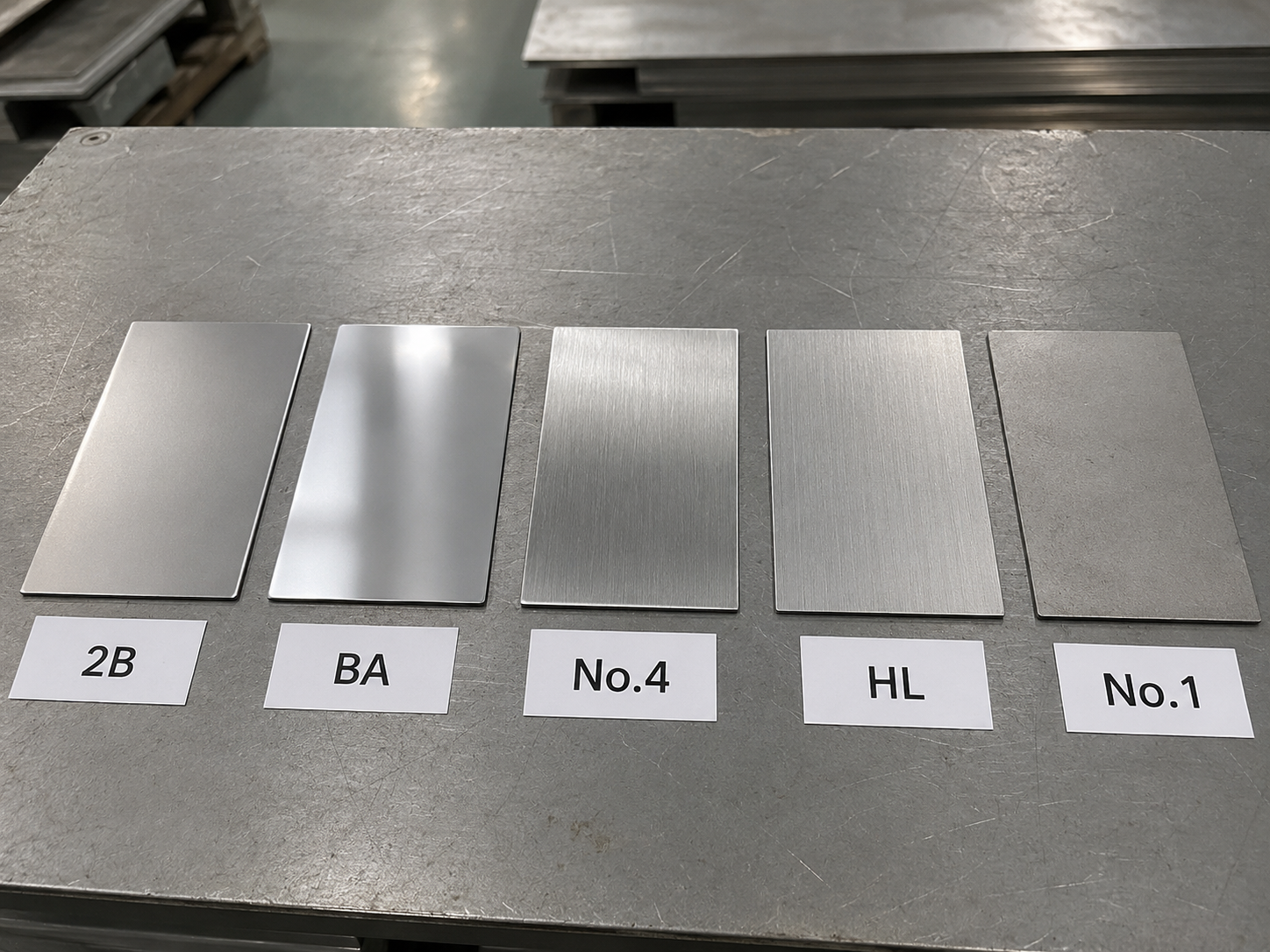
Surface finish affects appearance, cleanability, corrosion behavior, and downstream processing. Buyers should not treat finish as only a visual detail.
| Finish | Surface Appearance | Common Use | Buying Note |
|---|---|---|---|
| 2B | Smooth, slightly reflective | Industrial equipment, kitchen equipment, food machinery | Practical for general use and further processing. |
| BA | Bright and more reflective | Decorative panels, appliance parts, interior trim | Scratches are easier to notice, so packing matters. |
| No.4 | Brushed grain surface | Elevator panels, kitchen equipment, wall panels | Confirm grain direction before production. |
| HL | Long continuous hairline pattern | Interior decoration, elevator doors, cladding | Often used for visible architectural surfaces. |
| No.1 | Hot-rolled, annealed, and pickled surface | Tanks, heavy fabrication, chemical equipment | Usually selected for function rather than appearance. |
If surface finish is a key concern, buyers can also review this related guide on stainless steel surface finish for more background before confirming the order.
How to Choose Stainless Steel Sheet for Your Application
A practical stainless steel sheet selection should begin with the working environment and project requirement, not only a grade name or price comparison.
Indoor General Fabrication
For covers, machinery parts, cabinets, or food equipment, confirm the grade, finish, cleaning method, fabrication process, and applicable project requirement before selection.
Marine or Coastal Areas
For coastal or marine exposure, provide the chloride exposure, temperature, cleaning conditions, and expected service environment so the grade can be reviewed against the project requirement.
Decorative Panels
For decorative panels, confirm the environment, required appearance, grain direction, protective film, and sample-approval requirement. The selected grade and finish should follow that confirmation.
Food and Kitchen Equipment
For food or kitchen equipment, confirm the intended contact conditions, cleaning chemicals, surface finish, applicable requirements, and project documentation before selecting a grade.
Chemical Equipment
Grade selection should consider chemical type, concentration, temperature, pressure, cleaning method, and service life.
High-Strength Applications
Where strength and corrosion conditions are both important, the grade should be reviewed against the actual service environment and project specification.
What to Check Before Buying Stainless Steel Sheet
A clear purchase specification helps avoid wrong materials, delays, and disputes.
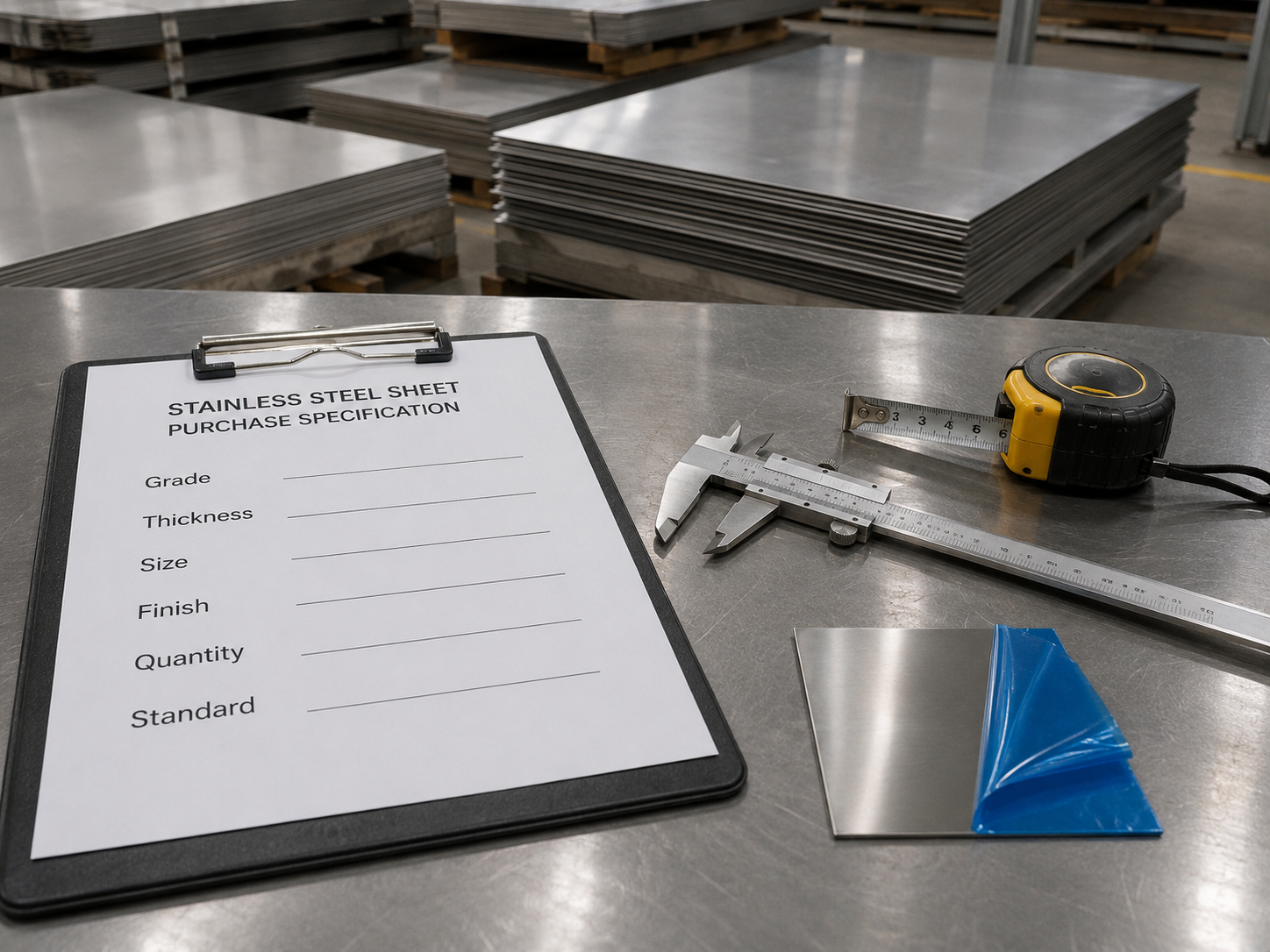
Stainless Steel Sheet Buying Checklist
If project documentation is required, buyers should state the document type and applicable requirement. Availability and acceptance should be confirmed for the specific order.
Buyers comparing sheet with other stainless flat products may also review stainless steel coil options when continuous processing, slitting, or large-volume production is needed.
Common Mistakes When Ordering Stainless Steel Sheet
Many purchasing problems come from incomplete specifications. The following mistakes are common in international stainless steel sheet orders.
Only Asking for “304 Sheet”
“304 sheet” is not enough. The review also needs thickness, tolerance, dimensions, finish, standard, quantity, packing, and application details.
Ignoring the Working Environment
A grade name alone does not establish suitability for coastal or chemical environments. Confirm the actual service conditions and project specification.
Confusing Sheet and Plate
Some buyers use sheet and plate as the same word. Always write the exact thickness to avoid misunderstanding.
Forgetting Surface Protection
Decorative stainless steel sheet can be scratched during cutting, bending, packing, or transport.
Not Confirming Finish Sample
No.4, HL, mirror, and colored finishes can vary between suppliers and production batches.
Ignoring Fabrication Direction
For brushed or hairline finishes, grain direction matters when panels are installed together.
If the project also requires matching long products or pipe products, buyers can compare specifications with stainless steel pipe and stainless steel bar for a more complete material purchasing plan.
Summary
Stainless steel sheet is a flat product used across industrial and project applications. The required grade, thickness, size, finish, standard, and service environment should be confirmed together.
For decorative use, surface finish, grain direction, protective film, and sample approval can be important. For marine, chemical, food-related, or high-strength applications, material selection should be reviewed against real working conditions and the project specification.
A clear inquiry should include grade reference, dimensions, thickness and tolerance, finish, quantity, standard, packing, application, destination, and any document requirements. This gives the team a clear basis for manual review and reply.
Need Stainless Steel Sheet for an Industrial Project?
Contact Voyage Metal to discuss your stainless steel sheet requirement. Send the grade reference, dimensions, thickness and tolerance, finish, quantity, application, destination, and any document or packing requirements. The team will review the project requirement and reply manually.
Useful details to include in an inquiry:
- Required grade or project grade reference
- Thickness, tolerance, and sheet dimensions
- Surface finish and protective film requirement
- Quantity, applicable standard, and destination
- Application, packing, and document requirements
View related products: Stainless Steel Sheet & Plate
FAQ
What is stainless steel sheet used for?
Stainless steel sheet is used for kitchen equipment, food machinery, tanks, decorative panels, wall cladding, machinery covers, automotive parts, chemical equipment, and general metal fabrication. The final use depends on the grade, thickness, and surface finish.
What is the difference between stainless steel sheet and stainless steel plate?
Stainless steel sheet usually refers to thinner flat stainless steel material, while stainless steel plate usually refers to thicker flat material. The exact dividing line can vary by market and standard. To avoid confusion, buyers should always state the exact thickness.
How do buyers choose stainless steel sheet thickness?
Buyers should choose thickness based on strength, forming method, weight, appearance, and final use. Thin sheets are suitable for light panels and covers. Thicker sheets are used for tanks, machinery parts, and stronger structures.
What is the most common stainless steel sheet grade?
304 is commonly referenced for general applications, while 316 is often evaluated for more demanding exposure conditions. The final grade should follow the project specification, service environment, fabrication method, and required documentation.
Why is 316 stainless steel sheet more expensive than 304?
Cost and technical suitability depend on the required grade, product form, standard, finish, quantity, and project conditions. For salt, coastal air, or chemical exposure, share the service details so the material requirement can be reviewed before selection.
What finish is suitable for stainless steel sheet?
2B finish is common for general industrial use. No.4 and HL finishes are common for visible decorative surfaces. BA and mirror finishes are used when a brighter surface is needed. No.1 finish is more common for hot-rolled industrial material.
How should stainless steel sheet be specified in an inquiry?
A clear inquiry should include grade reference, applicable standard, thickness and tolerance, dimensions, finish, quantity, edge condition, surface protection, packing, document requirements, application, and destination. The team will confirm the requirement manually before replying.