
 EN
EN




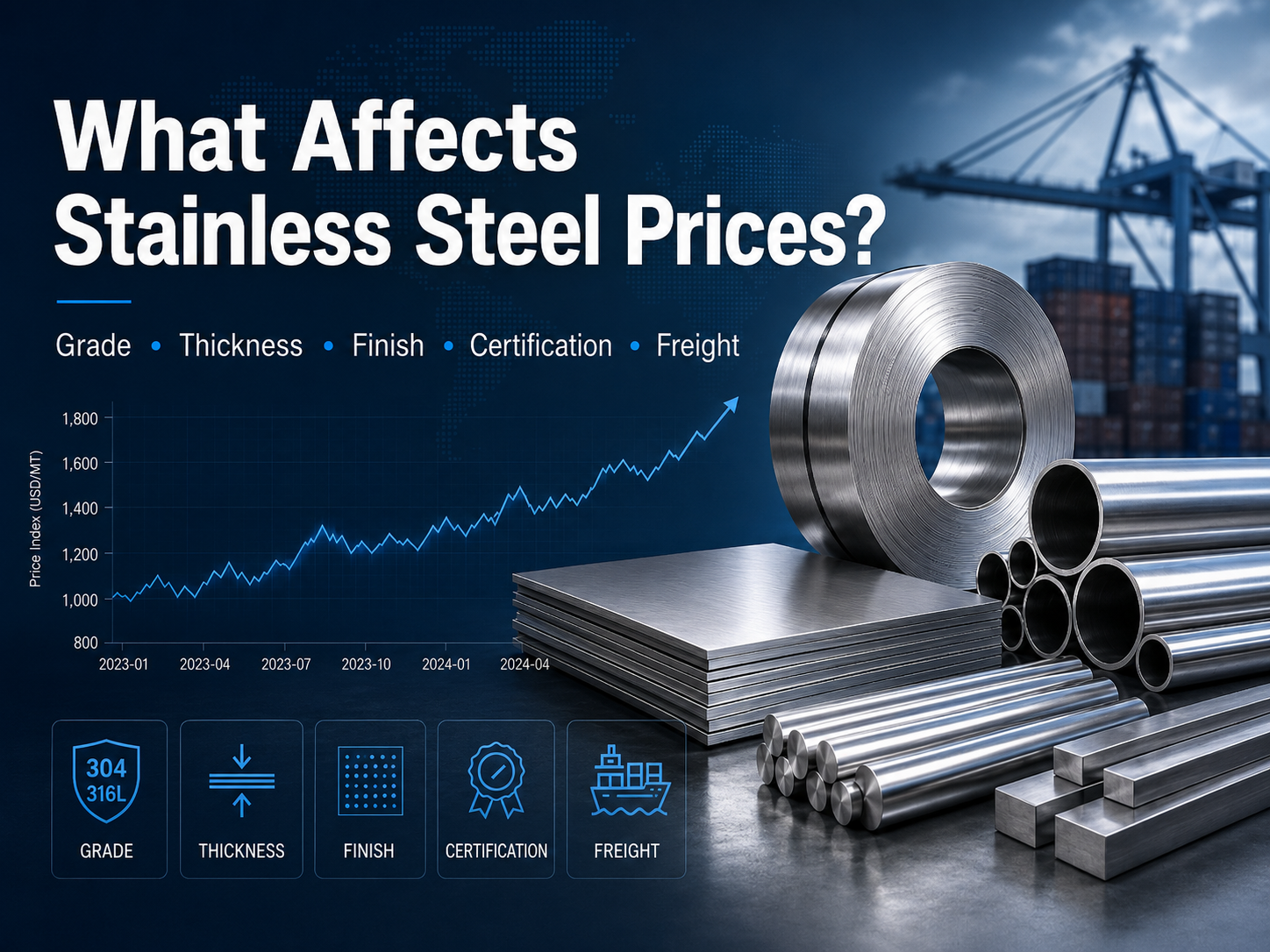
What Affects Stainless Steel Prices? Key Factors Buyers Should Know
When buyers search for stainless steel price, stainless steel cost, or stainless steel price per kg, they often expect a simple number. In real B2B procurement, stainless steel pricing depends on the complete specification, not only the grade name.
Two suppliers may both quote 304 stainless steel, but the final cost can be different because product form, thickness, surface finish, tolerance, cutting requirement, certificate, packing, freight terms, destination, and order quantity are not the same.
For industrial buyers, the goal is not only to find the lowest unit price. The real goal is to compare quotations on the same technical and commercial basis.
1. Grade and Alloy Content
The stainless steel grade is usually the first price driver. Different grades contain different levels of chromium, nickel, molybdenum, carbon, manganese, and other alloying elements. These elements affect corrosion resistance, mechanical performance, weldability, heat resistance, and final material cost.
For example, 316 stainless steel usually costs more than 304 stainless steel because it contains molybdenum, which improves resistance to chloride-containing environments. Ferritic grades such as 430 may be more cost-sensitive in some applications, but they cannot simply replace 304 or 316 where corrosion resistance, forming behavior, or welding performance is required.
304 Stainless Steel
A common choice for general fabrication, equipment, kitchen systems, panels, and many industrial parts where balanced corrosion resistance and formability are required.
316 Stainless Steel
Usually selected for marine, chemical, food processing, and chloride-related environments. The molybdenum content often makes 316 stainless steel price higher than 304.
430 Stainless Steel
A ferritic stainless steel option for some cost-sensitive applications. It may be suitable for decorative or indoor uses, but it has different corrosion and forming performance from 304.
Duplex Stainless Steel
Grades such as 2205 and 2507 may have a higher unit price, but they can offer stronger mechanical performance and better lifecycle value in demanding environments.
Related resource: Stainless Steel
2. Product Form: Sheet, Plate, Coil, Pipe, Tube, or Bar
Stainless steel is priced differently depending on product form. A stainless steel sheet price is not directly comparable to stainless steel plate price, coil price, pipe price, or bar price because each form has different production routes, tolerances, handling methods, packing requirements, and freight efficiency.
- Stainless steel sheet: often used for panels, equipment covers, cabinets, enclosures, and light fabrication.
- Stainless steel plate: used for thicker sections, structural parts, machining, pressure equipment, and heavy-duty service.
- Stainless steel coil: suitable for continuous processing, stamping, roll forming, slitting, and high-volume manufacturing.
- Stainless steel pipe or tube: affected by outside diameter, wall thickness, welded or seamless type, length, end finish, and testing requirements.
- Stainless steel bar or rod: affected by diameter, shape, straightness, tolerance, surface condition, and machining allowance.
Related resources: Stainless Steel Plate, Stainless Steel Sheet, Stainless Steel Pipe, Stainless Steel Coil, and Stainless Steel Bar.
3. Thickness, Size, and Tolerance
Thickness is one of the most visible stainless steel cost factors. Thicker material uses more metal, but price is not only a matter of weight. Production route, tolerance control, flatness, cutting yield, edge condition, and handling can also affect the final quotation.
For sheet and plate, buyers should confirm thickness, width, length, flatness, surface protection, and cutting tolerance. For coil, buyers should confirm coil width, inner diameter, outer diameter, coil weight, slit width, and burr control. For pipe and tube, buyers should confirm outside diameter, wall thickness, length, welded or seamless type, and end finish.
4. Surface Finish and Processing
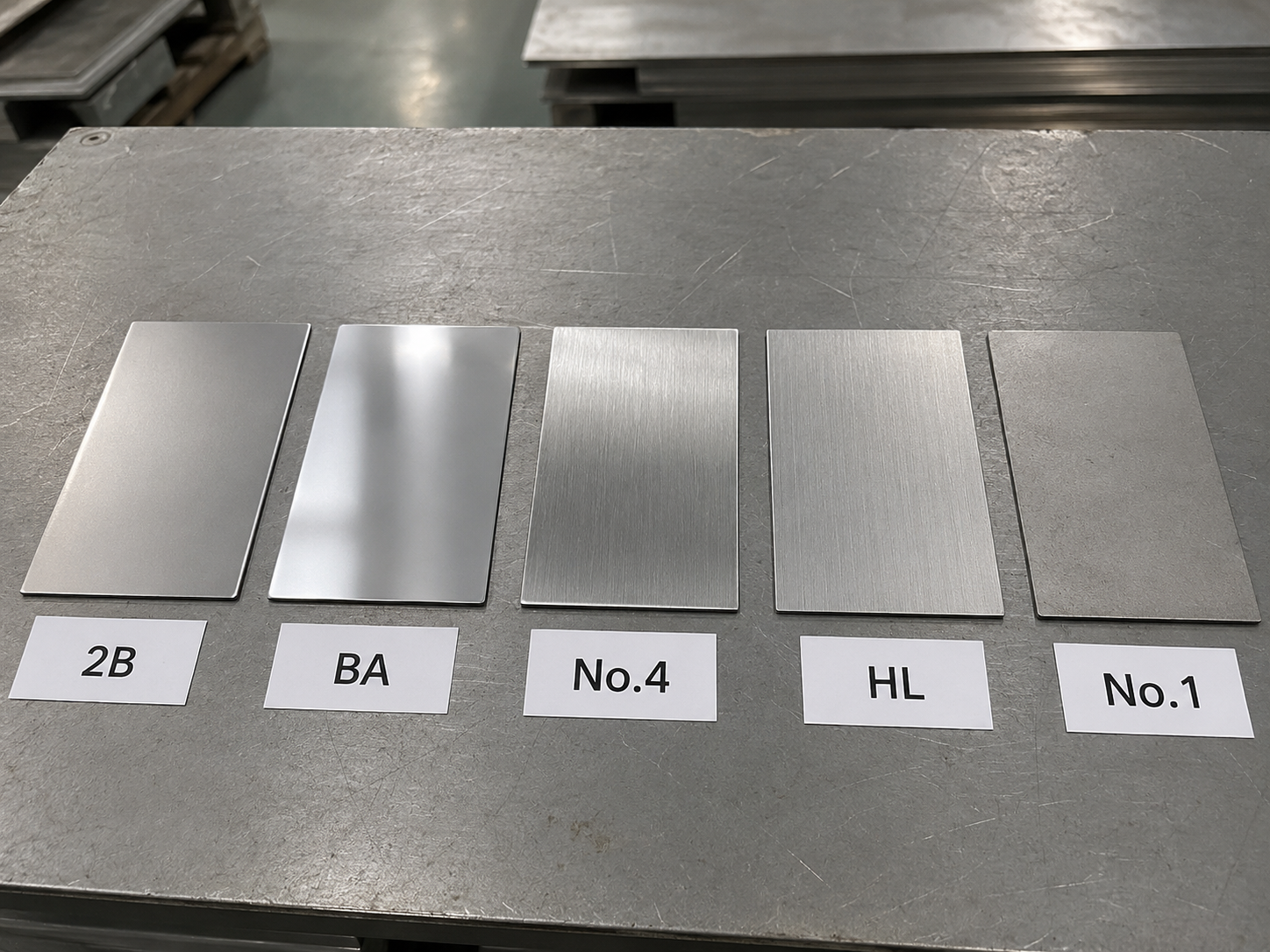
Surface finish is another common reason why stainless steel quotations differ. A standard mill finish, brushed finish, mirror finish, polished surface, or protective film requirement can change both material cost and handling cost.
For example, 2B finish is common for stainless steel sheet and coil, while No.4 brushed finish or mirror finish requires additional processing and more careful protection. If a project needs PVC film, special edge protection, or cosmetic surface control, these details should be included in the RFQ.
| Finish | Common Use | Price Impact |
|---|---|---|
| 2B | General sheet, coil, equipment parts, fabrication | Usually a common and cost-efficient finish |
| No.1 | Hot rolled plate, industrial equipment, heavy fabrication | Depends on plate thickness, grade, and size |
| No.4 Brushed | Decorative panels, elevator panels, visible equipment surfaces | Higher than standard mill finish because of polishing process |
| BA / Mirror | Decorative, appliance, architectural, and visual applications | Higher surface control and protective packing may increase cost |
5. Certification, Inspection, and Documentation
B2B stainless steel buyers often need documents for project approval, customs clearance, internal quality control, or customer acceptance. Certification and inspection requirements can affect cost because they add traceability, testing, documentation, or third-party involvement.
Common document requirements may include material test certificate, heat number traceability, chemical composition, mechanical properties, dimensional inspection, surface inspection, ultrasonic testing, PMI testing, or third-party inspection.
Important caution: certificate availability depends on the exact grade, standard, product form, stock source, and supply route. Buyers should confirm documentation requirements before ordering, not after production.
6. Quantity, MOQ, Yield, and Cutting Loss
Order quantity influences stainless steel cost because suppliers calculate production efficiency, handling, packing, and freight based on the order profile. A small trial order, mixed-grade order, or many cut sizes may have a higher unit cost than a regular bulk order.
Cut-to-size projects may also create yield loss when special dimensions do not match common sheet, plate, or coil sizes. If buyers only compare stainless steel price per kg without considering cutting loss and usable yield, the cheaper quote may not be the lowest real cost.
7. Freight, Packaging, and Destination
Stainless steel is heavy, and freight can be a major part of the landed cost. Buyers should compare quotations using the same trade terms and destination details. EXW, FOB, CFR, CIF, and DAP prices are not the same cost basis.
Packaging also matters. Stainless steel sheet, plate, coil, and pipe may require waterproof paper, wooden pallets, steel strips, edge protection, plastic film, seaworthy packing, or container loading plans. A quote that excludes proper packing may look cheaper but create higher risk during international transport.
8. Market Timing and Alloy Surcharges
Stainless steel prices can move with raw material markets, especially nickel, chromium, molybdenum, energy, and freight. For grades with higher nickel or molybdenum content, price fluctuation may be more obvious.
If your project has a long approval cycle, confirm quote validity, alloy surcharge terms, lead time, and what happens if specifications change after quotation. A stainless steel quotation that is valid for three days and another quote valid for fifteen days should not be compared without checking market conditions.
9. How Stainless Steel Price Is Usually Calculated
Stainless steel can be quoted by kg, ton, sheet, meter, piece, or coil depending on the product form and buying habit. For international B2B orders, suppliers usually calculate the cost from material weight, processing cost, packing, documentation, and freight terms.
| Quote Basis | Common Product | What Buyers Should Check |
|---|---|---|
| Price per kg | Sheet, plate, bar, pipe, coil | Confirm whether cutting, packing, certificate, and freight are included. |
| Price per ton | Bulk sheet, plate, coil, pipe, bar | Useful for bulk comparison, but specifications must be identical. |
| Price per sheet | Stainless steel sheet and plate | Check grade, thickness, size, finish, film, and cutting tolerance. |
| Price per meter | Stainless steel pipe and tube | Check outside diameter, wall thickness, length, welded or seamless type. |
| Price per piece | Cut parts, machined blanks, custom sizes | Check drawing, tolerance, processing, inspection, and packing. |
10. Why Stainless Steel Prices Differ Between Suppliers
Supplier quotations may look different even when the material grade is similar. The reason is often not only profit margin. One supplier may quote stock material, while another quotes new production. One may include mill test certificate, seaworthy packing, and freight, while another only quotes basic material price.
- Some quotes include cutting, while others charge cutting separately.
- Some quotes include MTC and heat traceability, while others need confirmation.
- Some quotes are based on stock size, while others require new production.
- Some quotes include export packing, while others use simple domestic packing.
- Some quotes are FOB, while others are CIF, CFR, DAP, or EXW.
- Some suppliers quote standard tolerance, while others include tighter tolerance or inspection.
- Some offers are valid for a short period because raw material prices are moving.
This is why professional buyers compare full specification, document requirements, delivery terms, lead time, and landed cost instead of choosing only the lowest stainless steel unit price.
Stainless Steel Quote Comparison Checklist
| Cost Factor | What to Confirm | Why It Matters |
|---|---|---|
| Grade | 304, 316, 430, 2205, 2507, 310S, 904L, or another grade | Alloy content and corrosion resistance change cost and performance. |
| Standard | ASTM, EN, JIS, GB, ASME, or project standard | Different standards may require different chemistry, tolerance, or testing. |
| Form | Sheet, plate, coil, pipe, tube, bar, or custom cut part | Each form has different production, processing, and handling costs. |
| Thickness / Size | Gauge, thickness, width, length, OD, wall thickness, diameter | Weight, tolerance, yield, and freight depend on dimensions. |
| Finish | 2B, BA, No.1, No.4, mirror, brushed, protective film | Finish affects appearance, processing, packing, and surface protection. |
| Processing | Cutting, slitting, polishing, drilling, bending, welding, machining | Extra processing may change unit price, lead time, and packing method. |
| Certification | MTC, heat traceability, inspection, third-party test | Documentation requirements can affect cost and lead time. |
| Freight Terms | EXW, FOB, CFR, CIF, DAP, destination port or address | Trade terms determine the real landed cost. |
How Buyers Can Prepare a Better Stainless Steel RFQ
A clear RFQ helps suppliers calculate a more accurate stainless steel quotation and reduces misunderstanding during production, inspection, packing, and shipment. If the RFQ is incomplete, suppliers may quote based on assumptions, and the final price may change later.
- Grade and standard, such as ASTM 304, 316L, 2205, or 310S.
- Product form: sheet, plate, coil, pipe, tube, bar, or custom cut size.
- Thickness, width, length, outside diameter, wall thickness, or diameter.
- Surface finish and protective film requirement.
- Quantity, tolerance, and acceptable production range.
- Required certificates, inspection documents, or third-party testing.
- Destination country, port, delivery address, or preferred trade term.
- Packing requirement and expected delivery schedule.
Frequently Asked Questions
What affects stainless steel price the most?
The main stainless steel price factors include grade, alloy content, thickness, product form, finish, tolerance, processing, certification, order quantity, packing, freight terms, and market timing. For B2B buyers, the same grade can have different prices if the specification or delivery terms are different.
How is stainless steel price calculated?
Stainless steel price is usually calculated by weight, sheet, meter, piece, or ton depending on product form. Suppliers may include material cost, processing, cutting loss, certificate, packing, and freight. Buyers should confirm what is included before comparing quotations.
Is stainless steel priced by kg, sheet, meter, or ton?
It depends on the product. Sheet, plate, coil, bar, pipe, and tube can be quoted by kg or ton. Stainless steel sheet may also be quoted per sheet, pipe may be quoted per meter, and custom parts may be quoted per piece.
Why is 316 stainless steel more expensive than 304?
316 stainless steel usually contains molybdenum, which improves resistance to chloride-related corrosion. This alloy content often makes 316 stainless steel more expensive than 304, especially for marine, chemical, and more corrosive environments.
Is the cheapest stainless steel quote the best choice?
Not always. A lower quote may exclude certificates, freight, protective packing, cutting, inspection, or suitable grade selection. Buyers should compare full specification, documentation, delivery terms, lead time, and landed cost.
How can I get an accurate stainless steel quotation?
Send grade, standard, form, thickness or size, finish, quantity, destination, certificate requirements, packing needs, and application details. The clearer the RFQ, the easier it is for suppliers to provide an accurate and comparable stainless steel quotation.
Need a stainless steel quotation?
If you need stainless steel sheet, plate, coil, pipe, tube, bar, or custom cut material for an industrial project, send Voyage Metal your grade, form, thickness, size, finish, quantity, destination, and certificate requirements. Our team can help review your specification and prepare a quotation based on your RFQ details.