
 EN
EN



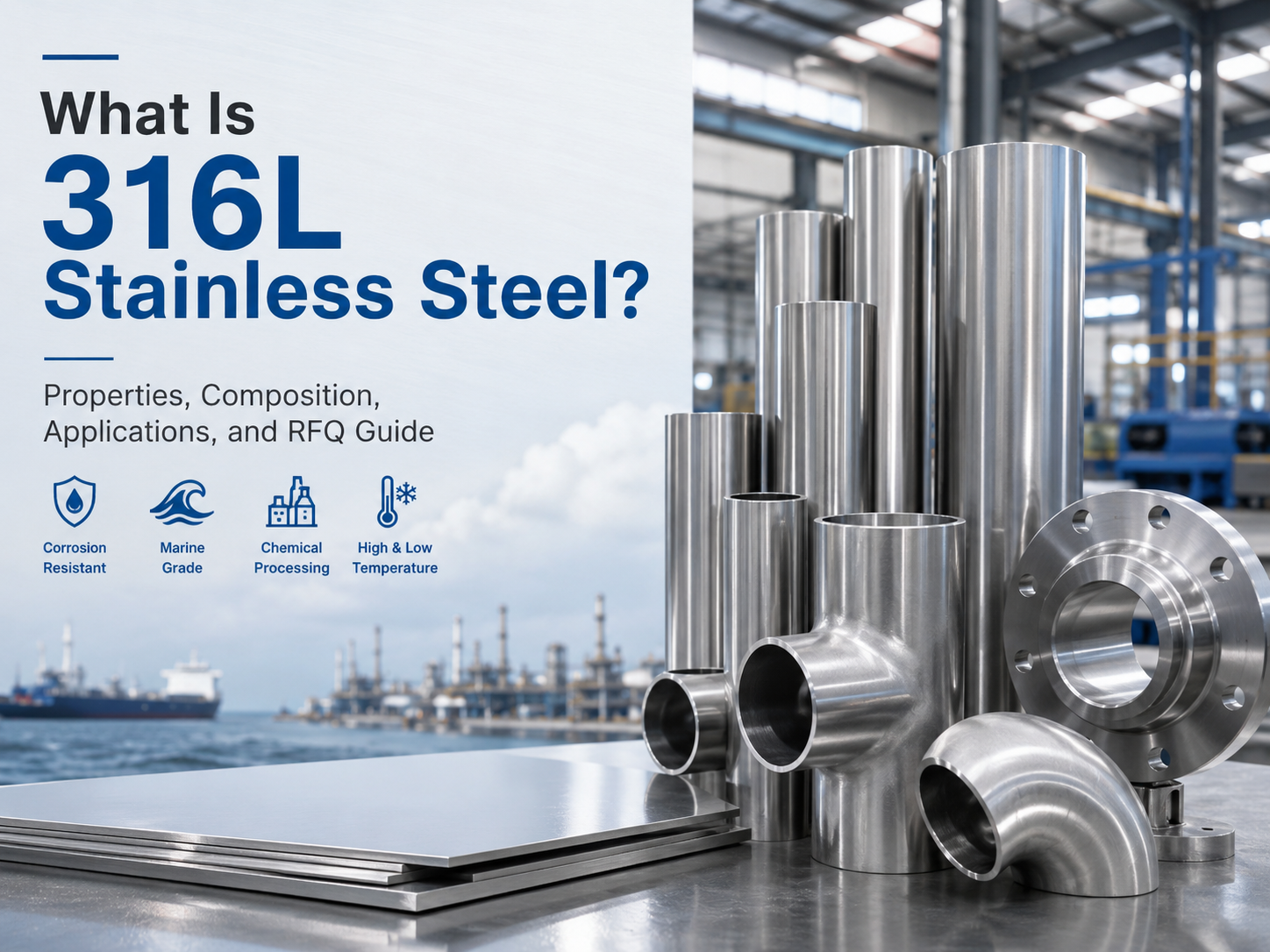
What Is 316L Stainless Steel? Properties, Composition, Applications, and RFQ Guide
316L stainless steel is a low-carbon austenitic stainless steel in the 316 family. It is commonly specified when a project requires corrosion resistance, weldability, and reliable performance in industrial fabrication.
For overseas buyers, the grade name alone is not enough for a purchase decision. A correct 316L stainless steel order should confirm the product form, applicable standard, dimensions, surface finish, welding requirement, inspection documents, and service environment.
This guide explains what 316L stainless steel is, how it compares with 316 and 304, which properties matter, where it is used, and how to prepare a clear RFQ for industrial purchasing.
What Is 316L Stainless Steel?
316L stainless steel is the low-carbon version of 316 stainless steel. The “L” indicates lower carbon content, which is often important when the material will be welded or used in corrosion-sensitive service.
It is commonly supplied as stainless steel sheet, plate, coil, strip, pipe, tube, bar, fittings, flanges, and fabricated components. Buyers often consider 316L for chemical processing, marine-related equipment, food-processing systems, pharmaceutical equipment, welded tanks, pipe systems, and architectural parts.
However, 316L is not automatically the right grade for every wet, marine, chloride, food-processing, or chemical environment. Final suitability depends on the medium, temperature, chloride level, cleaning method, fabrication route, surface finish, and project specification.
Before You Specify 316L Stainless Steel
Before specifying 316L stainless steel, buyers should check several practical points. These details often affect quotation accuracy, inspection requirements, delivery time, and final performance more than the grade name alone.
- 316L does not solve every corrosion problem. Chloride exposure, chemical concentration, temperature, and cleaning media should still be reviewed.
- Product form matters. Sheet, plate, coil, pipe, tube, bar, and fabricated parts may follow different standards and tolerances.
- Welding is not only about the base material. Joint design, filler metal, heat tint, post-weld cleaning, and inspection requirements should be confirmed.
- Surface finish can affect both appearance and service performance. 2B, No.1, brushed, polished, pickled, or passivated finishes should be agreed before production.
- Documents should be specified in the RFQ. Buyers may need an MTC, dimensional report, surface-finish confirmation, or fabrication inspection record.
What Does the “L” Mean in 316L Stainless Steel?
The “L” in 316L stainless steel means low carbon. Compared with standard 316 stainless steel, 316L has a lower maximum carbon content. This is one reason it is often discussed when welding is part of the fabrication route.
In welded stainless steel components, the condition near the weld can affect corrosion performance and appearance. The lower carbon level of 316L can help support welded fabrication requirements, but it does not replace proper welding control, surface cleaning, or project inspection.
Buyers should not assume that 316 and 316L are interchangeable in every project. The accepted grade should be confirmed from the drawing, applicable standard, project specification, and material certificate requirement.
316L Stainless Steel Chemical Composition
The chemical composition of 316L stainless steel may vary slightly depending on the applicable standard and product form. The following table gives common reference ranges used in industrial purchasing discussions.
| Element | Typical Range / Limit | Role in 316L Stainless Steel |
|---|---|---|
| Carbon, C | Max 0.03% | Low carbon content supports welded fabrication requirements. |
| Chromium, Cr | Approx. 16.0–18.0% | Supports stainless steel corrosion resistance through passive film formation. |
| Nickel, Ni | Approx. 10.0–14.0% | Helps stabilize the austenitic structure and improve toughness. |
| Molybdenum, Mo | Approx. 2.0–3.0% | Improves resistance to pitting and crevice corrosion in many chloride-containing environments. |
| Manganese, Mn | Max 2.00% | Used as part of stainless steel composition control. |
| Silicon, Si | Max 1.00% | Supports steelmaking and oxidation resistance. |
| Phosphorus, P | Max 0.045% | Controlled as a residual element. |
| Sulfur, S | Max 0.030% | Controlled as a residual element unless a special machining requirement is specified. |
| Iron, Fe | Balance | Main base element. |
For purchasing, confirm the chemical composition according to the applicable standard, such as ASTM A240 for plate, sheet, and strip, or ASTM A312 for stainless steel pipe when relevant to the project.
316L Stainless Steel Mechanical Properties
Mechanical properties depend on product form, thickness, manufacturing route, heat treatment condition, and applicable standard. The values below are common reference values for preliminary material comparison.
| Property | Typical Reference Value | Buyer Note |
|---|---|---|
| Tensile Strength | Approx. 485 MPa or higher | Actual requirement depends on product form and standard. |
| Yield Strength | Approx. 170 MPa or higher | Check the specified standard and thickness range. |
| Elongation | Approx. 40% or higher | Useful for forming and fabrication review. |
| Hardness | Controlled by product specification | Confirm if hardness is critical for machining, forming, or wear-related service. |
| Density | Approx. 8.0 g/cm³ | Useful for weight calculation and logistics planning. |
| Melting Range | Approx. 1370–1400°C | Reference only, not a purchasing specification by itself. |
If mechanical performance is important, buyers should request the material test certificate and confirm whether tensile testing, hardness testing, dimensional inspection, or additional project testing is required.
316L Stainless Steel Equivalent Grades
316L stainless steel may be referenced by different grade designations in different markets. Equivalent names help buyers compare drawings, standards, supplier quotations, and import documents.
| Standard / System | Common Designation | Buyer Note |
|---|---|---|
| UNS | S31603 | Common UNS designation for 316L stainless steel. |
| EN | 1.4404 / X2CrNiMo17-12-2 | Common European designation for 316L-type stainless steel. |
| JIS | SUS316L | Common Japanese designation. |
| ASTM | 316L | Used across multiple ASTM product specifications. |
| China GB | 022Cr17Ni12Mo2 | Chinese designation often used in domestic documents. |
Equivalent grades are useful for communication, but buyers should not rely only on grade names. Always confirm the full standard, product form, dimensions, delivery condition, and inspection document requirements.
316L vs 316 vs 304 Stainless Steel
304, 316, and 316L are often compared during early material selection. A useful comparison starts with the service environment, corrosion risk, fabrication method, and project documents rather than a simple ranking.
| Grade | Typical Buyer Question | What to Confirm Before Selection |
|---|---|---|
| 304 Stainless Steel | Is general corrosion resistance sufficient for the application? | Environment, cleaning conditions, product form, finish, and applicable standard. |
| 316 Stainless Steel | Does the project specification require the 316 family? | Exact grade designation, corrosion conditions, welding route, and document requirements. |
| 316L Stainless Steel | Is a low-carbon 316 variant required for welded fabrication? | Drawing, welding procedure, surface restoration, inspection level, and service environment. |
For example, a visible architectural panel may focus on surface finish consistency and packing protection. A welded pipe system may need wall thickness, pipe standard, end condition, inspection, and weld-document review. A component exposed to chlorides or process chemicals may require a more detailed corrosion review.
Common 316L Stainless Steel Applications
316L stainless steel is used in many industrial applications where corrosion resistance, weldability, cleanliness, and fabrication quality are important. Common application areas include:
- Chemical processing equipment
- Marine-related components and coastal structures
- Food-processing equipment
- Pharmaceutical and sanitary equipment
- Welded tanks and pressure-related fabrication
- Stainless steel pipe and tube systems
- Valves, fittings, flanges, and machined components
- Architectural panels, handrails, and visible stainless steel parts
- Heat exchangers and industrial fluid-handling systems
These are application categories, not a universal suitability claim. Buyers should describe the medium, cleaning routine, indoor or outdoor exposure, chloride risk, welding requirement, polishing requirement, and inspection level before confirming the final grade.
Product Forms and Common Standards
316L stainless steel is supplied in many product forms. The correct standard depends on the product type and project requirement.
| Product Form | Common Standards to Review | Key RFQ Details |
|---|---|---|
| 316L Stainless Steel Sheet / Plate | ASTM A240, EN 10088 | Thickness, width, length, finish, tolerance, edge condition, and MTC. |
| 316L Stainless Steel Coil / Strip | ASTM A240, EN 10088 | Thickness, width, coil weight, finish, edge, ID, OD, and packing. |
| 316L Stainless Steel Pipe | ASTM A312, project pipe specification | OD, wall thickness, schedule, length, seamless or welded, end condition, and inspection. |
| 316L Stainless Steel Tube | ASTM A269, ASTM A213, project tube specification | OD, wall thickness, tolerance, surface finish, application, and testing requirement. |
| 316L Stainless Steel Bar | ASTM A276, EN standard, or project specification | Diameter, length, tolerance, surface condition, machining allowance, and document needs. |
| 316L Fabricated Parts | Drawing-based requirement | Drawing revision, welding details, finish, dimensional inspection, and packing method. |
The applicable document should be confirmed rather than inferred from a supplier’s product description. Two products may both be called 316L stainless steel but follow different standards, tolerances, finishes, and inspection levels.
Welding and Surface Finish Considerations
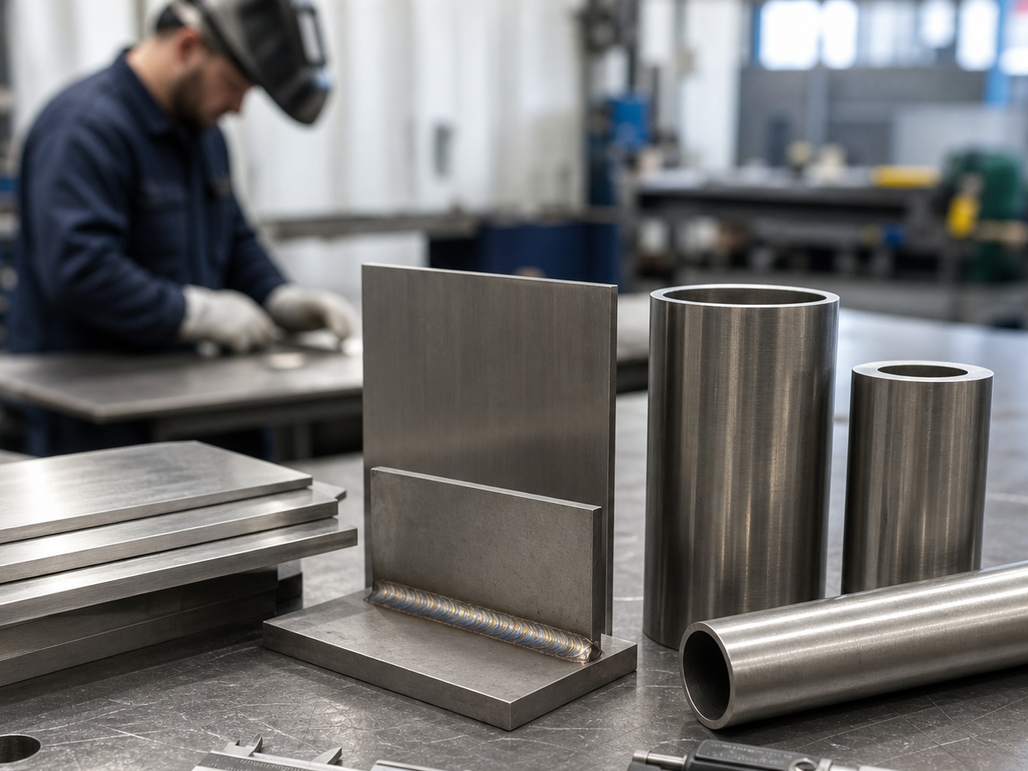
If fabrication includes welding, tell the supplier whether a welding procedure, filler-metal requirement, weld inspection, or post-weld finish is already specified. A clean-looking weld does not by itself confirm that the finished part meets the corrosion or appearance requirement.
Heat tint, iron contamination, rough grinding, or incomplete cleaning near a weld can matter in some services. Depending on the project, brushing, grinding, pickling, passivation, polishing, or another approved cleaning route may be required.
The final finish should be agreed before production, especially for sanitary, visible, marine-related, food-processing, pharmaceutical, or chemical-service components.
How to Specify 316L Stainless Steel in an RFQ
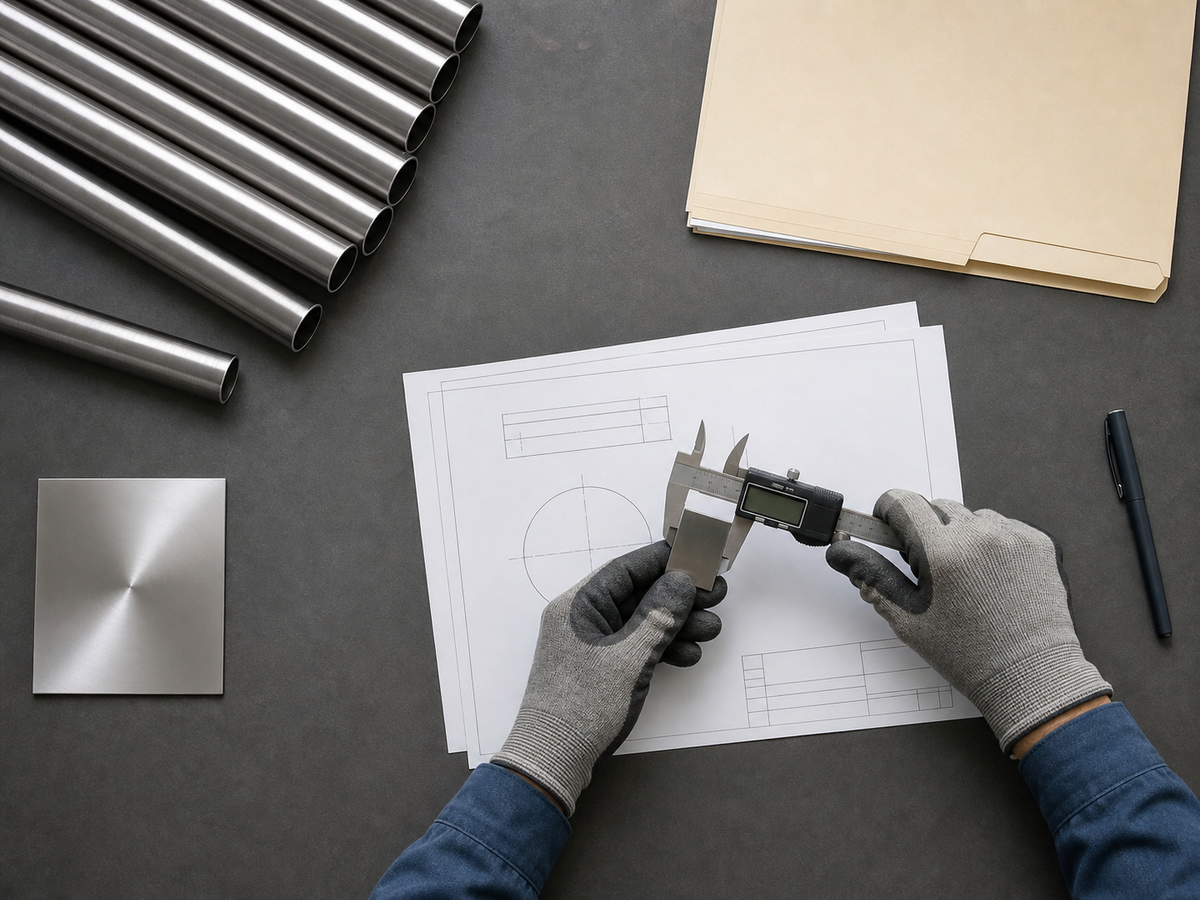
A clear RFQ helps suppliers quote the correct material, processing route, inspection level, packing method, and delivery plan. For 316L stainless steel, buyers should provide more than just the grade name.
| Item to Provide | Why It Helps the Quote |
|---|---|
| Grade and applicable standard | Confirms the intended material designation and document basis. |
| Product form and dimensions | Defines sheet, plate, coil, pipe, tube, bar, fitting, or fabricated-part requirements. |
| Thickness, wall thickness, tolerance, and finish | Reduces ambiguity in processing, inspection, and cost calculation. |
| Drawing and welding requirement | Helps define joint details, weld appearance, and post-weld work. |
| Inspection documents | Clarifies MTC, dimensional report, surface-finish confirmation, or additional records. |
| Quantity, packing, and destination | Supports production planning, export packing, and logistics quotation. |
| Application environment | Helps identify questions related to corrosion risk, cleaning media, and service conditions. |
Frequently Asked Questions
Is 316L stainless steel better than 304?
316L is not universally better than 304. 316L may be considered where the service environment, chloride exposure, welding requirement, or project specification calls for the 316 family. 304 can still be suitable for many general industrial and architectural applications.
Is 316L the same as 316 stainless steel?
316L is the low-carbon version within the 316 family. Whether a project accepts 316, 316L, dual-certified 316/316L, or another designation should be confirmed from the applicable standard, drawing, and project documents.
Can 316L stainless steel be welded?
316L stainless steel can be welded when the welding procedure, filler selection, joint design, and post-weld treatment fit the project. Buyers should specify the welding and inspection requirement instead of assuming one approach suits every thickness or product form.
What is UNS S31603?
UNS S31603 is a common UNS designation for 316L stainless steel. It is often used in material certificates, standards, and international purchasing documents.
What is 1.4404 stainless steel?
1.4404 is a common European designation for 316L-type stainless steel. It is often associated with X2CrNiMo17-12-2 in EN material systems.
What documents should I request for 316L stainless steel?
Depending on the project, buyers may request an MTC, chemical composition report, mechanical test report, dimensional inspection report, surface-finish confirmation, or fabrication and weld-inspection records.
Request 316L Stainless Steel for Your Project
For a 316L stainless steel RFQ, send the grade, applicable standard, product form, size, thickness or wall thickness, tolerance, surface finish, quantity, packing requirement, inspection document needs, drawing or welding requirement, and application environment.
Need 316L stainless steel sheet, plate, pipe, tube, coil, or fabricated parts?
Send your grade, standard, dimensions, quantity, finish, and inspection document requirements. Our team can help review the specification and prepare a quotation based on your project needs.