
 EN
EN




Applications & Advantages of 409, 409L, 410, 410S, and 430 Stainless Steel Coil/Wire
Stainless steel coils from the 400 series—such as 409, 409L, 410, 410S, and 430—are widely used across automotive, construction, appliance manufacturing, and industrial processing. These ferritic and martensitic grades offer a combination of oxidation resistance, durability, and cost efficiency, making them ideal for large-scale production environments that require reliable performance under moderate to high temperatures.
These materials are especially popular for automotive exhaust structures and consumer appliance components. Companies searching for stable quality and fast delivery often compare suppliers of automotive stainless steel coil to ensure consistent manufacturing output.
Understanding the Core Characteristics of 400-Series Stainless Steel Coils
The 400 series includes chromium-rich grades without significant nickel additions, giving them:
-
Competitive pricing compared to austenitic stainless steels
-
Good resistance to scaling at high temperatures
-
Strong mechanical performance
-
Suitability for heat-resistant and structural applications
Many manufacturers rely on ferritic stainless steel coils for automotive and appliance production due to their balanced cost-to-performance ratio.
To help buyers understand the differences between commonly used grades, the following table summarizes key chemical components:
Chemical Composition Overview
| Grade | C (%) | Cr (%) | Ni (%) | Mn (%) | P (%) | S (%) | Other |
|---|---|---|---|---|---|---|---|
| 409 | ≤0.03 | 10.5–11.7 | ≤0.6 | ≤1.00 | 0.04 | 0.03 | Ti stabilized |
| 410 | ≤0.15 | 11.5–13.5 | – | ≤1.00 | 0.04 | 0.03 | – |
| 410S | ≤0.08 | 11.5–13.5 | – | ≤1.00 | 0.04 | 0.03 | – |
| 420 | ≤0.15 | 12.0–14.0 | – | ≤1.00 | 0.04 | 0.03 | – |
| 430 | ≤0.12 | 16–18 | ≤0.4 | ≤1.00 | 0.04 | 0.03 | – |
These compositions play a major role in how each coil performs in various environments.
Mechanical Properties Comparison
| Grade | Yield Strength ≥ (MPa) | Tensile Strength ≥ (MPa) | Elongation ≥ (%) | Hardness (HV) ≤ |
|---|---|---|---|---|
| 409 | 175 | 360 | 20 | 150 |
| 410 | 200 | 440 | 20 | 145 |
| 410S | 200 | 410 | 20 | 145 |
| 430 | 200 | 450 | 25 | 145 |
These figures show the balance between formability and durability needed for automotive and industrial parts.
You can also check complete stainless steel coil specifications to compare thickness, width, surface finish, and mechanical limits for precise project requirements.
Where 400-Series Stainless Steel Coils Are Used
Each grade is designed for distinct applications:
-
409 Stainless Steel: Auto exhaust pipes, silencers
-
410 Stainless Steel: Flat springs, knives, kitchen utensils, hand tools
-
420 Stainless Steel: Cutting tools, surgical instruments, shafts, molds, scissors
-
430 Stainless Steel: Appliance trim, sinks, roofing, siding, restaurant equipment
Manufacturers prefer these materials because they offer excellent oxidation resistance and stable performance at a lower cost compared to nickel-containing stainless steels.
Companies seeking efficient sourcing often review ferritic stainless steel coils to match project needs.
Surface Options and Coil Specifications
Common finishes include:
-
NO.1、2B、BA、Hairline、6K / 8K mirror finishes
Typical specification ranges:
| Parameter | Range |
|---|---|
| Thickness | 0.15–2.0 mm |
| Width | 600–1250 mm |
| Surface | Galvanized, galvalume, or standard stainless finish |
| Coil weight | 3–6 tons |
| Coil ID | 508 / 610 mm |
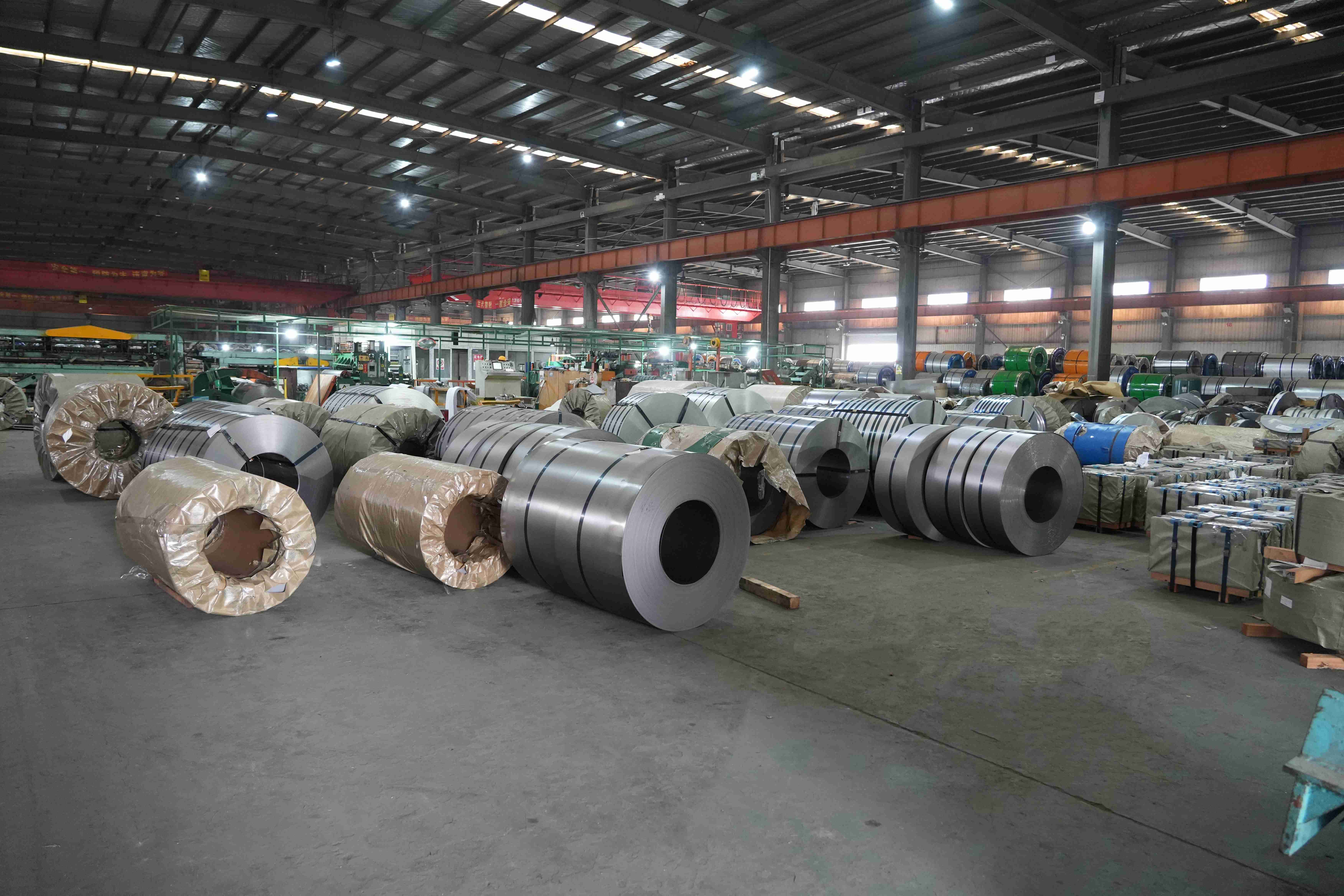
These standardized dimensions ensure compatibility with automated processing lines used in stamping, bending, and deep drawing.
Why Many Buyers Choose 400-Series Coils for Automotive Applications
The automotive industry continues to favor ferritic stainless steels due to:
-
Strong heat resistance for exhaust components
-
Superior resistance to chloride stress cracking compared to 300-series
-
Magnetic properties ideal for specific equipment
-
Lower raw material cost
For exhaust tubing, heat shields, and catalytic converter components, manufacturers commonly source automotive stainless steel coil to maintain consistent quality and reduce long-term maintenance costs.
How to Choose the Right Grade for Your Application
To ensure smooth production and minimize defect rates, consider the following:
-
Corrosion environment (humidity, chemicals, temperature)
-
Mechanical load (bending, forming, stamping)
-
Required hardness or toughness level
-
Budget constraints
Engineers often review detailed stainless steel coil specifications when deciding between ferritic and martensitic grades for projects.
For complex or customized requirements, buyers can contact our sales team to request technical support, packaging options, and bulk order pricing.
FAQ Section
Q1: What’s the main difference between 409 and 430 stainless steel coils?
409 is optimized for high-temperature resistance in automotive exhaust systems, while 430 offers higher chromium content and better corrosion resistance for appliances and architectural uses.
Q2: Is 410 stainless steel coil suitable for heat treatment?
Yes, 410 can be hardened through heat treatment, making it ideal for tools and wear-resistant parts.
Q3: Why are ferritic grades more cost-effective than austenitic grades?
Ferritic stainless steels contain little to no nickel, significantly lowering production costs.
Q4: Can these coils be used for outdoor structures?
430 stainless steel is commonly used outdoors due to its strong corrosion resistance and stable finish.
Q5: Where to request pricing for bulk stainless steel coil orders?
Users can submit inquiries through the contact our sales team page for fast quotations.