
 EN
EN



In industrial applications where materials face extreme temperatures, corrosive chemicals, and relentless mechanical stress, the choice of metal becomes critical to operational success and safety. Stainless steel coils have emerged as the preferred solution across chemical processing, marine engineering, food production, and energy sectors precisely because they maintain structural integrity where conventional metals fail. Understanding the metallurgical properties, protective mechanisms, and engineering characteristics that enable these coils to withstand punishing conditions is essential for engineers, procurement specialists, and facility managers tasked with selecting materials that minimize downtime and maximize asset lifespan.
The durability of stainless steel coils in harsh environments stems from a combination of chromium-driven passivation, strategic alloy compositions, and manufacturing processes that enhance both surface and structural resilience. Unlike carbon steel or aluminum, which deteriorate rapidly when exposed to moisture, acids, or saline atmospheres, stainless steel coils form a self-healing oxide layer that regenerates even after mechanical disruption. This fundamental difference explains why these coils dominate applications ranging from offshore petroleum platforms to pharmaceutical cleanrooms, where material failure carries catastrophic consequences. The following analysis examines the specific mechanisms, alloy variations, and practical factors that determine how effectively stainless steel coils perform under environmental stress.
Chromium Content and Passive Layer Formation
The Self-Healing Oxide Barrier
The exceptional durability of stainless steel coils begins with their chromium content, typically ranging from 10.5% to over 30% depending on grade specifications. When chromium atoms within the steel matrix contact oxygen in the atmosphere or aqueous environments, they spontaneously form a chromium oxide (Cr2O3) passive layer approximately three to five nanometers thick. This invisible protective film adheres tightly to the underlying metal surface and creates an impermeable barrier that prevents corrosive agents from reaching the base material. Unlike painted coatings or galvanized layers that degrade over time, the passive layer on stainless steel coils regenerates instantaneously when scratched or abraded, provided sufficient oxygen access exists.
The self-healing characteristic distinguishes stainless steel coils from all other industrial metals. In marine applications where salt spray constantly attacks exposed surfaces, conventional steels rust rapidly as iron oxides form porous, flaking layers that accelerate deterioration. Stainless steel coils, by contrast, maintain their protective chromium oxide barrier even under continuous saltwater immersion. This regenerative capacity extends material service life from months to decades in coastal installations, offshore structures, and desalination plants. The passive layer remains stable across a pH range of approximately 4 to 10, covering most industrial process environments except highly acidic or alkaline extremes.
Factors Influencing Passive Layer Stability
Several environmental and compositional factors determine how effectively the passive layer protects stainless steel coils. Temperature plays a critical role, as elevated heat accelerates oxidation reactions that either strengthen or compromise the protective film depending on atmospheric composition. In oxidizing environments with abundant oxygen, higher temperatures up to 900°C can actually enhance passive layer density and adhesion. However, in reducing atmospheres or chloride-rich conditions, thermal stress may destabilize the chromium oxide barrier, creating localized vulnerabilities. Manufacturers address this through alloy adjustments, incorporating molybdenum and nitrogen to reinforce passive layer integrity at temperature extremes.
Surface finish quality directly impacts passive layer formation and long-term stability on stainless steel coils. Smoother surfaces with lower roughness values (typically Ra < 0.5 micrometers) develop more uniform, defect-free oxide films compared to rough-rolled or heavily worked surfaces containing micro-crevices. These surface irregularities can trap corrosive fluids and create differential aeration cells where localized corrosion initiates despite the passive layer presence. Industrial processors often specify electropolished or bright annealed finishes for stainless steel coils destined for pharmaceutical, semiconductor, or food contact applications where surface cleanliness and corrosion resistance reach critical importance. The investment in superior surface preparation translates directly into extended service life under aggressive operating conditions.
Alloy Composition Optimization for Environmental Resistance
Austenitic Grades for Corrosive Chemical Exposure
Austenitic stainless steel coils, particularly those in the 300-series family, dominate harsh environment applications due to their face-centered cubic crystal structure that delivers superior ductility, toughness, and corrosion resistance compared to ferritic or martensitic alternatives. The most common austenitic grade, 304 stainless steel, contains approximately 18% chromium and 8% nickel, providing excellent general corrosion resistance across moderate industrial environments. For more aggressive conditions involving chlorides, sulfuric acid, or elevated temperatures, grade 316 stainless steel coils incorporate 2-3% molybdenum that significantly enhances pitting and crevice corrosion resistance. This molybdenum addition creates a more stable passive layer and inhibits localized attack mechanisms that compromise less-alloyed grades.
In extremely corrosive applications such as chemical tanker construction, pulp bleaching equipment, or seawater desalination systems, specialized austenitic grades like 904L push alloy optimization further. These super-austenitic stainless steel coils contain elevated nickel levels (23-28%), increased molybdenum (4-5%), and copper additions (1-2%) that collectively deliver corrosion resistance approaching exotic nickel alloys at substantially lower material costs. The higher alloy content enables these coils to withstand concentrated acids, organic chemicals, and chloride solutions that rapidly attack standard 300-series materials. Procurement decisions increasingly favor these advanced grades when lifecycle cost analysis reveals that higher initial material expenses yield dramatic reductions in maintenance, replacement, and production interruption costs over multi-decade service periods.
Ferritic and Duplex Solutions for Stress Corrosion Resistance
While austenitic stainless steel coils excel in most corrosive environments, they remain vulnerable to chloride-induced stress corrosion cracking when subjected to tensile stresses above approximately 30% of yield strength in warm chloride solutions. Ferritic grades like 430 and 441 offer immunity to stress corrosion cracking due to their body-centered cubic crystal structure, making these coils preferable for applications involving formed components in chloride-bearing atmospheres. Ferritic stainless steel coils also provide superior resistance to nitric acid and demonstrate lower thermal expansion coefficients that reduce thermal fatigue in cycling temperature applications. However, their lower nickel content compromises general corrosion resistance compared to austenitic alternatives, limiting ferritic grades to specific environmental niches.
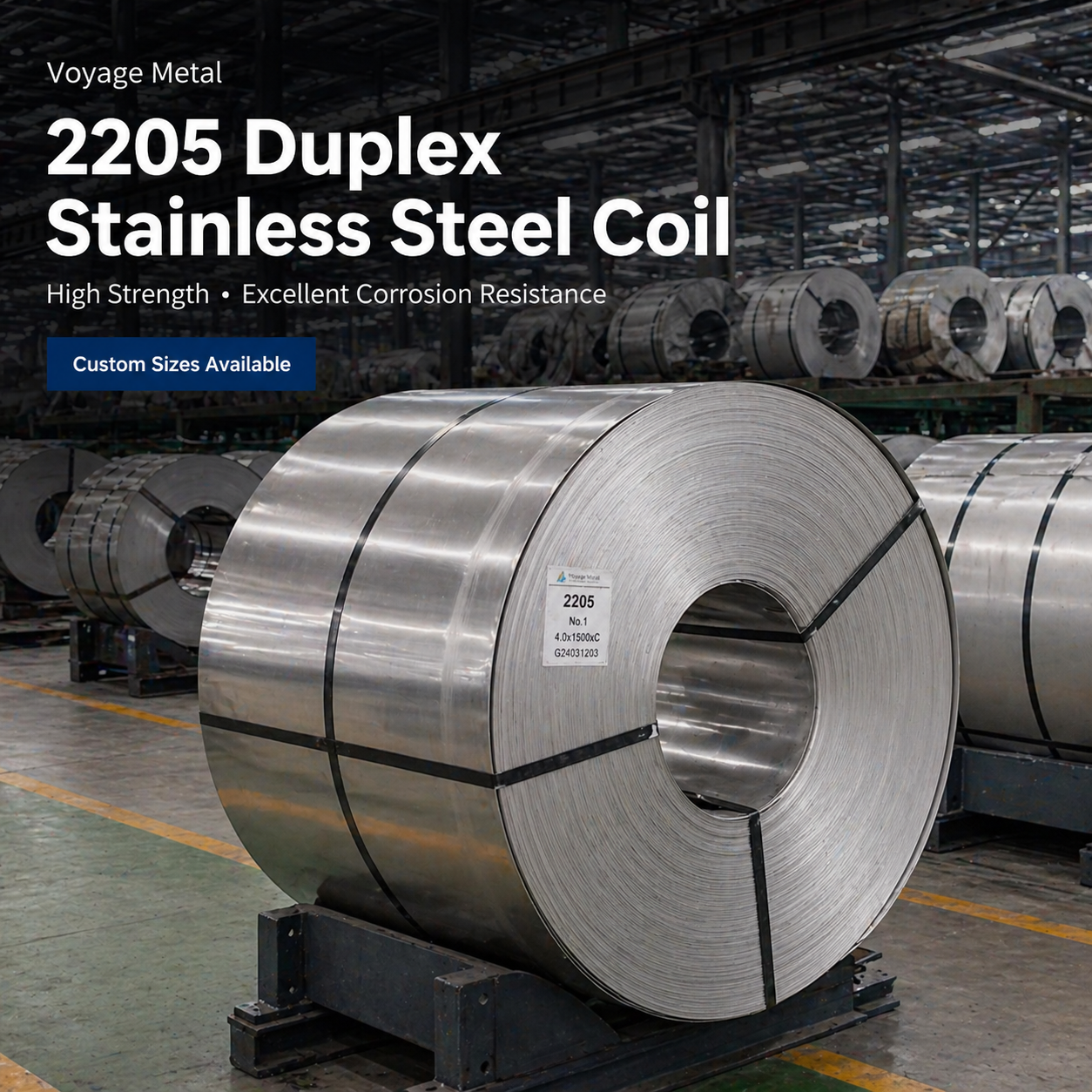
Duplex stainless steel coils represent an engineered compromise that combines austenitic corrosion resistance with ferritic stress corrosion immunity through a balanced microstructure containing approximately equal proportions of both phases. Common duplex grades like 2205 deliver roughly double the yield strength of austenitic 316 while maintaining comparable corrosion resistance and eliminating stress corrosion cracking susceptibility. This strength advantage allows designers to specify thinner gauge stainless steel coils for pressure vessels, structural members, and transport tanks, reducing material weight and fabrication costs without sacrificing environmental durability. Duplex grades particularly excel in offshore oil and gas applications where high strength, chloride resistance, and stress corrosion immunity simultaneously influence material selection decisions. The manufacturing complexity and higher raw material costs of duplex stainless steel coils find justification in applications where material failure carries catastrophic safety or environmental consequences.
Manufacturing Processes That Enhance Environmental Durability
Hot Rolling Versus Cold Rolling Impact on Corrosion Resistance
The manufacturing route significantly influences how stainless steel coils perform in harsh environments. Hot-rolled coils emerge from the mill at temperatures exceeding 1000°C, allowing controlled grain structure development and stress relief during processing. This thermal treatment creates a relatively thick surface oxide scale that requires subsequent pickling and passivation to restore full corrosion resistance. Hot-rolled stainless steel coils typically exhibit slightly lower surface quality and dimensional precision compared to cold-rolled alternatives, but their enhanced formability and lower production costs make them economical for structural applications, tanks, and heavy fabrications where minor surface imperfections carry minimal performance penalties.
Cold-rolled stainless steel coils undergo additional processing at ambient temperatures after initial hot rolling, creating work-hardened material with superior surface finish, tighter dimensional tolerances, and enhanced mechanical properties. The cold reduction process compresses the grain structure and increases dislocation density, raising yield strength by 30-50% compared to annealed conditions. However, this work hardening introduces residual stresses that may accelerate stress corrosion cracking in chloride environments unless proper stress-relief annealing follows fabrication. Manufacturers typically supply cold-rolled coils in bright annealed condition, where controlled atmosphere heat treatment restores ductility while maintaining the smooth, oxide-free surface that optimizes passive layer formation. Applications demanding superior cleanliness, precise thickness control, or enhanced mechanical properties specify cold-rolled stainless steel coils despite their premium pricing.
Surface Treatment Technologies for Extended Service Life
Advanced surface treatments applied after primary rolling operations can substantially improve how stainless steel coils resist environmental attack. Electropolishing removes surface metal through controlled anodic dissolution, creating an ultra-smooth finish with enhanced chromium enrichment at the surface that strengthens passive layer formation. This process eliminates embedded particles, removes heat-affected zones from welding or thermal cutting, and creates microscopic surface topography that resists bacterial adhesion in sanitary applications. Electropolished stainless steel coils demonstrate measurably improved corrosion resistance in pharmaceutical reactors, food processing equipment, and semiconductor wet benches where contamination control requirements exceed capabilities of mechanically finished surfaces.
Passivation treatments using nitric or citric acid solutions accelerate passive layer development and remove free iron contamination that can initiate localized corrosion on freshly fabricated components. While stainless steel coils naturally form protective oxide layers when exposed to atmospheric oxygen, chemical passivation ensures complete, uniform coverage across complex geometries and validates surface cleanliness through standardized testing protocols. Many industrial specifications mandate passivation following fabrication operations that disrupt the mill finish, particularly for components entering service in aggressive chemical or marine environments. The relatively modest cost of passivation treatment delivers substantial insurance against premature corrosion failures during critical early service periods when passive layer stability most influences long-term durability outcomes.
Environmental Factors and Performance Boundaries
Chloride Concentration and Temperature Interactions
Chloride ions represent the most common threat to stainless steel coil durability across industrial environments. These aggressive anions penetrate the passive layer at defect sites, creating autocatalytic pitting cells where localized pH depression and oxygen depletion accelerate metal dissolution. The critical chloride concentration that initiates pitting varies dramatically with temperature, alloy composition, and solution chemistry. Standard 304 stainless steel coils may resist dilute chloride solutions below 50°C indefinitely, yet suffer rapid pitting attack in the same environment at 80°C. This temperature sensitivity explains why cooling water systems, heat exchangers, and process vessels operating above ambient temperatures require upgraded alloy grades or alternative materials when chloride contamination exceeds trace levels.
The synergistic effect of chlorides and temperature creates distinct performance boundaries for different stainless steel coil grades. Grade 316 with 2-3% molybdenum extends the safe operating envelope to approximately 60°C in seawater (roughly 19,000 ppm chloride), while super-austenitic 904L maintains passivity to 90°C in similar conditions. Design engineers reference pitting resistance equivalent number (PREN) calculations that quantify alloy resistance based on chromium, molybdenum, and nitrogen content. Grades with PREN values above 40 typically deliver reliable service in warm chloride environments that destroy lower-alloyed alternatives. Understanding these metallurgical boundaries prevents costly material selection errors that compromise equipment integrity and process safety in chemical, marine, and energy applications where chloride exposure remains unavoidable.
pH Extremes and Chemical Compatibility Considerations
Beyond the neutral pH range where stainless steel coils perform optimally, acidic and alkaline extremes challenge passive layer stability through different mechanisms. Strong mineral acids like sulfuric, hydrochloric, and phosphoric acid dissolve the chromium oxide barrier, exposing bare metal to rapid general corrosion unless alloy composition and concentration/temperature parameters fall within acceptable boundaries. Dilute sulfuric acid below 10% concentration at ambient temperature poses minimal threat to 316L stainless steel coils, yet the same grade fails rapidly in 50% sulfuric acid at 70°C. Concentrated nitric acid, paradoxically, enhances passivation on austenitic grades while attacking ferritic and martensitic alternatives, demonstrating how chemical specificity determines material suitability rather than simple corrosivity classifications.
Alkaline environments above pH 12 present distinct challenges where stainless steel coils exhibit moderate general corrosion rates and remain vulnerable to caustic stress corrosion cracking when tensile stresses combine with hot concentrated hydroxide solutions. Paper pulp digesters, alkaline cleaning systems, and certain chemical synthesis operations create these aggressive conditions where nickel-based alloys or titanium may prove necessary despite their substantially higher costs. Material selection matrices developed by corrosion engineers map safe operating zones for various stainless steel coil grades against specific chemical exposures, concentration ranges, and temperature limits. Consulting these references during design stages prevents catastrophic material failures while optimizing total installed cost by avoiding over-specification where less expensive grades deliver adequate performance. The complexity of chemical compatibility assessment underscores why corrosion expertise remains essential for successful material selection in process industries.
Mechanical Properties and Physical Resilience Under Environmental Stress
Impact Toughness in Temperature Extremes
Environmental durability encompasses more than corrosion resistance; stainless steel coils must also maintain mechanical integrity across operating temperature ranges that span cryogenic liquefied gas service to elevated-temperature process applications. Austenitic grades demonstrate exceptional low-temperature toughness, retaining ductility and impact resistance down to absolute zero without brittle fracture concerns that plague ferritic steels and carbon steel alternatives. This property makes 304 and 316 stainless steel coils ideal for liquefied natural gas tanks, aerospace cryogenic systems, and superconducting magnet enclosures where material embrittlement would create catastrophic failure risks.
At elevated temperatures approaching 600-800°C, austenitic stainless steel coils maintain useful strength while resisting oxidation and creep deformation that limit carbon steel service life. However, prolonged exposure to the 425-815°C sensitization range precipitates chromium carbides at grain boundaries, locally depleting chromium content below passivation thresholds and creating intergranular corrosion susceptibility. Low-carbon variants designated with L suffixes (304L, 316L) minimize this risk by reducing carbon content below 0.03%, while stabilized grades containing titanium or niobium bind carbon in stable carbides that prevent chromium depletion. Specifying appropriate grade variants ensures stainless steel coils maintain both mechanical and corrosion performance throughout their intended service temperature range, whether in Arctic pipeline construction or industrial furnace applications.
Fatigue Resistance and Cyclic Loading Performance
Many harsh environment applications subject stainless steel coils to repetitive mechanical stressing through pressure cycling, thermal expansion/contraction, or vibration loading that can initiate fatigue cracks even when peak stresses remain below material yield strength. The corrosion-fatigue interaction proves particularly damaging, as environmental attack at crack tips accelerates propagation rates far beyond predictions based on mechanical fatigue alone. Austenitic stainless steel coils demonstrate superior corrosion-fatigue resistance compared to higher-strength ferritic or martensitic grades because their face-centered cubic structure inhibits crack initiation and their enhanced corrosion resistance reduces environmental acceleration effects.
Surface finish quality significantly influences fatigue performance of stainless steel coils in environmental service. Mechanical damage, sharp forming radii, and rough machining marks create stress concentration sites where fatigue cracks preferentially initiate. Electropolished or carefully ground surfaces extend fatigue life by eliminating these stress risers and creating compressive surface stresses that resist crack opening. In critical rotating equipment, pressure vessels, and structural members experiencing cyclic loading, specifying premium surface finishes for stainless steel coils represents cost-effective insurance against premature fatigue failures. The combination of alloy toughness, corrosion resistance, and attention to surface condition enables these materials to survive millions of loading cycles in chemically aggressive environments where alternative materials fail through combined mechanical and environmental degradation mechanisms.
FAQ
What is the minimum chromium content required for stainless steel coils to resist corrosion in marine environments?
Stainless steel coils require a minimum of 10.5% chromium by weight to form the protective passive oxide layer that provides basic corrosion resistance. However, for reliable marine environment service involving direct seawater exposure or salt spray atmospheres, grades containing at least 16-18% chromium combined with nickel and molybdenum additions prove necessary. Standard 316 grade with approximately 17% chromium and 2-3% molybdenum represents the practical minimum for most marine applications, while more aggressive exposures may require super-austenitic grades with chromium levels exceeding 20% to ensure long-term durability without pitting or crevice corrosion failures.
How does temperature affect the corrosion resistance of stainless steel coils in acidic environments?
Temperature dramatically accelerates corrosion rates of stainless steel coils in acidic solutions by increasing both the dissolution rate of the protective passive layer and the diffusion velocity of corrosive species to the metal surface. A temperature increase from 25°C to 60°C can raise corrosion rates by factors of ten or more depending on acid type and concentration. Each stainless steel grade exhibits specific temperature limits for various acid exposures; for example, 316L coils may resist dilute sulfuric acid adequately at room temperature yet corrode rapidly above 50°C in the same solution. Material selection must account for both acid chemistry and maximum operating temperature to ensure the passive layer remains stable throughout the service envelope.
Can stainless steel coils be used in chlorinated water systems without special treatment?
Stainless steel coils can generally withstand chlorinated potable water and swimming pool environments without special treatment, provided the chlorine concentration remains below approximately 200 ppm and water temperature stays below 60°C. However, several precautions enhance reliability: avoiding crevices and stagnant areas where chlorine can concentrate, maintaining water flow to prevent localized chemistry changes, and selecting grades with adequate molybdenum content such as 316 rather than basic 304 alloys. Situations involving hot chlorinated solutions, high chlorine levels above 500 ppm, or brackish water with combined chloride and chlorine exposure may require upgraded super-austenitic grades or alternative materials like titanium to prevent pitting corrosion and stress corrosion cracking over extended service periods.
What surface finish provides the best corrosion resistance for stainless steel coils in pharmaceutical applications?
Pharmaceutical applications demanding maximum cleanliness and corrosion resistance typically specify electropolished stainless steel coils with surface roughness values below 0.5 micrometers Ra. Electropolishing removes surface contaminants, embedded particles, and micro-crevices while creating a chromium-enriched surface layer that forms a particularly stable passive oxide film. This superior surface condition resists bacterial adhesion, facilitates cleaning validation, and minimizes crevice corrosion risks in contact with process chemicals and cleaning agents. Alternative finishes such as 2B mill finish or mechanical polishing may prove adequate for less critical pharmaceutical applications, but electropolished surfaces represent the industry gold standard where product purity, equipment longevity, and regulatory compliance requirements reach maximum stringency in sterile processing environments.
Table of Contents
- Chromium Content and Passive Layer Formation
- Alloy Composition Optimization for Environmental Resistance
- Manufacturing Processes That Enhance Environmental Durability
- Environmental Factors and Performance Boundaries
- Mechanical Properties and Physical Resilience Under Environmental Stress
-
FAQ
- What is the minimum chromium content required for stainless steel coils to resist corrosion in marine environments?
- How does temperature affect the corrosion resistance of stainless steel coils in acidic environments?
- Can stainless steel coils be used in chlorinated water systems without special treatment?
- What surface finish provides the best corrosion resistance for stainless steel coils in pharmaceutical applications?