
 EN
EN




Is Aluminum Magnetic? What Industrial Buyers Should Know
Aluminum is generally considered non-magnetic in normal industrial use. A magnet can help with quick material sorting, but it cannot identify aluminum alloy grade, temper, tolerance, surface condition, or order compliance.
Quick Answer: Is Aluminum Magnetic?
Aluminum is generally non-magnetic in ordinary industrial use. A common permanent magnet will not visibly attract aluminum sheet, plate, coil, tube, bar, or most aluminum fabricated parts.
However, this does not mean a magnet can identify the aluminum alloy grade. A magnet check may help separate aluminum from common magnetic steel, but it cannot confirm alloy designation, temper, dimensions, tolerance, surface condition, or compliance with a purchase order.
For industrial buyers, the practical answer is simple: aluminum normally does not stick to a magnet, but material approval should be based on the requested standard, order details, inspection documents, and agreed receiving method.
Is Aluminum Magnetic or Non-Magnetic?
In purchasing, warehouse inspection, and fabrication, aluminum is usually treated as a non-magnetic metal. Unlike carbon steel or some magnetic stainless steels, aluminum does not show strong attraction to a permanent magnet.
Technically, aluminum has a very weak magnetic response, but this response is too small to be useful for ordinary material identification. That is why most industrial buyers, engineers, and inspectors describe aluminum as non-magnetic.
This point matters when aluminum is used in equipment housings, marine parts, transportation components, construction panels, electrical enclosures, sensor areas, and mixed-material assemblies. Buyers sourcing general aluminum materials can review available product forms on the Voyage Metal aluminum products page.
Why Does Aluminum Not Stick to a Magnet?
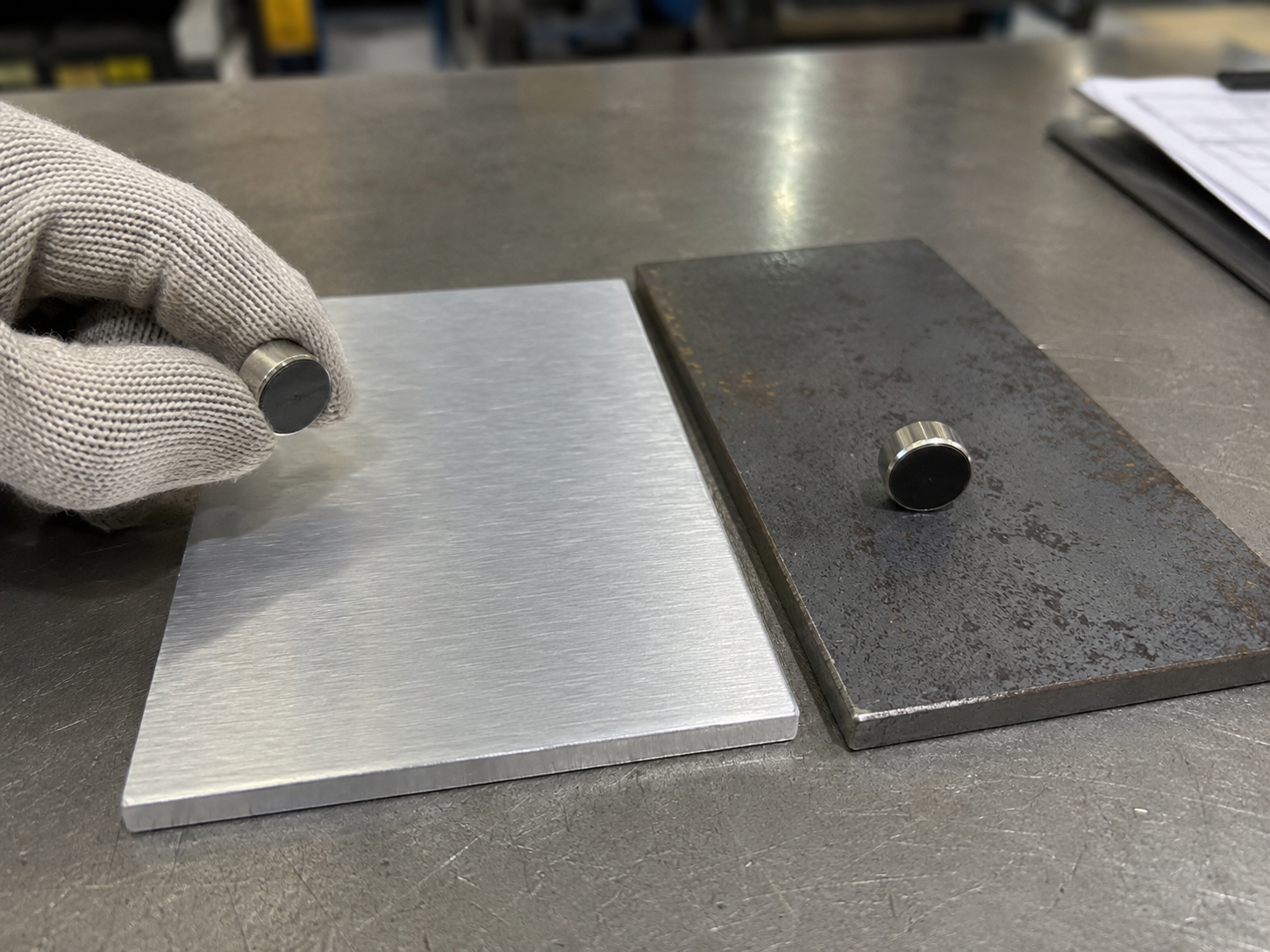
Aluminum does not contain iron as its main element and does not behave like ferromagnetic metals such as iron, carbon steel, or many low-alloy steels. Ferromagnetic metals can be strongly attracted by a permanent magnet.
Aluminum belongs to a different material category. Its magnetic response is extremely weak in daily use, so a regular magnet will not pull aluminum the way it pulls steel.
Buyer note: If a magnet strongly sticks to a part that is supposed to be aluminum, check whether the part includes steel screws, inserts, brackets, fixtures, contamination, or nearby ferrous components before judging the aluminum material itself.
Can Aluminum Alloys Be Magnetic?
Common commercial aluminum alloys are not magnetic in the practical sense used by buyers and inspectors. This includes many aluminum grades used in sheet, plate, coil, tube, bar, foil, and profile form.
Examples include 1000 series, 3000 series, 5000 series, 6000 series, and 7000 series aluminum alloys. These materials may contain alloying elements such as magnesium, manganese, silicon, copper, or zinc, but they are still not identified by magnetic attraction.
For example, a magnet cannot tell whether a product is 1050, 3003, 5052, 5083, 5754, 6061, 6063, 6082, 7075, or another aluminum alloy. Grade confirmation requires order control, specification review, and documents. For machined components, buyers may also compare material requirements with products such as 6061 aluminum round bar.
Why a Magnet Is Not an Aluminum Alloy Test
A magnet test is only a rough sorting method. It can help workers quickly notice whether a material is likely to be common magnetic steel, but it cannot prove that the supplied material matches the requested aluminum alloy.
For example, a magnet cannot confirm:
- aluminum alloy grade;
- temper, such as O, H14, H24, H32, T4, T6, or T651;
- chemical composition;
- mechanical properties;
- thickness, wall thickness, width, diameter, or length;
- surface finish or coating condition;
- tolerance requirements;
- inspection document requirements.
For B2B orders, especially for aluminum plate, aluminum sheet, aluminum coil, aluminum tube, aluminum bar, and aluminum profiles, the buyer should confirm the material by specification, drawing, marking, packing list, and material test certificate when required.
Aluminum vs Steel vs Stainless Steel Magnet Check
A magnet check is useful only when the result is interpreted correctly. Different metals can behave differently, and the result may also be affected by surface condition, assembly design, and nearby components.
| Material | Typical Magnet Response | Buyer Interpretation |
|---|---|---|
| Aluminum | Usually no visible attraction | Useful for quick sorting, but not for alloy identification. |
| Carbon steel | Strong magnetic attraction | Usually easy to identify with a magnet, but grade still needs confirmation. |
| Austenitic stainless steel | Usually weak or non-magnetic, but may become slightly magnetic after cold working. | A magnet result alone cannot confirm stainless steel grade. |
| Ferritic stainless steel | Magnetic | Magnetism is expected, but grade confirmation still needs specification control. |
| Mixed aluminum-steel assembly | May attract a magnet if steel components are present. | Review the drawing and component list before judging material quality. |
Where This Question Affects Industrial Purchasing
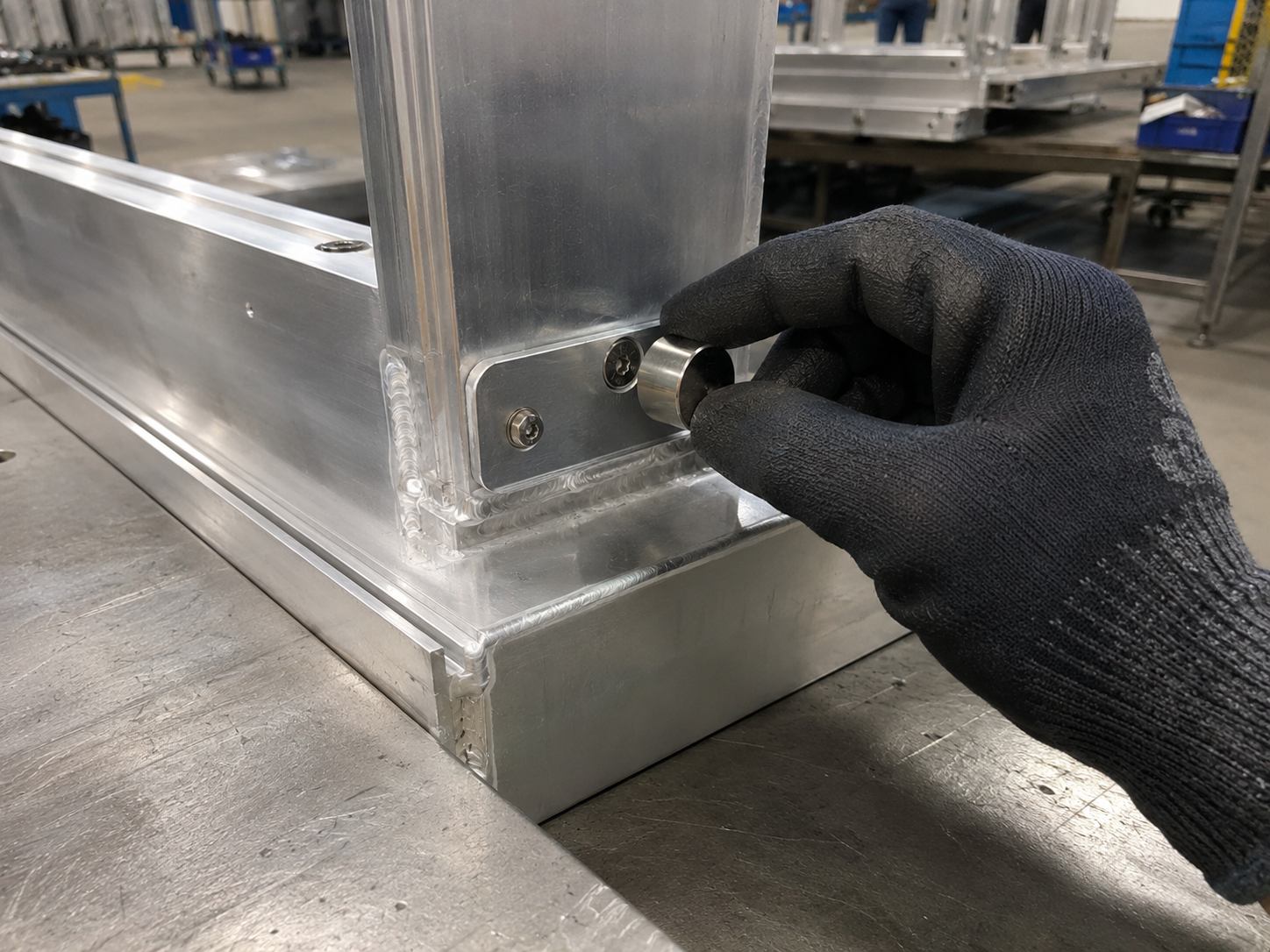
Incoming Inspection and Warehouse Sorting
Warehouse teams may use a magnet as a first screening tool when receiving mixed metal products. This can help separate aluminum from common magnetic steel during unloading, cutting, storage, or repacking.
However, the final receiving inspection should still check alloy designation, standard, dimensions, tolerance, surface condition, packing marks, heat number if applicable, and document requirements.
Plate Cutting and Machining Projects
For cut-to-size aluminum plate, a magnet check is not related to cutting quality. Buyers should focus on alloy, temper, thickness, tolerance, edge quality, flatness, and the selected cutting method. For this topic, see how to cut aluminum plate.
Sensors, Separators, and Handling Equipment
Some projects use aluminum near magnetic sensors, separation equipment, measuring systems, or automated handling lines. In these cases, the full assembly must be reviewed, not just the aluminum part.
Sensor distance, installation position, wall thickness, adjacent steel frames, fasteners, brackets, and operating environment may all affect the final result.
Mixed-Material Fabrication
Many fabricated products combine aluminum with steel fasteners, stainless steel inserts, brackets, hinges, or support frames. A finished assembly may attract a magnet even when the aluminum component itself is correct.
For this reason, buyers should list each material separately in drawings and RFQs. This prevents confusion during inspection and helps suppliers prepare accurate quotations and documents.
What Buyers Should Confirm Before Ordering Aluminum
| Check Item | Why It Matters | Example Details to Provide |
|---|---|---|
| Alloy and standard | Defines the requested material and avoids grade confusion. | 5052, 5083, 6061, 6063, 7075; ASTM, EN, GB, JIS, or customer standard. |
| Product form | Different forms require different production and inspection details. | Sheet, plate, coil, tube, pipe, bar, wire, profile, foil, or fabricated part. |
| Size and tolerance | A magnet cannot confirm dimensional accuracy. | Thickness, width, length, outer diameter, wall thickness, straightness, flatness. |
| Temper | Temper affects strength, forming, machining, and application performance. | O, H14, H24, H32, T4, T6, T651, or customer-required condition. |
| Surface condition | Surface affects appearance, fabrication, coating, and end-use quality. | Mill finish, brushed, anodized, coated, polished, protective film. |
| Documents | Documents support traceability and project approval. | MTC, inspection report, packing list, certificate of origin, third-party inspection if required. |
| Assembly details | Mixed materials may affect magnet checks and inspection results. | Steel fasteners, inserts, brackets, welding parts, nearby magnetic components. |
| Application | Application helps the supplier recommend suitable alloy and supply condition. | Marine, construction, transportation, electrical housing, machinery, mold, pressure component, sensor equipment. |
RFQ Checklist for Aluminum Products
When requesting a quote for aluminum products, “non-magnetic aluminum” is not enough as a material specification. The RFQ should include clear technical and commercial details.
A complete aluminum RFQ should include:
- aluminum alloy grade;
- standard or specification;
- product form;
- temper;
- thickness, wall thickness, width, diameter, and length;
- tolerance requirements;
- surface finish or coating;
- quantity and delivery schedule;
- packing method;
- required documents;
- application or working environment;
- drawing, especially for fabricated or mixed-material parts.
If magnetism is related to a sensor, separator, electrical system, or inspection process, include the acceptance condition and explain how the material will be used. This helps avoid misunderstanding between buyer, supplier, and inspection team.
Common Aluminum Products for Non-Magnetic Applications
Aluminum is widely selected when buyers need lightweight, corrosion-resistant, easy-to-fabricate, and generally non-magnetic material. Common product forms include aluminum plate, coil, foil, tube, and bar.
| Product Form | Common Applications | Common Buyer Concerns |
|---|---|---|
| Aluminum sheet | Panels, cabinets, covers, signs, vehicle parts, electrical housings. | Thickness tolerance, flatness, surface quality, film protection. |
| Aluminum plate | Machined parts, molds, marine structures, tooling, heavy-duty components. | Alloy, temper, flatness, cutting method, ultrasonic testing if required. |
| Aluminum coil | Roofing, cladding, insulation, stamping, continuous production. | Coil weight, width tolerance, surface finish, packing. |
| Aluminum foil | Packaging, insulation, electronics, wrapping, protective layers. | Thickness, pinhole control, surface cleanliness, roll condition. |
| Aluminum tube | Frames, heat exchangers, structures, furniture, transport equipment. | OD, wall thickness, straightness, surface, cutting length. |
| Aluminum bar | Machining, shafts, fittings, connectors, precision components. | Diameter tolerance, temper, straightness, machinability. |
Storage and Surface Considerations
Magnetism is not the only issue buyers should consider during receiving inspection. Aluminum products may also require dry storage, moisture-resistant packing, surface protection, and careful handling, especially for humid, coastal, or long-distance shipments.
For sheet and plate products, surface condition can affect later fabrication, coating, machining, and appearance requirements. Buyers who need better storage control can also review how to prevent aluminum sheet corrosion.
FAQ
Is aluminum magnetic?
Aluminum is generally non-magnetic in normal industrial use. A common permanent magnet will not visibly attract aluminum sheet, plate, coil, tube, bar, or most aluminum parts.
Does aluminum stick to a magnet?
No. Aluminum usually does not stick to a regular magnet. If an aluminum assembly attracts a magnet, check whether it contains steel fasteners, inserts, brackets, fixtures, or nearby magnetic materials.
Are aluminum alloys magnetic?
Common aluminum alloys are not magnetic in the practical sense used for receiving inspection and material sorting. A magnet cannot identify whether the alloy is 5052, 5083, 6061, 6063, 7075, or another grade.
Can a magnet identify an aluminum alloy?
No. A magnet can help separate aluminum from common magnetic steel, but it cannot identify the aluminum alloy grade or prove compliance with a purchase order.
Why might an aluminum assembly attract a magnet?
An aluminum assembly may attract a magnet if it contains steel screws, inserts, brackets, hinges, fixtures, contamination, or nearby ferrous components. Review the drawing and component list before judging the aluminum material.
How should buyers verify aluminum material?
Buyers should verify aluminum material by checking the alloy, standard, product form, temper, dimensions, tolerance, surface condition, packing marks, and material test certificate or inspection documents when required.
Is aluminum suitable for use near magnetic sensors?
Aluminum may be suitable for use near magnetic sensors, but the complete assembly should be reviewed. Nearby steel parts, sensor distance, installation design, and working conditions may affect performance.
Request a Quote with the Right Aluminum Details
To receive an accurate quotation, send the alloy, standard, product form, temper, dimensions, tolerance, surface requirement, quantity, packing method, document requirements, and application. If the product is used near sensors or includes mixed materials, include the drawing and acceptance condition.
Clear technical details help avoid material confusion, inspection disputes, delivery delays, and unnecessary cost during aluminum procurement.