
 EN
EN




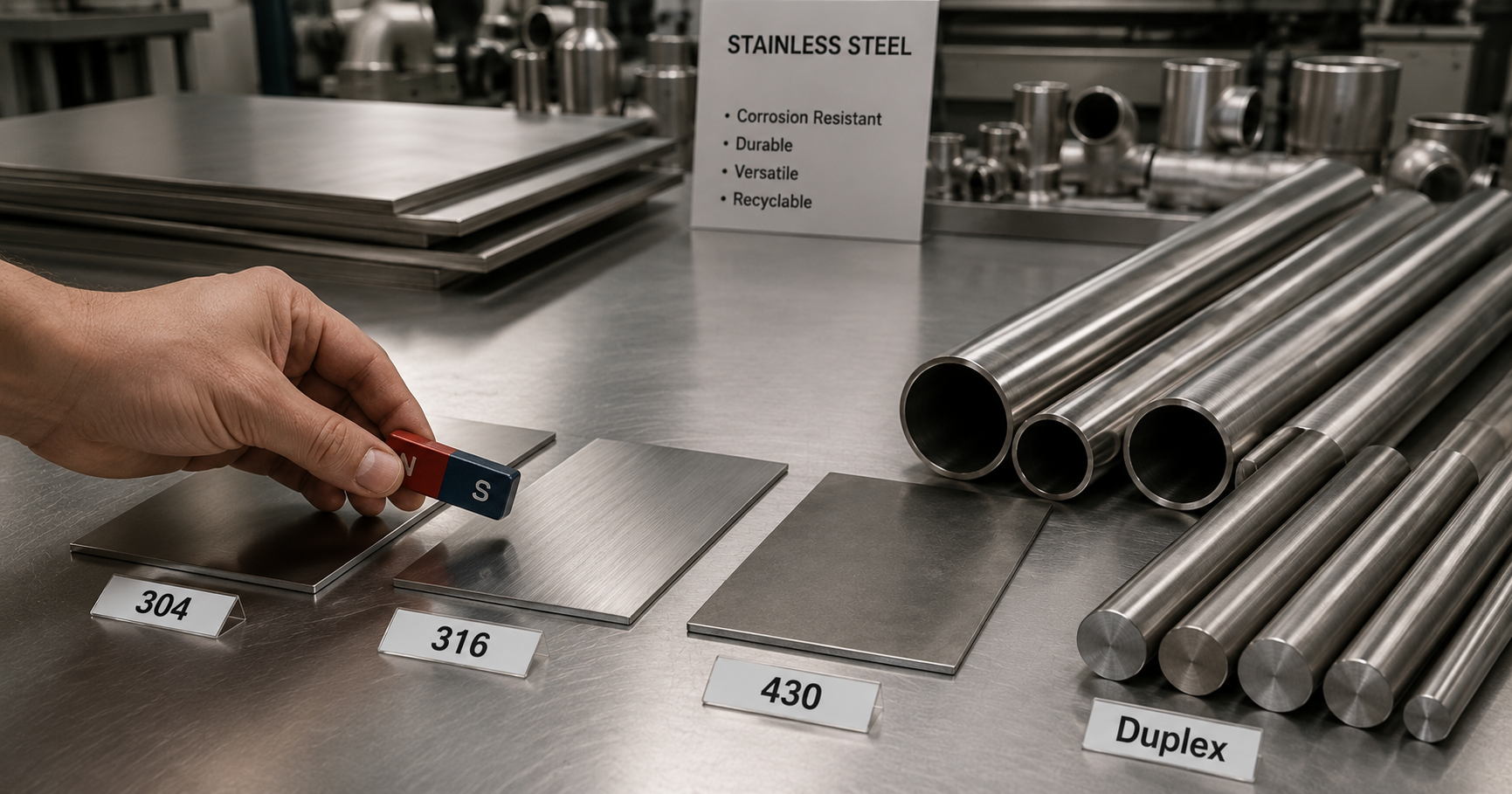
តើស្ពាន់អ៊ីណុកមានលក្ខណៈទាក់ទាញដោយម៉ាញេទិកទេ? ការបកស្រាយអំពី 304, 316, 430 និងស្ពាន់អ៊ីណុកប្រភេទ Duplex
បាទ ស្តេនលេសស្ថែលខ្លះមានសារធាតុដែលទាក់ទាញម៉ាញេទិក ហើយខ្លះទៀតមិនមានទេ។ 304 និង 316 ជាទូទៅបង្ហាញពីការឆ្លើយតបទៅនឹងម៉ាញេទិកយ៉ាងទាបនៅពេលដែលវាត្រូវបានធ្វើឱ្យអាក្សេន (annealed) ខណៈដែល 430, 2205 duplex និង 2507 super duplex stainless steels គឺមានសារធាតុដែលទាក់ទាញម៉ាញេទិក។
តើស្តេនលេសស្ថែលប្រភេទណាខ្លះមានសារធាតុដែលទាក់ទាញម៉ាញេទិក?
| កម្រិត | គ្រួសារស្តេនលេសស្ថែល | ការឆ្លើយតបទៅនឹងម៉ាញេទិកជាទូទៅ | ហេតុអ្វី? |
|---|---|---|---|
| 304 / 304L | អូស្តេនីតិក | ជាទូទៅទាបណាស់នៅពេលដែលវាត្រូវបានធ្វើឱ្យអាក្សេន ប៉ុន្តែអាចកើនឡើងបន្ទាប់ពីការធ្វើឱ្យបាក់ | ការប៉ះទង្គិចដែលបណ្តាលមកពីការធ្វើឱ្យបាក់ អាចបង្កើត martensite ដែលបណ្តាលមកពីការតានតឹង។ |
| 316 / 316L | អូស្តេនីតិក | ជាទូទៅទាបណាស់នៅពេលដែលវាត្រូវបានធ្វើឱ្យអាក្សេន | រចនាសម្ព័ន្ធអូស្តេនីតិករបស់វាជាទូទៅមានស្ថេរភាពច្រើនជាង 304 ទោះបីជាការដំណាំ (processing) នៅតែអាចប៉ះពាល់ដល់ការឆ្លើយតបទៅនឹងម៉ាញេទិកក៏ដោយ។ |
| 430 | ហ្វេរីទិក | ប្រភេទប៉ុល | ដែកអ៊ីណុកស្តេល ហ្វេរីទិក មានសារធាតុម៉ាញេទិចដោយធម្មជាតិ។ |
| 410 | មាត់រេនស៊ីតិក | ប្រភេទប៉ុល | ដែកអ៊ីណុកប្រភេទម៉ាតេនស៊ីតិក មានសាកល្បង។ |
| 420 | មាត់រេនស៊ីតិក | ប្រភេទប៉ុល | ដែកអ៊ីណុកប្រភេទម៉ាតេនស៊ីតិក មានសាកល្បង។ |
| 2205 | ដុប្យូស | ប្រភេទប៉ុល | រចនាសម្ព័ន្ធរបស់វាមានទាំង ហ្វេរីត និង អូស្ទេនីត។ |
| 2507 | សុបេរឌុប្លេក (Super Duplex) | ប្រភេទប៉ុល | រចនាសម្ព័ន្ធប៉ះគ្នារបស់វាមានដំណាំហ្វេរីត។ |
តើស្តេលអ៊ីណុកស៊ីដ 304 មានសារធាតុម៉ាញេទិកទេ?
ដែកអ៊ីណុកស្តេល 304 ជាទូទៅបង្ហាញការឆ្លើយតបទៅនឹងម៉ាញេទិចទាបណាស់ក្នុងស្ថានភាពបានប៉ះកំដែល។ ទោះយ៉ាងណាក៏ដោយ វាអាចក្លាយជាប្រតិកម្មច្បាស់លាស់ជាងមុនទៅនឹងម៉ាញេទិចបន្ទាប់ពីបានធ្វើការប៉ះកំដែលតាមរយៈការប៉ះកំដែលតាមរយៈការប៉ះកំដែល។
304 គឺជាដែកអ៊ីណុកស្តេលប្រភេទអូស្ទេនីត។ នៅពេលវាត្រូវបានប៉ះកំដែលទាំងស្រុង រចនាសម្ព័ន្ធរបស់វាគឺជាអូស្ទេនីតជាចម្បង ហើយជាទូទៅបង្ហាញការទាក់ទាញទៅនឹងម៉ាញេទិចដៃទាបណាស់។ ក្នុងអំឡុងពេលការប្រើប្រាស់ការប៉ះកំដែលតាមរយៈការប៉ះកំដែលតាមរយៈការប៉ះកំដែលតាមរយៈការប៉ះកំដែលតាមរយៈការប៉ះកំដែល ផ្នែកមួយនៃរចនាសម្ព័ន្ធនេះអាចប្តូរទៅជាម៉ាតេនស៊ីតដែលបណ្តាលមកពីការប៉ះកំដែល។ ម៉ាតេនស៊ីតគឺជាប្រភេទម៉ាញេទិច។
នេះមានន័យថា ផលិតផលពីរដែលផ្តល់ជាលោហៈអ៊ីណុកស្ទែន 304 អាចមិនឆ្លើយតបទៅនឹងម៉ាញេទិកបានដូចគ្នាទេ។ សន្លឹកដែលបានធ្វើឱ្យរាបស្មើនិងបានប៉ះដោយកំដៅអាចបង្ហាញពីការទាក់ទាញតិចណាស់ ខណៈដែលគែមដែលបានបត់យ៉ាងខ្លាំង ជ្រុងដែលបានប៉ះដោយកម្លាំង ឬតំបន់ដែលបានទាញយ៉ាងជ្រៅ អាចឆ្លើយតបច្បាស់ជាង។
សម្រាប់គម្រោងវិស្វកម្មដែលប្រើសារធាតុទូទៅ 304 និង 316 អ្នកទិញអាចពិនិត្យមើល ជម្រើសផ្គត់ផ្គង់ស្តេលអ៊ីណុកស៊ីដ 304 និង 316 សម្រាប់ផលិតផលសន្លឹក គូល ប៉ៃពិភព ប៉ៃពិភពរាងប៉ោង និងរាងដែក។
តើស្សេនលេសស្សេល 316 មានលក្ខណៈទាក់ទាញផ្កាយមេដែកឬទេ?
លោហៈអ៊ីណុកស្ទែន 316 ក៏បង្ហាញពីការឆ្លើយតបទៅនឹងម៉ាញេទិកទាបណាស់ក្នុងស្ថានភាពប៉ះដោយកំដៅផងដែរ។ ដូចជា 304 វាក៏ស្ថិតក្នុងគ្រួសារលោហៈអ៊ីណុកស្ទែនអូស្តេណីតផងដែរ។
ទោះយ៉ាងណាក៏ដោយ 316 ជាទូទៅមានភាពធន់នឹងម៉ាតេនស៊ីតដែលបណ្តាលមកពីការប៉ះពាល់ច្រើនជាង 304។ ដូច្នេះ ការឆ្លើយតបទៅនឹងម៉ាញេទិកបន្ទាប់ពីការធ្វើការតាមសីតុណ្ហភាពទាប ជាទូទៅទាបជាងការឆ្លើយតបរបស់ 304 ដែលបានធ្វើការតាមសីតុណ្ហភាពទាបយ៉ាងខ្លាំង។ ការឆ្លើយតបពិតប្រាកដនៅតែអាស្រ័យលើសមាសធាតុគីមី ស្ថានភាពផលិតផល និងកម្រិតនៃការប៉ះពាល់។
316 មានមូលីបឌេនុម ដែលធ្វើឱ្យវាមានសមត្ថភាពទប់ទល់នឹងការឆ្លាក់ និងការឆ្លាក់នៅក្នុងជ្រុងដែលមានសារធាតុគ្លូរីតច្រើនជាង 304 ក្នុងបរិយាកាសជាច្រើន។ នេះគឺជាមូលហេតុមួយដែលធ្វើឱ្យ 316 ត្រូវបានគេយកមកពិចារណាប្រើប្រាស់យ៉ាងទូទៅសម្រាប់ការងារនៅតាមឆ្នេរសមុទ្រ ការងារនៅលើសមុទ្រ ការដំណាំគីមី និងការប្រើប្រាស់ក្នុងឧបករណ៍ផ្លាស់ប្តូរកំដៅ។
សម្រាប់អ្នកទិញភាគច្រើន សមត្ថភាពទប់ទល់នឹងការឆ្លាក់ និងលក្ខខណ្ឌនៃការប្រើប្រាស់គួរតែជាមូលហេតុសំខាន់ជាងការពិនិត្យមើលថាតើគ្រឿងប្រើប្រាស់មេដែកដែលចាប់ផ្តើមដោយដៃ អាចឆ្លើយតបទៅនឹងវត្ថុនេះបានឬអត់។
ហេតុអ្វីបានជាការធ្វើការតាមរយៈការប៉ះទង្គិចត្រជាក់ (Cold Work) អាចធ្វើឱ្យស្តេនលេសស្ទែលអូស្តេណីតក្លាយជាមេដែក?
ការធ្វើការតាមរយៈការប៉ះទង្គិចត្រជាក់ (Cold working) មានន័យថា ការប៉ះទង្គិចត្រជាក់ស្តេនលេសស្ទែលក្រោមសីតុណ្ហភាពដែលធ្វើឱ្យវាប្រែរូបវិញ (recrystallization temperature) តាមរយៈដំណាំដូចជា ការរីករាយ (rolling) ការបត់ (bending) ការទាញ (drawing) ការបោះពុម្ព (stamping) និងការបង្កើតរាង (forming)។ ដំណាំទាំងនេះអាចផ្លាស់ប្តូររចនាសម្ព័ន្ធរាងកាយវិការ (microstructure) នៃស្តេនលេសស្ទែលអូស្តេណីត។
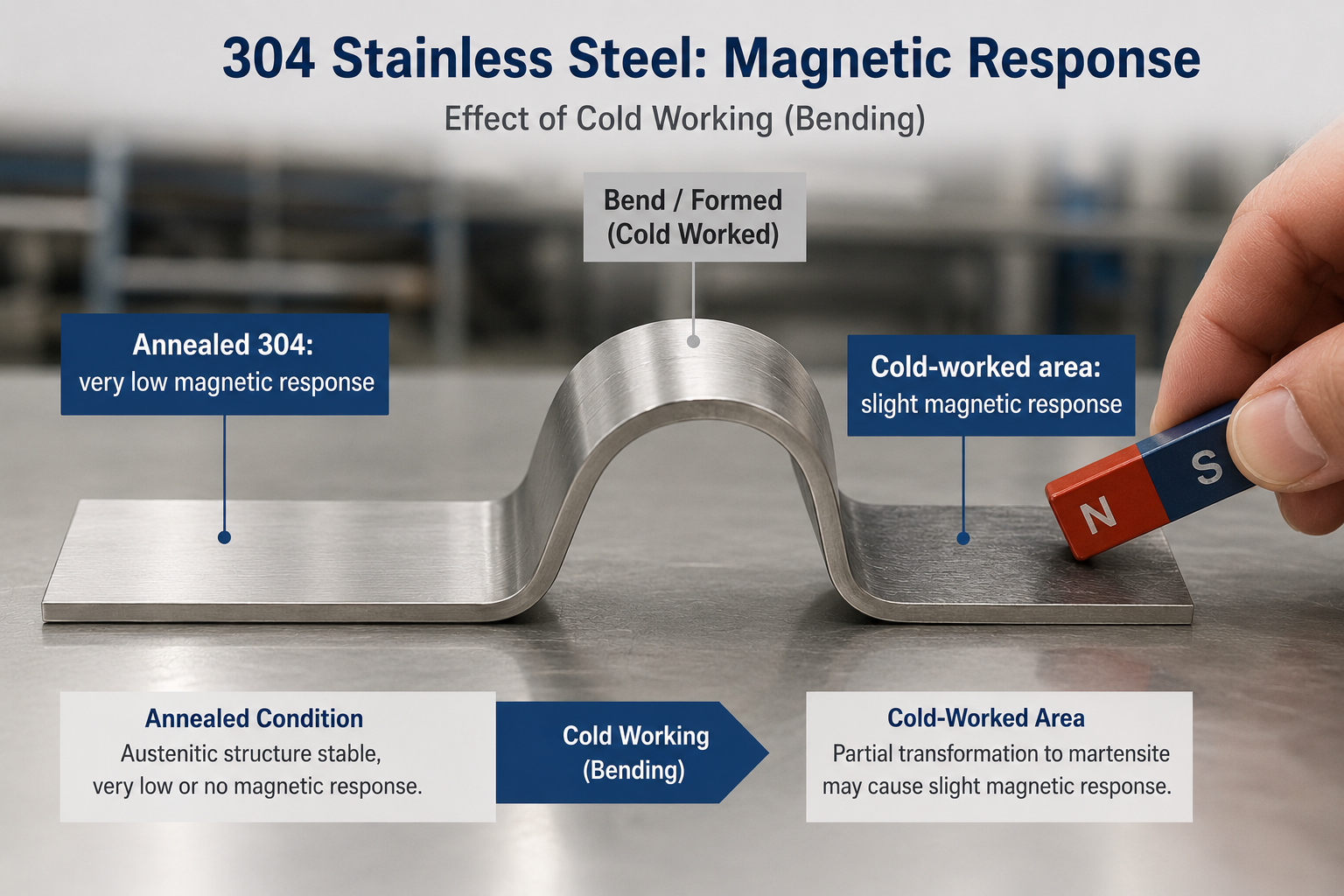
ឧទាហរណ៍ជាក់ស្តែង៖ សន្លឹកស្ថេលអ៊ីណុកស៊ីដ 304 ប្រភេទរាបស្មើ អាចបង្ហាញពីការទាក់ទាញម៉ាញេទិកតិចណាស់មុនពេលបង្កើតរាង។ បន្ទាប់ពីបង្កើតរាងដោយការបត់ ឬគ្រាប់ជ្រៅ គ្រាប់ ឬជ្រុងដែលបានធ្វើការអាចទាក់ទាញម៉ាញេទិកខ្លាំងជាងមុន។ នេះមិនមានន័យថា វាមិនមែនជាប្រភេទ 304 ទេ។
សេចក្តីយោងឧស្សាហកម្ម៖ សមាគមអភិវឌ្ឍន៍ស្ថេលអ៊ីណុកស៊ីដអូស្ត្រាលី បានពន្យល់ថា ការធ្វើការតាមសីតុណ្ហភាពទាបអាចផ្លាស់ប្តូរផ្នែកមួយនៃរចនាសម្ព័ន្ធអូស្តេនីតទៅជាម៉ាតេនស៊ីត ហើយធ្វើឱ្យការឆ្លើយតបទៅនឹងម៉ាញេទិកកើនឡើង។ ប្រភព៖ ASSDA
តើស្ថេលអ៊ីណុកស៊ីដ 304 ឬ 316 ដែលបានភ្ជាប់គ្នាដោយការប៉ះ អាចបង្ហាញពីការឆ្លើយតបទៅនឹងម៉ាញេទិកបានឬទេ?
បាទ តំបន់ដែលបានភ្ជាប់គ្នាដោយការប៉ះគ្នាអាចឆ្លើយតបខុសពីលោហៈមេដែលនៅជុំវិញ។ លោហៈដែលបានប៉ះគ្នានៃស្តេនលេសស្តៀលអូស្តេណីទិក អាចមានហ្វេរីថិកខ្លះ អាស្រ័យលើលោហៈប៉ះគ្នា វិធីសាស្ត្រប៉ះគ្នា និងរចនាសម្ព័ន្ធមីក្រូចុងក្រាយ។ ដោយសារលោហៈដែលបានប៉ះគ្នានៃស្តេនលេសស្តៀលអូស្តេណីទិក អាចមានហ្វេរីថិកខ្លះ ដូច្នេះ ការប៉ះគ្នាតែមួយគត់ អាចបង្ហាញពីការឆ្លើយតបដែលមានសារប្រយោជន៍ខ្លាំងជាងលោហៈមេដែលបានធ្វើឱ្យទន់នៅជុំវិញ។ ការឆ្លើយតបក្នុងតំបន់ក្បែរតំបន់ដែលបានរំខានដោយកំដៅ ក៏អាចប្រែប្រួលផងដែរ អាស្រ័យលើប្រភេទវត្ថុ និងលក្ខខណ្ឌនៃការប៉ះគ្នា។
សម្រាប់អ្នកទិញដែលកំពុងតែពិនិត្យប៉ះគ្នានៃប៉ះង៉ែត ប៉ះង៉ែតរាងប៉ះង៉ែត ធុង គ្រឿងភ្ជាប់ ឬគ្រឿងផ្សំដែលបានផលិតរួចរាល់ ការឆ្លើយតបខ្លាំងជាងនៅក្បែរការប៉ះគ្នា មិនមែនជាភស្តុតាងដែលបញ្ជាក់ថា កម្រិតស្តេនលេសស្តៀលគឺមិនត្រឹមត្រូវទេ។ គួរតែពិនិត្យមើលរួមគ្នាអំពីវិធីសាស្ត្រប៉ះគ្នា លោហៈប៉ះគ្នា ឯកសារអំពីវត្ថុ និងតម្រូវការគម្រោង។
តើស្ពាន់ស្តេល 430 មានសារធាតុម៉ាញេទិកដែរឬទេ?
បាទ។ ស្តេនលេសស្តៀល 430 មានលក្ខណៈមេដែលទាក់ទាញម៉ាញេទិក។
430 គឺជាកម្រិតស្តេនលេសស្តៀលហ្វេរីថិក ដូច្នេះ ការដែលម៉ាញេទិកអាចជាប់នឹង 430 គឺជារឿងធម្មតា ហើយមិនបញ្ជាក់ពីគុណភាពទាប ឬស្តេនលេសស្តៀលក្លែងក្លាយទេ។
430 ជាទូទៅមានក្រូម៉ីយ៉ូមជាសារធាតុដែលបន្ថែមចូលគ្នាជាសំខាន់ ហើយមាននីកែលតិចជាង 304 និង 316 ធម្មតា។ វាត្រូវបានប្រើយ៉ាងទូទៅក្នុងការអនុវត្តផ្សេងៗ ដូចជា ផ្ទៃរបស់ឧបករណ៍អគារ ផ្ទៃខាងក្រោយនៃគ្រឿងបរិក្ខារបាយ គ្រឿងតុបតែង គ្រឿងតុបតែងរថយន្ត និងឧបករណ៍នៅក្នុងអគារ។
សម្រាប់ថ្នាក់ជាក់លាក់នេះ សមត្ថភាពទប់ទល់នឹងការឆ្លាក់គឺទូទៅទាបជាង 304 ឬ 316 នៅក្នុងបរិយាកាសសើម អាស៊ីត ឬមានក្លូរីតច្រើន ដែលទាមទារការប្រុងប្រយ័ត្នខ្ពស់។ ដូច្នេះ ការជ្រើសរើសថ្នាក់គួរផ្អែកលើបរិយាកាសប្រើប្រាស់ជាក់ស្តែង ជាជាងផ្អែកតែលើប្រតិកម្មទៅនឹងម៉ាញេទិកតែប៉ុណ្ណោះ។
សម្រាប់គម្រោងការផលិត អ្នកទិញអាចពិនិត្យមើល ស្លាប់ និងផ្ទៃរាបស្មើស្ពាន់ស្តេល .
តើដុប្លេចស្តេនលេសស្ស្តេលមានលក្ខណៈម៉ាញេទិកទេ?
បាទ។ ស្តេលអ៊ីណុកស្ទែនឌូប្លេქស៍មានលក្ខណៈម៉ាញេទិក។
ស្តេលអ៊ីណុកស្ទែនឌូប្លេកស៍មានទាំងអូស្តេនីត និងហ្វេរីត។ ដោយសារហ្វេរីតមានលក្ខណៈម៉ាញេទិក ថ្នាក់ឌូប្លេកស៍ធម្មតាដូចជា 2205 ជាទូទៅទាក់ទាញម៉ាញេត។ គោលការណ៍ដូចគ្នានេះក៏អនុវត្តចំពោះថ្នាក់សូប៊ែរឌូប្លេកស៍ដូចជា 2507 ផងដែរ។
ដូច្នេះ លក្ខណៈម៉ាញេទិកនៅក្នុងស្តេលអ៊ីណុកស្ទែនឌូប្លេកស៍គឺជាលក្ខណៈរបស់វាដែលគេរំពឹងទុក មិនមែនជាខ្វះខាតទេ។ អ្នកទិញមិនគួរបដិសេធការទទួលយក 2205 ឬ 2507 គ្រាន់តែដោយសារម៉ាញេតជាប់នឹងវាទេ។
ទឹកក្រូចស្តេនលេស ដែលមានរចនាសម្ព័ន្ធប្រភេទឌុប្លេក (duplex) ជាទូទៅត្រូវបានគេពិចារណាប្រើនៅពេលគម្រោងត្រូវការ:
- ភាពរឹងមាំខ្ពស់ជាងទឹកក្រូចស្តេនលេស ប្រភេទអូស្តេណីតិក (austenitic) ធម្មតា
- ភាពធន់ប្រឆាំងនឹងការបាក់បែកដោយសារសារធាតុគ្លូរីត (chloride stress corrosion cracking) ប្រសើរឡើង
- ភាពធន់ប្រឆាំងនឹងការបាក់បែកនៅផ្ទៃ (pitting) និងការបាក់បែកនៅកន្លែងដែលមានប្រហោង (crevice-corrosion) សមស្របសម្រាប់ថ្នាក់ដែលបានជ្រើសរើស
- សមត្ថភាពប្រើប្រាស់បានល្អក្នុងការងារដែលទាក់ទងនឹងសម្ពាធ ស្ថាបត្យកម្ម និងដំណាំ
សម្រាប់គម្រោងដែលទាក់ទងនឹងប៉ាઇប៍ អ្នកទិញអាចពិនិត្យមើល ផលិតផលប៉ាઇប៍ និងប៉ារ៉ាប៉ាយដែលធ្វើពីស្តេនលេសស្ឋែល .
សេចក្តីយោងឧស្សាហកម្ម៖ Outokumpu ពណ៌នាអំពីទឹកក្រូចស្តេនលេសប្រភេទឌុប្លេកថា វាមានរចនាសម្ព័ន្ធម៉ាក្រូ (microstructure) ប្រភេទហ្វេរីតិក-អូស្តេណីតិក (ferritic-austenitic)។ ដំណាំហ្វេរីត (ferrite phase) គឺជាមូលហេតុដែលទឹកក្រូចស្តេនលេសប្រភេទឌុប្លេក និងសូប៊ែរឌុប្លេក (super duplex) ជាទូទៅឆ្លើយតបទៅនឹងម៉ាញេទិក។ ប្រភព៖ Outokumpu
ហេតុអ្វីបានជាទឹកក្រូចស្តេនលេសខ្លះមានលក្ខណៈម៉ាញេទិក?
ឥរិយាបថម៉ាញេទិក សំខាន់ៗគឺអាស្រ័យលើរចនាសម្ព័ន្ធផ្ទៃក្នុងនៃទឹកក្រូចស្តេនលេស។ គ្រួសារទឹកក្រូចស្តេនលេសសំខាន់ៗ មានឥរិយាបថខុសគ្នា។
ដែកអ៊ីណុកប្រភេទអូស្តេនីតិច
ថ្នាក់ដូចជា 304, 304L, 316 និង 316L ជាទូទៅបង្ហាញពីការឆ្លើយតបម៉ាញេទិកទាបណាស់ នៅពេលដែលបានប៉ះពាល់ដោយកំដៅពេញលេញ (fully annealed)។ ការធ្វើឱ្យត្រជាក់ (cold working) និងលក្ខខណ្ឌផ្សេងៗទៀតនៅពេលផលិត អាចបង្កើនការឆ្លើយតបម៉ាញេទិកនៅតំបន់ជាក់លាក់មួយ។
ដែកអ៊ីណុកប្រភេទហ្វេរីទិច (ferritic stainless steel)
ក្រុមស្តេនលេសស្ទែលដែលមានរចនាសម្ព័ន្ធប៉េរ៉ីតិក ដូចជា 430 និង 444 គឺមានសាកល្បងម៉ាញេទិក ព្រោះរចនាសម្ព័ន្ធប៉េរ៉ីតិកគឺមានសាកល្បងម៉ាញេទិកដោយធម្មជាតិ។
ស្តេលអ៊ីណុកស្ទែនម៉ាតេនស៊ីតិក
ក្រុមស្តេនលេសស្ទែលដែលមានរចនាសម្ព័ន្ធម៉ាតេនស៊ីតិក ដូចជា 410 និង 420 គឺមានសាកល្បងម៉ាញេទិក ហើយអាចប្រើការព្យាបាលដោយកំដៅដើម្បីទទួលបានភាពរឹង និងភាពរឹងមាំខ្ពស់ជាងមុន។
Stainless steel ទ្វេ
ក្រុមស្តេនលេសស្ទែលឌុប្លេក់ស៍មានទាំងផ្នែកប៉េរ៉ីត និងអូស្ទេនីត។ ផ្នែកប៉េរ៉ីតធ្វើឱ្យក្រុមដូចជា 2205 និង 2507 មានសាកល្បងម៉ាញេទិក។
សេចក្តីយោងឧស្សាហកម្ម៖ សមាគមស្តេនលេសស្ទែលចក្រភពអង់គ្លេស បានពន្យល់ថា ស្តេនលេសស្ទែលប៉េរ៉ីតិក ម៉ាតេនស៊ីតិក និងឌុប្លេក់ស៍ ជាទូទៅមានសាកល្បងម៉ាញេទិក ខណៈដែលស្តេនលេសស្ទែលអូស្ទេនីត ជាទូទៅមានសាកល្បងម៉ាញេទិកទាបជាង។ ប្រភព៖ BSSA
តើម៉ាញេទិកអាចកំណត់បាននូវក្រុមស្តេនលេសស្ទែលដែលបានប្រើឬទេ?
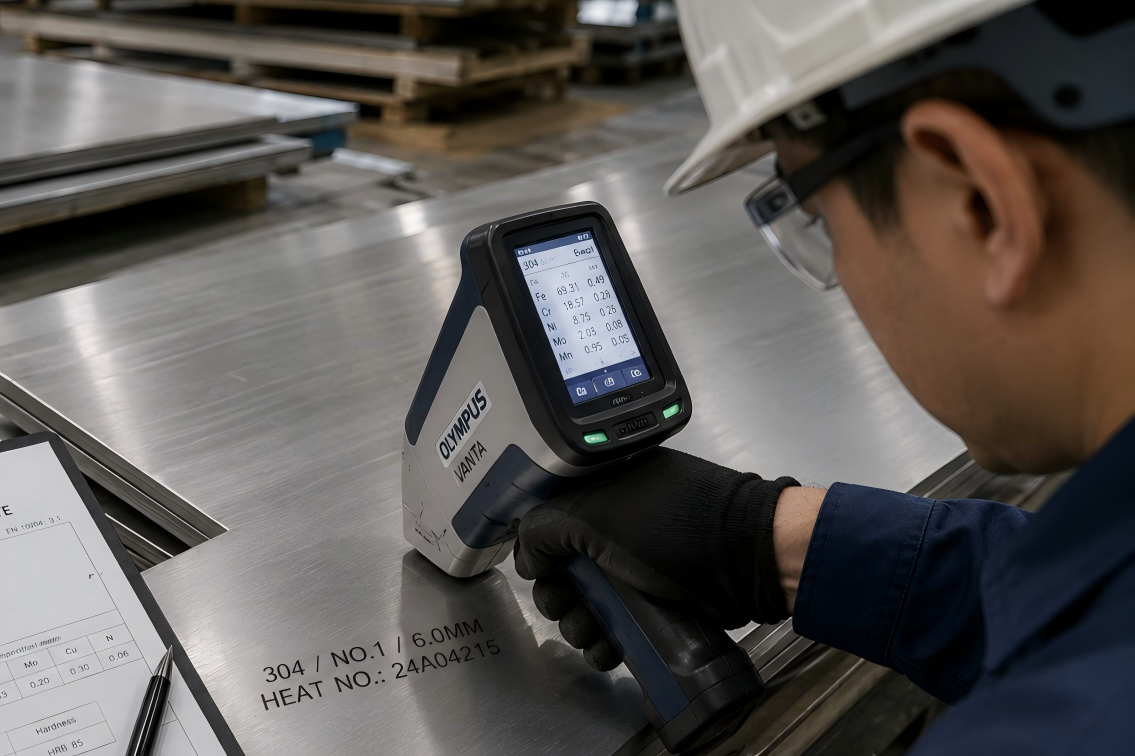
ការសាកល្បងដោយប្រើម៉ាញេទិកអាចផ្តល់ការសង្កេតយ៉ាងឆាប់រហ័សអំពីសាកល្បងម៉ាញេទិក ប៉ុន្តែវាមិនអាចកំណត់បានដោយជាក់លាក់នូវក្រុមស្តេនលេសស្ទែល ឬសមាសធាតុគីមីរបស់វាបានទេ។
ម៉ាញេទិកមិនអាចឆ្លើយបានដោយជាក់លាក់នូវសំណួរដូចជា៖
- តើវត្ថុនេះគឺជា 304 ឬ 316?
- តើវត្ថុនេះគឺជា 2205 ឬ 2507?
- តើវត្ថុនេះបំពេញតាមក្រុម ASTM, ASME ឬ EN ដែលបានបញ្ជាក់ឬទេ?
- តើវាមានកម្រិតនីកែល មូលីបឌេនុម ឬអាសូតដែលត្រូវការទេ?
- តើវាបំពេញលក្ខណៈយន្តសាស្ត្រដែលត្រូវការទេ?
- តើសម្ភារៈដែលផ្តល់មកអាចតាមដានបានទៅលេខកំដែលបានបញ្ជាក់ទេ?
- តើវាអាចផ្តល់នូវស្ថេរភាពចំពោះការឆ្លងកាត់បានគ្រប់គ្រាន់ក្នុងបរិស្ថានប្រើប្រាស់ជាក់ស្តែងទេ?
ដូច្នេះ គួរចាត់ទុកការមានសារធាតុម៉ាញេទិកជាការសង្កេតមួយយ៉ាងផ្នែករូបរាង មិនមែនជាភស្តុតាងចុងក្រាយនៃអត្តសញ្ញាណសម្ភារៈទេ។
អ្នកទិញគួរធ្វើការផ្ទៀងផ្ទាត់ថ្នាក់ទឹកក្រូចយ៉ាងដូចម្តេច?
សម្រាប់ការទិញ B2B វិជ្ជាជីវៈ ការផ្ទៀងផ្ទាត់ថ្នាក់គួររួមបញ្ចូលឯកសារ ការតាមដាន និងការសាកល្បងដែលសមស្រប នៅពេលដែលគម្រោងទាមទារ។
វិធីផ្ទៀងផ្ទាត់ទូទៅរួមមាន៖
- វិញ្ញាបនប័ត្រសាកល្បងរោងចក្រ (MTC)៖ ឯកសារដែលបញ្ជាក់អំពីសមាសធាតុគីមី លក្ខណៈយន្តការ លេខកូដការផ្គុំ និងស្តង់ដារសម្ភារៈដែលអាចអនុវត្តបាន។
- ការតាមដានលេខកូដការផ្គុំ៖ ភ្ជាប់ឯកសារទៅនឹងផ្ទៃដែលបានផ្តល់ គ្រឿងរ៉ែ ប៉ះពាល់ ដំបូល ឬផលិតផលដែលបានផ្សារ។
- ការកំណត់សារធាតុវិជ្ជមាន (PMI): អាចជួយបញ្ជាក់ធាតុអ៊ីដ្រូសេនសំខាន់ៗដោយប្រើឧបករណ៍សាកល្បងដែលសមស្រប។
- ការវិភាគគីមី៖ អាចត្រូវការនៅពេលដែលត្រូវការការផ្ទៀងផ្ទាត់សមាសធាតុលម្អិតជាងមុន។
- ការសាកល្បងមេកានិក៖ ពិនិត្យលក្ខណៈដូចជា សាមត្ថភាពទប់ទល់នឹងការទាញ, សាមត្ថភាពទប់ទល់នឹងការរីករាយ, ការយ៉ាង, ភាពរឹង ឬតម្លៃផ្ទះ់ ដែលត្រូវការ។
- ការត្រួតពិនិត្យទំហំ និងទស្សនៈ៖ បញ្ជាក់ទំហំ សារធាតុ លក្ខខណ្ឌផ្ទៃ និងការបញ្ចប់។
កំហុសធម្មតាដែលកើតឡើងនៅពេលសាកល្បងស្តេលអ៊ីណុកដោយប្រើម៉ាញេទិក
កំហុសទី១៖ «ប្រសិនបើវាមានលក្ខណៈទាក់ទាញជាម៉ាញេទិក វាមិនមែនជាស្តេលអ៊ីណុកស៊ីដទេ»
មិនត្រឹមត្រូវទេ។ 430, 410, 420, 2205 duplex និង 2507 super duplex គឺជាឧទាហរណ៍នៃស្តេលអ៊ីណុកពិតប្រាកដ ដែលជាទូទៅមានលក្ខណៈទាក់ទាញដោយម៉ាញេទិក។
កំហុសទី២៖ «ម៉ាញេទិកអាចប្រាប់បានថា វត្ថុនេះគឺជា 304 ឬ 316»។
ខុស។ ទាំង 304 និង 316 គឺជាប្រភេទដែកអ៊ីណុកស្តេនអូស្តេណីតិក ហើយប្រតិកម្មម៉ាញេទិកអាស្រ័យលើស្ថានភាពវត្ថុធាតុ និងដំណាំរបស់វា។ សូមប្រើឯកសារវត្ថុធាតុ ការតាមដាន និងការសាកល្បងដែលសមស្រប ដើម្បីផ្ទៀងផ្ទាត់ថ្នាក់វត្ថុធាតុ។
កំហុសទី៣៖ «ការទាក់ទាញម៉ាញេទិកប្រាប់ខ្ញុំពីកម្រិតធន់នឹងការឆ្លាក់របស់វត្ថុធាតុ»។
ខុស។ ឥរិយាបថម៉ាញេទិកមិនវាស់កម្រិតធន់នឹងការឆ្លាក់ដោយផ្ទាល់ទេ។ សមាសធាតុគីមី ថ្នាក់ ស្ថានភាពផ្ទៃ ប្រវែងប្រវត្តិសាស្ត្រនៃការផលិត និងបរិស្ថានប្រើប្រាស់ជាក់ស្តែង សំខាន់ជាងច្រើន។
សម្រាប់ព័ត៌មានបន្ថែមអំពីឥរិយាបថឆ្លាក់របស់ដែកអ៊ីណុកស្តេន សូមមើល ហេតុអ្វីបានជាដែកអ៊ីណុកស្តេនអាចឆ្លាក់ .
តើអ្នកគួរជ្រើសរើសដែកអ៊ីណុកស្តេនដោយផ្អែកលើការទាក់ទាញម៉ាញេទិកឬទេ?
ជាទូទៅ ទេ។ សម្រាប់គម្រោងឧស្សាហកម្មភាគច្រើន ការធន់នឹងការឆ្លាក់ លក្ខណៈមេកានិក តម្រូវការផលិត សីតុណ្ហភាព បរិស្ថានប្រើប្រាស់ និងស្តង់ដារដែលអាចអនុវត្តបាន សំខាន់ជាងការដែលម៉ាញេទិកដៃអាចទាក់ទាញវត្ថុធាតុឬទេ។
ឥរិយាបទម៉ាញេទិកក្លាយជាការកំណត់ចម្បងនៅពេលកម្មវិធីមានតម្រូវការម៉ាញេទិក ឬ ភាពអាចឆ្លងកាត់ដែលបានកំណត់។ ក្នុងករណីទាំងនេះ ការសរសេរគ្រាន់តែថា «ដែកអ៊ីណុកមិនម៉ាញេទិក» ក្នុងការសួរអាចមិនគ្រប់គ្រាន់ទេ។
អ្នកទិញគួររាប់បញ្ចូលអ្វីខ្លះក្នុងសំណើ RFQ?
ការសួរដែកអ៊ីណុកច្បាស់លាស់បន្ថយកំហុសកំណត់ និងជៀសវាងការពឹងផ្អែកលើប្រតិកម្មម៉ាញេទិកជំនួសការផ្ទៀងផ្ទាត់សម្ភារៈ។
- ថ្នាក់ដែកអ៊ីណុកដែលត្រូវការ
- ទម្រង់ផលិតផល៖ សន្លឹក សន្លឹកក្រាល cuộn បំពង់ ទ្វារ ដែកគោល ឬ គ្រឿងភ្ជាប់
- ស្តង់ដារ ASTM ASME EN JIS ឬស្តង់ដារគម្រោងដែលអាចអនុវត្តបាន
- វាស់វែង និងកំហុស
- ការបញ្ចូលផ្ទៃ
- លក្ខខណ្ឌសម្ភារៈ ឬ ការព្យាបាលកំដៅ
- វិញ្ញាបនប័ត្រសាកល្បងម៉ាស៊ីនដែលត្រូវការ
- តម្រូវការសម្រាប់ការតាមដានលេខកំដៅ
- តម្រូវការសាកល្បង PMI ឬការត្រួតពិនិត្យផ្សេងទៀត
- ចំនួន
- បរិស្ថានសេវាកម្ម និងការប្រើប្រាស់
- ដែនកំណត់សារធាតុម៉ាញេទិក ប្រសិនបើគម្រោងទាមទារ
សម្រាប់ការជ្រើសរើសផលិតផលទូទៅ អ្នកទិញក៏អាចពិនិត្យមើលផងដែរ សម្ភារៈស្តេនលេសស្ទែល វយ៉េជ មេតាល់ .
សង្ខេប៖ តើស្តេនលេសស្ថែលមានលក្ខណៈអេឡិចត្រូម៉ាញេទិកឬអត់?
- 304:ជាទូទៅបង្ហាញពីការឆ្លើយតបម៉ាញេទិកទាបណាស់នៅពេលដែលបានធ្វើការប៉ះទង្វើ ប៉ុន្តែការធ្វើការតាមរយៈការចុះសំពាធអាចបង្កើនភាពម៉ាញេទិក
- 316:ជាទូទៅបង្ហាញពីការឆ្លើយតបម៉ាញេទិកទាបណាស់នៅពេលដែលបានធ្វើការប៉ះទង្វើ ហើយជាទូទៅមានសារធាតុម៉ាញេទិកតិចជាង 304 នៅពេលដែលមានការប៉ះទង្វើដែលបណ្តាលមកពីការប៉ះទង្វើ
- 430:មានសារធាតុម៉ាញេទិក ព្រោះវាជាប្រភេទហ្វេរីតិក
- 2205 ឌុយប្លេក មានសាកសិទ្ធិផ្សេងៗដោយសារតែរចនាសម្ព័ន្ធរបស់វាមានហ្វេរីត។
- 2507 សុប៉ែរឌុប្លេក់ស៍៖ ក៏មានសាកសិទ្ធិផ្សេងៗដែរ ដោយសារតែរចនាសម្ព័ន្ធឌុប្លេក់ស៍របស់វាមានហ្វេរីត។
គ្រឿងទេសមានសាកសិទ្ធិផ្សេងៗអាចប្រើបានសម្រាប់ការសង្កេតយ៉ាងឆាប់រហ័ស ប៉ុន្តែវាមិនអាចធានាបានថាជាប្រភេទទឹកក្រូចមួយៗដែលត្រូវបានបញ្ជាក់យ៉ាងត្រឹមត្រូវទេ។ សម្រាប់ការទិញជាផ្លូវការ សូមពិនិត្យឡើងវិញនូវប្រភេទ ស្តង់ដារ ស្ថានភាពសម្ភារៈ ឯកសារបញ្ជាក់គុណភាព (MTC) លេខកូដការតាមដានការផ្ទះការ និងការត្រួតពិនិត្យ ឬការសាកល្បងដែលត្រូវការ។
ត្រូវការទឹកក្រូចដែលមានការបញ្ជាក់ប្រភេទច្បាស់លាស់?
Voyage Metal គាំទ្រអ្នកទិញ B2B ពីបរទេសជាមួយនឹងសម្ភារៈទឹកក្រូច និងតម្រូវការឯកសារសម្រាប់គម្រោង។ សូមផ្ញើសេចក្តីបញ្ជាក់ជាមូលដ្ឋាន ដើម្បីឱ្យប្រភេទ ទម្រង់ផលិតផល និងតម្រូវការបញ្ជាក់អាចត្រូវបានពិនិត្យមុនពេលបញ្ជាទិញ។
- ថ្នាក់ដែលត្រូវការ
- រូបរាងផលិតภัณฑ์
- ស្តង់ដារ
- អង្គភាព
- ចំនួន
- ការដាក់ពាក្យ
- តម្រូវការឯកសារបញ្ជាក់គុណភាព (MTC)
- តម្រូវការ PMI ប្រសិនបើអាចអនុវត្តបាន
អ៊ីមែល: [email protected]
សំណួរដែលត្រូវបានសួរប្រចាំ
តើស្តេលអ៊ីណុកស៊ីដ 304 មានសារធាតុម៉ាញេទិកទេ?
ទឹកក្រូចប្រភេទ 304 ជាទូទៅមានប្រតិកម្មសាកសិទ្ធិផ្សេងៗទាបណាស់ក្នុងស្ថានភាពដែលបានប៉ះពាល់។ ការប្រើប្រាស់ការរីករាយតាមរយៈការបង្ហាប់ ការបត់ ការបោះ ការទាញ ឬការប៉ះពាល់ផ្សេងៗទៀត អាចបង្កើនប្រតិកម្មសាកសិទ្ធិផ្សេងៗដោយបង្កើតម៉ាតេនស៊ីតដែលបណ្តាលមកពីការប៉ះពាល់។
តើស្សេនលេសស្សេល 316 មានលក្ខណៈទាក់ទាញផ្កាយមេដែកឬទេ?
ទឹកក្រូច 316 ស្តេនលេស ជាទូទៅមានប្រតិកម្មម៉ាញេទិកទាបណាស់នៅពេលដែលវាត្រូវបានធ្វើឱ្យអាក្សេស (annealed)។ ការធ្វើការតាមរយៈការត្រជាក់ (cold working) អាចប៉ះពាល់ដល់ឥរិយាបថរបស់វា ទោះបីជាទឹកក្រូច 316 នេះមានភាពធន់ចំពោះការបង្កើតម៉ាទេនស៊ីតដែលបណ្តាលមកពីការប៉ះពាល់ (deformation-induced martensite) ខ្ពស់ជាងទឹកក្រូច 304 ក៏ដោយ ហើយជាទូទៅបង្ហាញប្រតិកម្មម៉ាញេទិកទាបជាងបន្ទាប់ពីការត្រជាក់ដែលមានកម្រិតស្មើគ្នា។
តើស្ពាន់ស្តេល 430 មានសារធាតុម៉ាញេទិកដែរឬទេ?
បាទ។ ទឹកក្រូច 430 គឺជាទឹកក្រូចស្តេនលេសប្រភេទហ្វេរីតិក (ferritic stainless steel) ហើយវាមានលក្ខណៈម៉ាញេទិកដោយធម្មជាតិ។ ដូច្នេះ ការដែលម៉ាញេតមួយជាប់នឹងទឹកក្រូច 430 គឺជារឿងធម្មតា។
តើដុប្លេចស្តេនលេសស្ស្តេលមានលក្ខណៈម៉ាញេទិកទេ?
បាទ។ ទឹកក្រូចប្រភេទឌុប្លេក (duplex grades) ដូចជា 2205 មានផ្ទុកទាំងហ្វេរីត និងអូស្តេនីត (ferrite and austenite)។ ដំណាំហ្វេរីត (ferrite phase) នេះធ្វើឱ្យទឹកក្រូចស្តេនលេសប្រភេទឌុប្លេកមានលក្ខណៈម៉ាញេទិក។
តើទឹកក្រូចស្តេនលេសប្រភេទសូប៉េរឌុប្លេក (super duplex stainless steel) មានលក្ខណៈម៉ាញេទិកដែរឬទេ?
បាទ។ ទឹកក្រូចប្រភេទសូប៉េរឌុប្លេក (super duplex grades) ដូចជា 2507 មានលក្ខណៈម៉ាញេទិក ព្រោះរចនាសម្ព័ន្ធរបស់វាក៏មានផ្ទុកដំណាំហ្វេរីត (ferrite phase) ផងដែរ។ ការមានលក្ខណៈម៉ាញេទិកតែមួយគត់ មិនមែនជាមូលហេតុសម្រាប់បដិសេធទឹកក្រូចប្រភេទនេះទេ។
ហេតុអ្វីបានជាម៉ាញេទិកអាចជាប់នឹងស្ថេរភាព 304?
ការធ្វើការតាមរយៈការត្រជាក់ (cold working) អាចប៉ះពាល់ដល់ផ្នែកមួយនៃរចនាសម្ព័ន្ធអូស្តេនីត ហើយបំប្លែងវាទៅជាម៉ាទេនស៊ីតដែលមានលក្ខណៈម៉ាញេទិក។ នេះគឺជាមូលហេតុដែលតំបន់ដែលបានបត់ បានបង្វិល បានបោះ ឬបានទាញជ្រៅ (bent, rolled, stamped or deep-drawn areas) នៃទឹកក្រូច 304 អាចទាក់ទាញម៉ាញេតបានខ្លាំងជាងទឹកក្រូចដែលបានធ្វើឱ្យអាក្សេស (annealed) ទាំងស្រុង។
តើម៉ាញេតមួយអាចបែងចែកភាពខុសគ្នារវាងទឹកក្រូច 304 និង 316 បានដែរឬទេ?
ទេ។ ការធ្វើតេស្តដោយប្រើផ្កាយមេដាយមិនអាចបែងចែកបានដោយជាក់ស្តែងរវាង 304 និង 316 ទេ។ អ្នកទិញគួរប្រើវិញ្ញាបនប័ត្រ Mill Test Certificate ការតាមដានលេខកំដៅ និងវិធីសាស្ត្រកំណត់សារធាតុ ឬវិភាគគីមីដែលសមស្រប នៅពេលដែលត្រូវការបញ្ជាក់ថ្នាក់។
សេចក្តីយោង
- សមាគមទឹកក្រុះអ៊ីណុកស្តេលចក្រភពអង់គ្លេស, “លក្ខណៈម៉ាញេទិកនៃទឹកក្រុះអ៊ីណុកស្តេលហ្វេរីតិក ម៉ាតេនស៊ីតិក និងឌុប្លេក្ស។” មើលប្រភព
- សមាគមអភិវឌ្ឍន៍ទឹកក្រុះអ៊ីណុកស្តេលអូស្ត្រាលី, “ផលប៉ះពាល់ម៉ាញេទិកនៃទឹកក្រុះអ៊ីណុកស្តេល។” មើលប្រភព
- worldstainless, “ឯកសារបច្ចេកទេសអំពីថ្នាក់ទឹកក្រុះអ៊ីណុកស្តេល។” មើលប្រភព
- Outokumpu, “ថ្នាក់ទឹកក្រុះអ៊ីណុកស្តេលឌុប្លេក្ស និងលក្ខណៈរបស់វា។” មើលប្រភព